
Lake Tahoe marked a decision point in our trip, with options eastward towards Salt Lake City, or extending our north-bound trajectory through Oregon to Smith Rock. Unfortunately, a major cold snap drifting in from the Pacific had other ideas, with temperatures plummeting by 15C in the space of 48hrs…
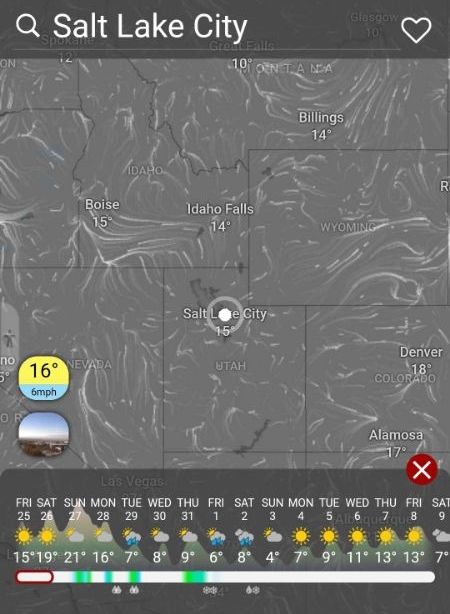
That put a lid on the further extension of our loop and had thoughts turning to all the places further south that we’d bypassed in 40C heat, so we pointed the nose of the van downhill and started heading southwards. Another planning consideration was to be somewhere special in time for Helen’s birthday, with some climbing to occupy ourselves and temperatures to make the experience enjoyable. Pinnacles National Park looked like it might fit the bill, and would take us down the western side of the Sierra rather than retracing our route through Bishop.
All that is a long-winded prelude to explain how it was that we ended up climbing in a disused quarry during a California road trip, within shouting distance of Yosemite, Tahoe and the Buttermilks (at least as the crow flies!) Northern California and especially the Bay Area aren’t blessed with a huge amount of climbing, so we broke the journey with a drive-by visit to Auburn Quarry.
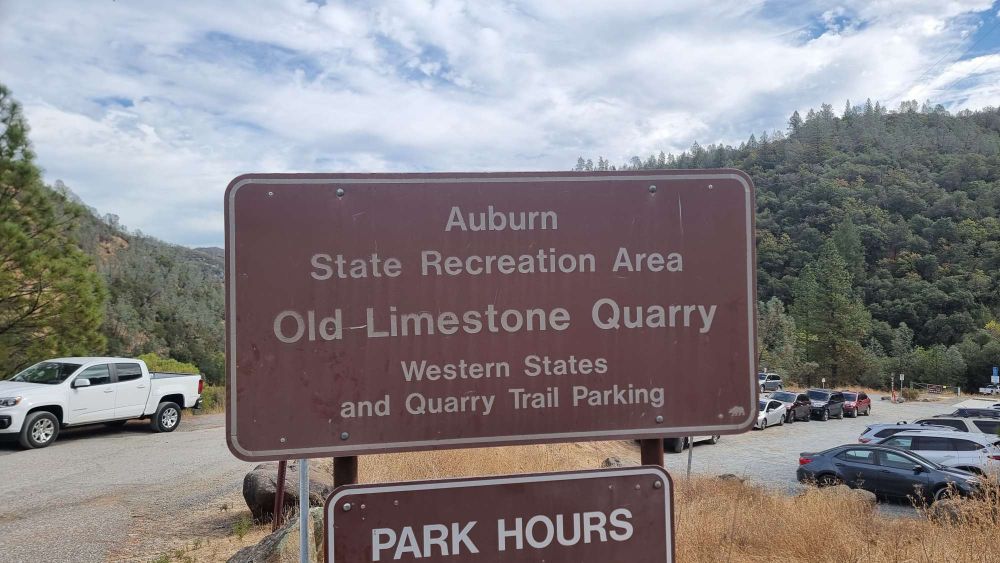
A couple of miles flat walk in a pretty riverside setting leads to an uphill plod to a scene familiar to Brit sport climbers, but with a California vibe.

The rock architecture is more reminiscent of a Lakes slate quarry than Horseshoe, and although the rock is limestone, it does have a slatey feel in places. We did WMD, 5.9, and Let’s Roll, 11a, in the Twin Towers sector, and Handy Capable, 11a on Wreckage Wall.

Nearer the entrance to the quarry, Scale Wall is a geological oddity – a natural flowstone wall exposed by the quarrying.

M+M is a really fun, juggy 8
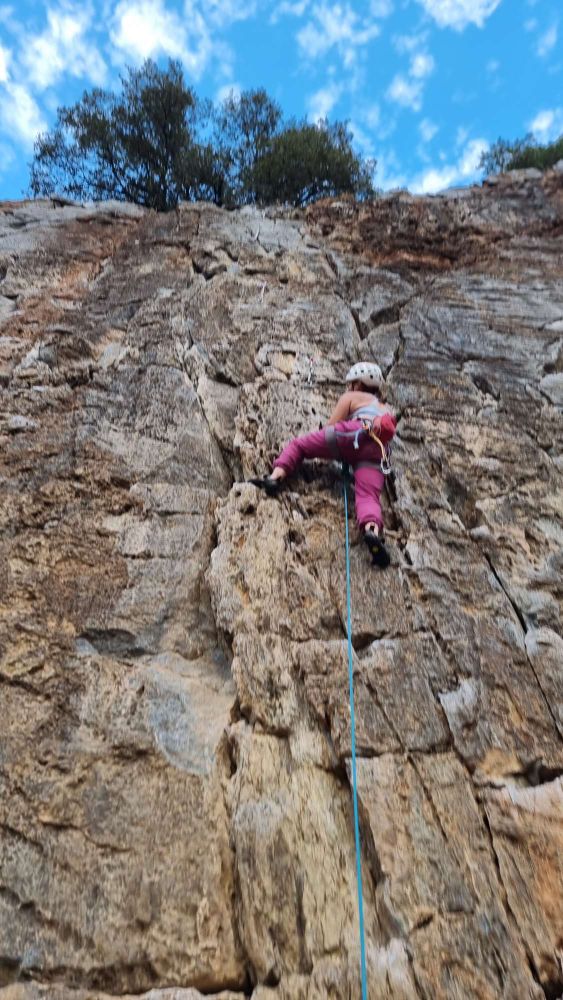
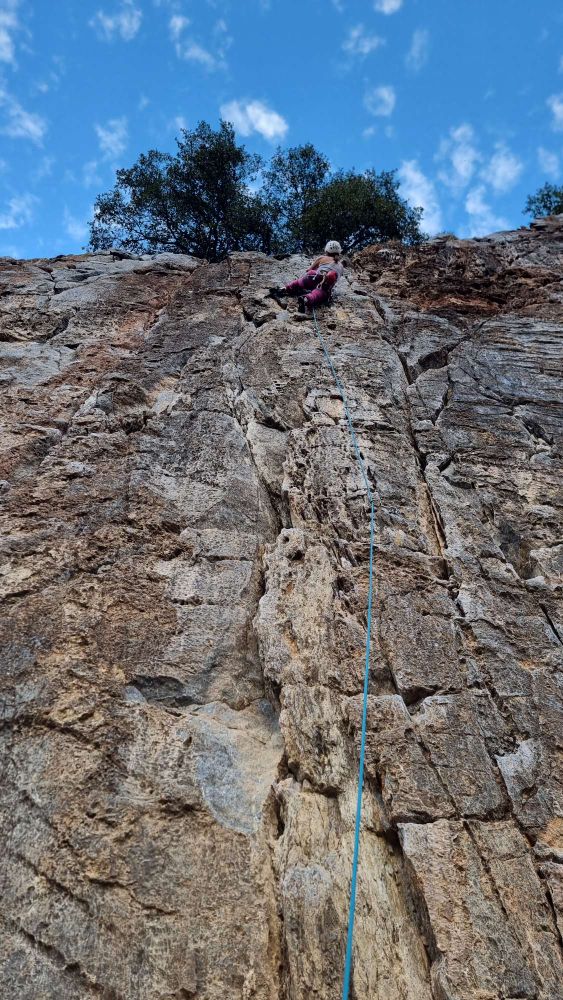
Another journey breaker, and a totally different geology, Table Mountain is an example of an “inverted stream” resulting from a streambed filling with lava, leaving a flat-topped table ringed with a steep Basalt (or maybe Latite?) cliff band.
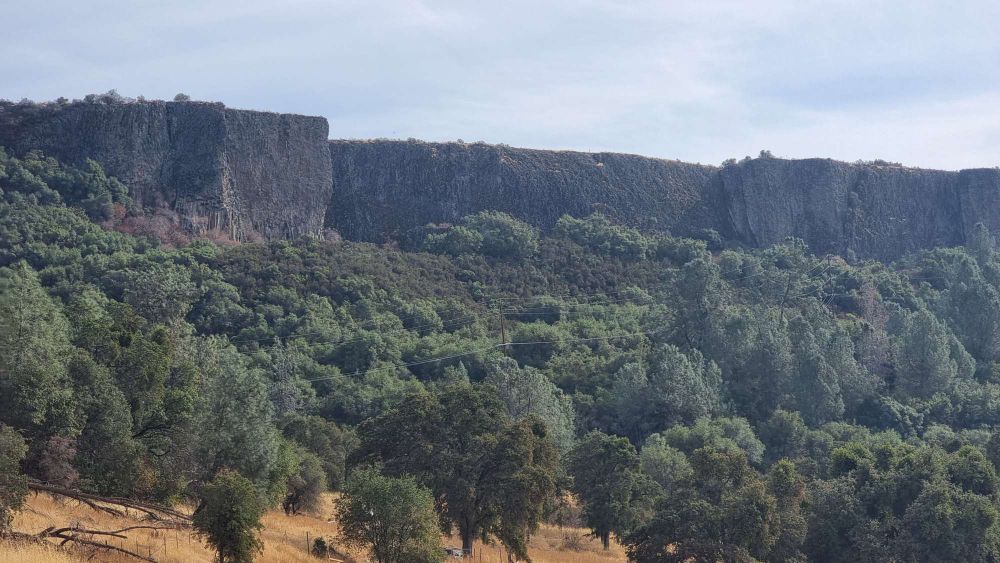
Most of this is choss, but there are a few great climbing spots scattered amongst it, and a great view down to New Melones Lake and a very acceptable campsite.

A 4×4 would get you within a 15mins walk of The Grotto, but you need to tack a mile’s flat walk on with an RV. The Grotto is well-named, tucked out of site and with a fairytale replica of a mini Devil’s Tower. Unfortunately, a team from the local University were in situ on a “learn to trad” weekend – nice kids but quite noisy, and with top ropes strewn everywhere!
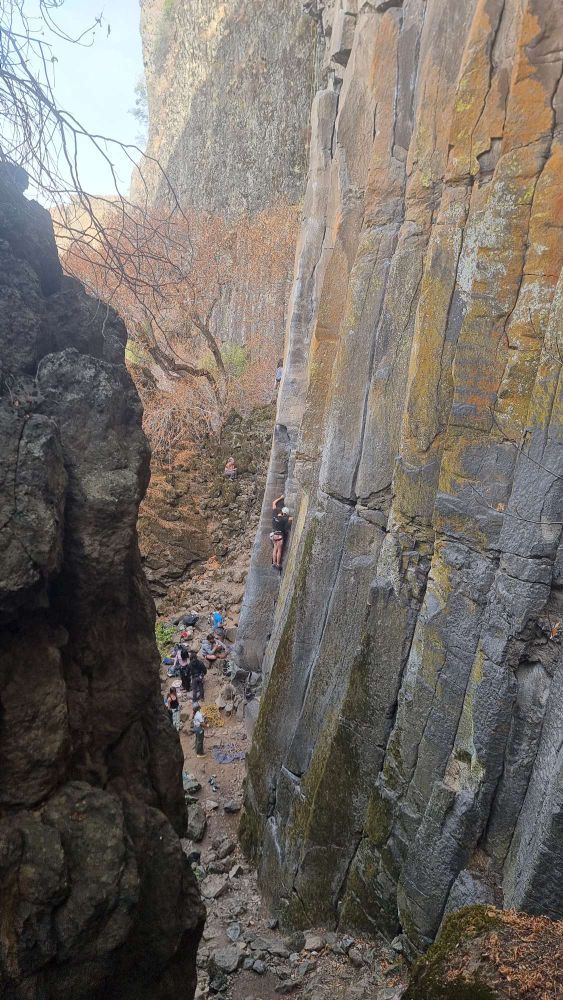
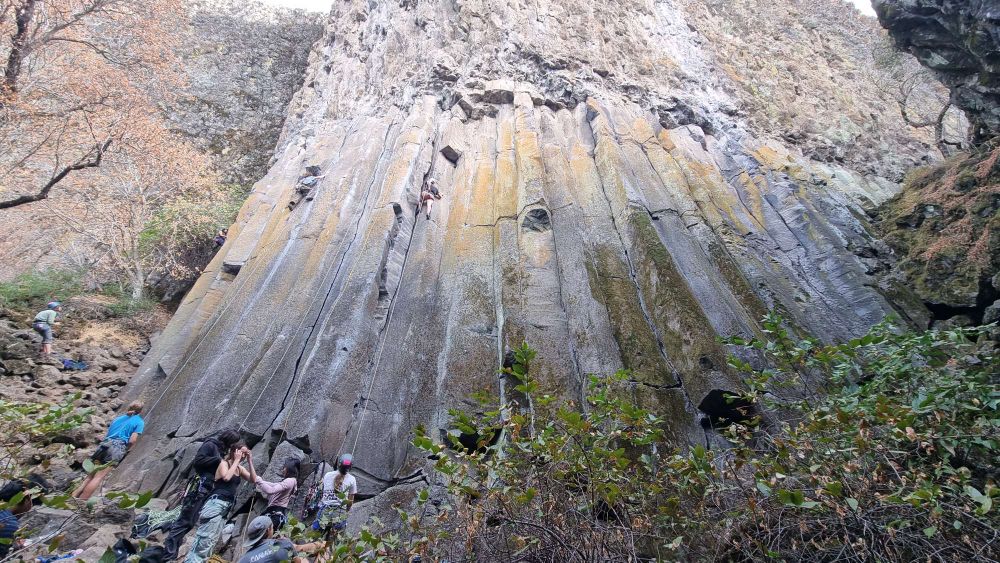
We managed to get on the classic Bandito, 3* trad 5.8
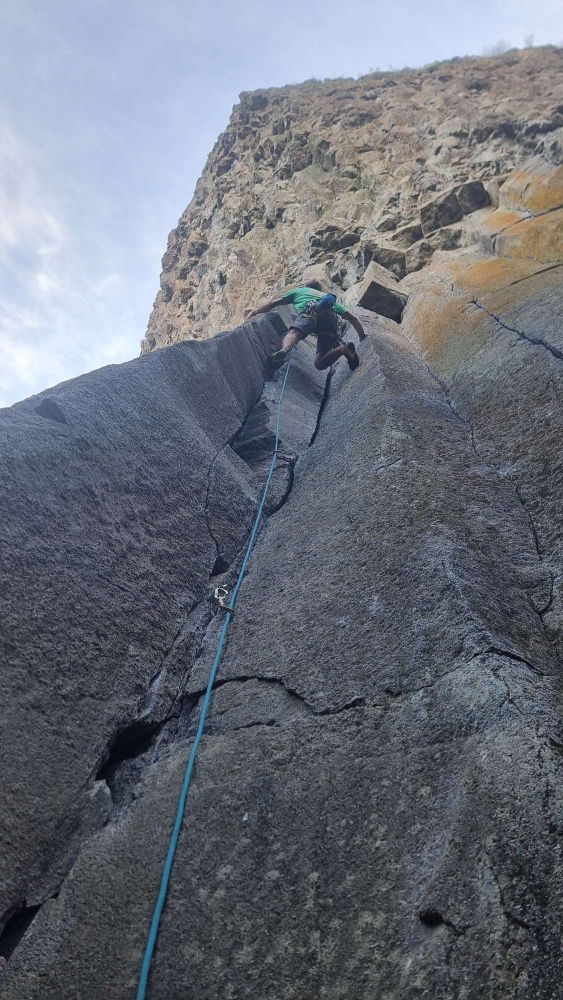
… and then switched our attention to the slightly quieter sport routes on the Ort Wall opposite. Here’s Helen on Side Saddle, 5.9
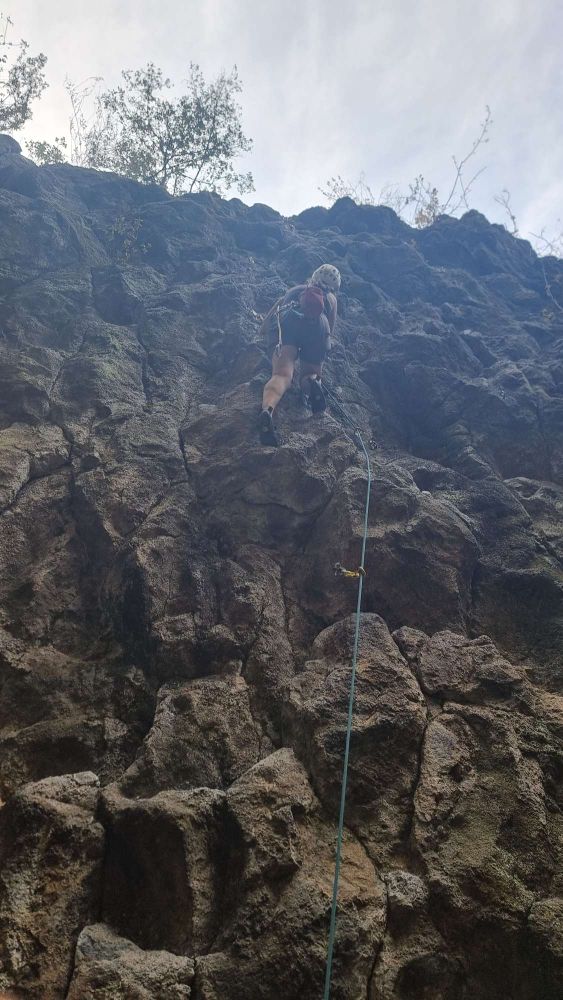
… and I did the adjacent Colour Coded Quickdraws, 10b. Much better was Chicken Ranch Bingo, 10a, which takes the steep wall above the Grotto itself, somewhat spoilt by being covered in bat shit! I also made an anxious ascent of Wing of Bat, 10b and the pick of the bunch. The reason for the anxiety was a warning that more bats would be found in the undercling crack system, and these ones carry rabies! Happily none were encountered!
We spied the impressive looking Gold Wall on the way down. One to come back for if we’re ever in the vicinity again.
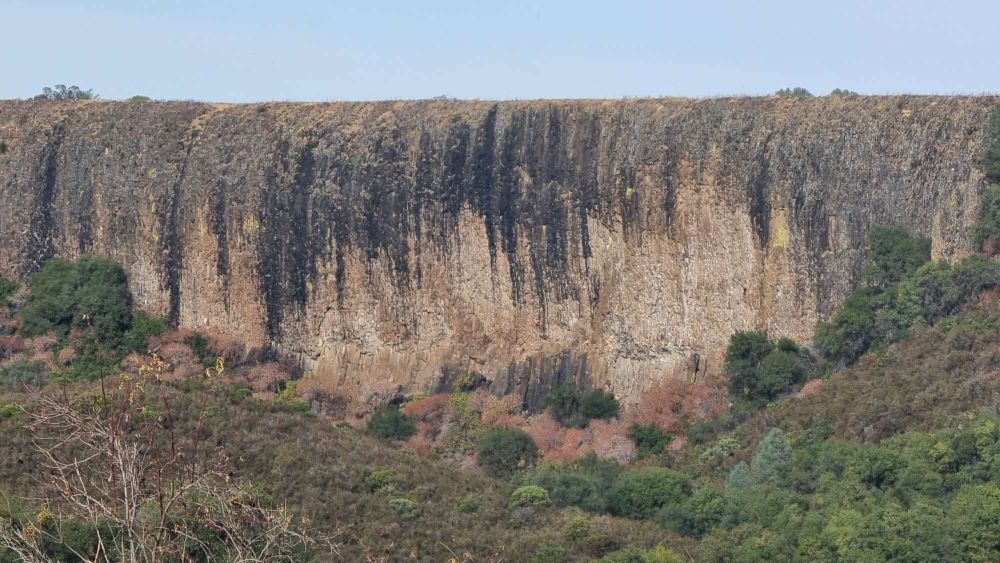
Gorgeous sunset.

Pinnacles National Park protects a volcanic landscape of wild rock formations – spires, towers, ridges and of course pinnacles!
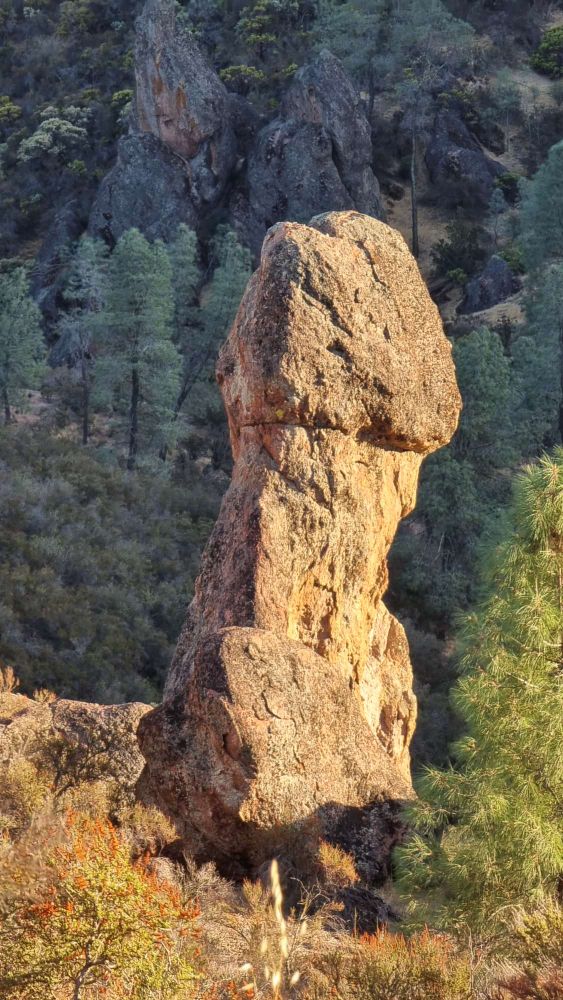
It’s a gorgeous spot, with attractive rock architecture, but the actual climbing is something of an acquired taste. Steeped in history as a stomping ground of Yosemite legends, the present-day climbing community seems split, judging by the Mountain Project Forum: “One of the worst places I have climbed, anywhere in the world!” and a quote from the encyclopedic “Rock and Road”: “You know what your poop looks like after eating corn-on-the-cob and a payday bar? It looks like Pinnacle National Park”. Even the definitive guidebook Mud ‘n’ Crud takes a self-deprecating tone. The tongue in cheek title refers to the volcanic conglomerate rock, which is patchy to say the least. Others, on the other hand, rave about the place.

If the attraction of a climbing venue is a combination of the quality of the rock, the movement, the line and the environment, then what Pinnacles might lack on the first couple, it certainly makes up for on the latter.
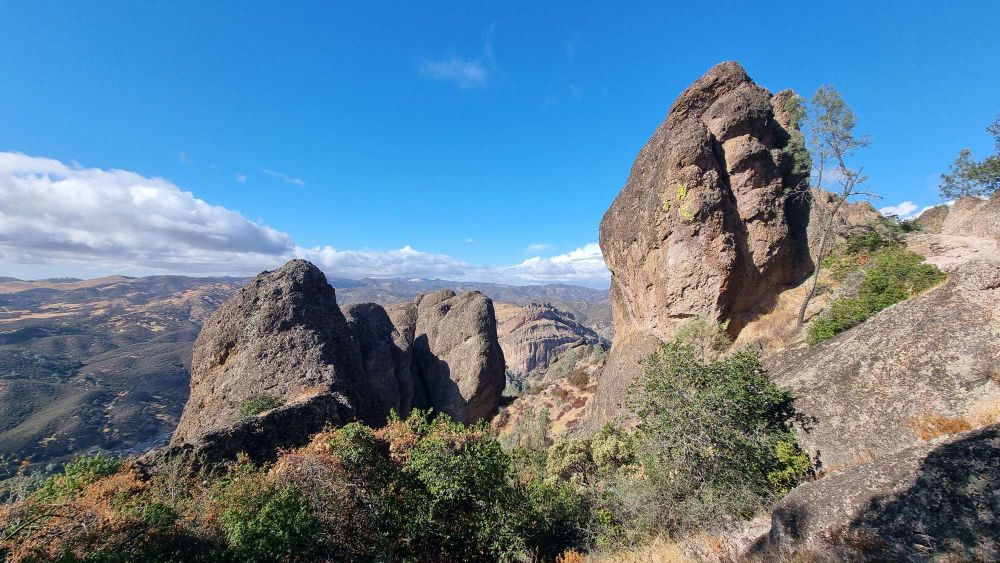
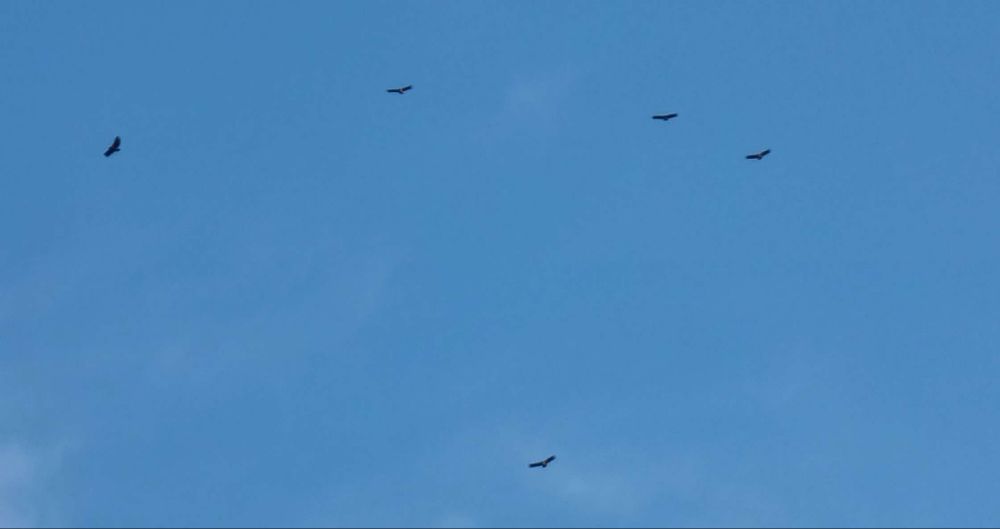
The biggest draw at the Park isn’t the pinnacles at all, but the thriving resident population of Condors (the product of a successful reintroduction program). Our hope was to combine the two and go climbing amongst the Condors, for which you need to go high. There’s a brilliant circular walk that takes in the highest point in the Park and a bunch of the most fun pinnacles.
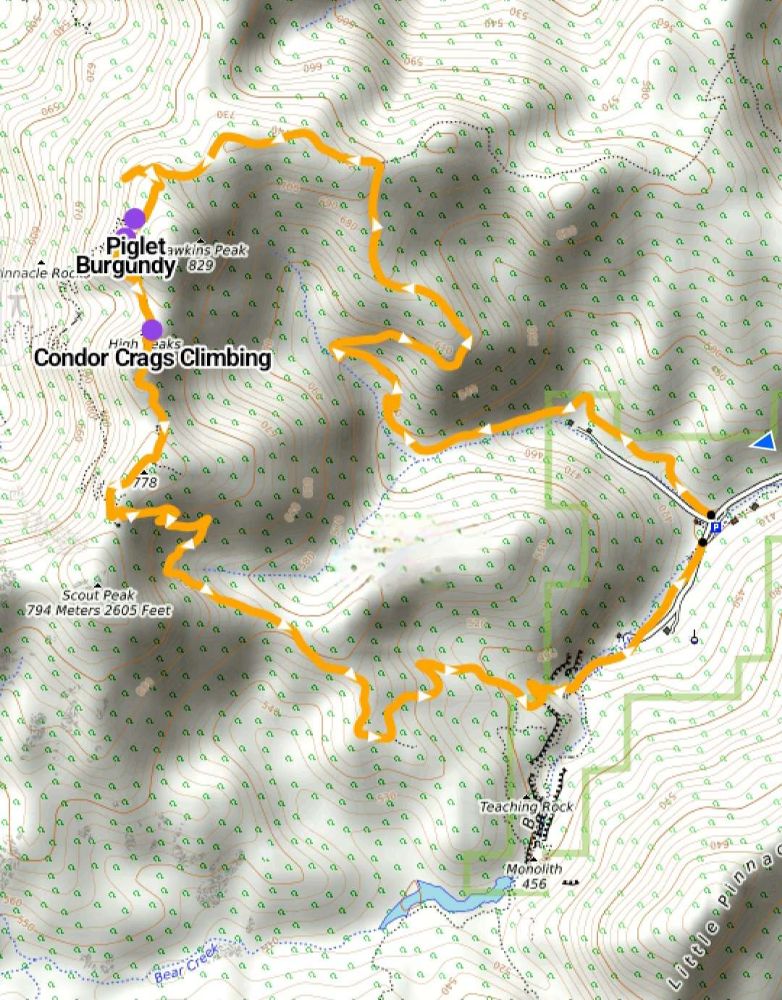
First stop: Piglet, a rather challenging little route to a fun summit.
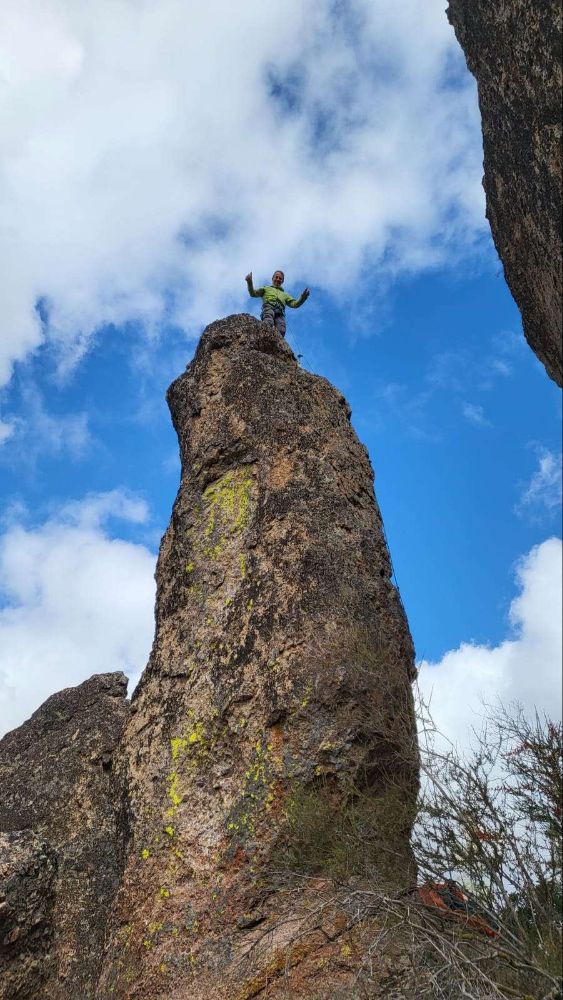

Next, Burgundy Pinnacle – a slightly more travelled and solid prospect.
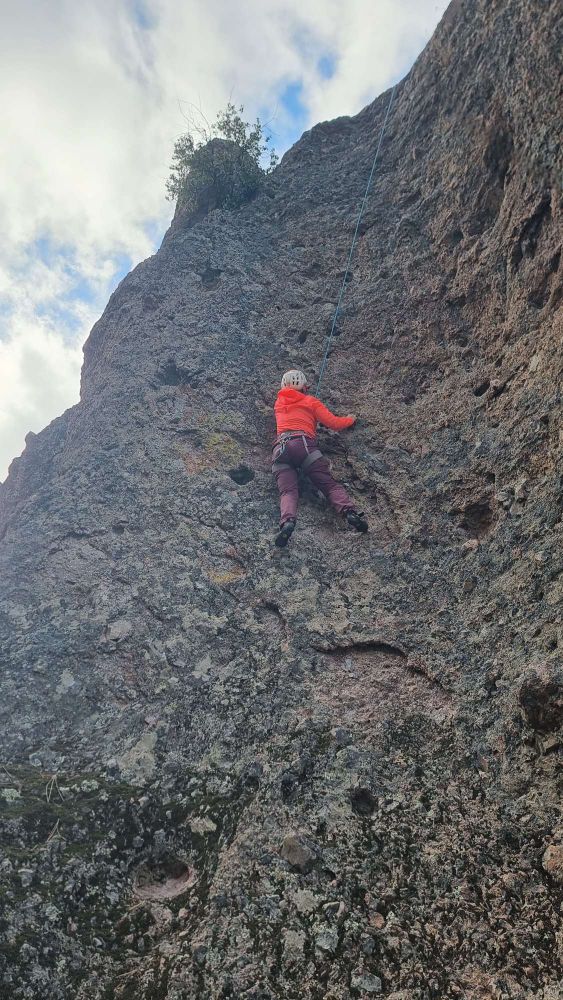
Then onwards along the High Peaks Trail, featuring carved staircases and walkways…

… to Condor Crag. This is the highest point in the Park and site of the first recorded route in 1933. We chose to do St Valentine’s Day Massacre, which starts up the regular route but leaves where that turns into a grungy chimney to take a wild but easy traverse then blunt arete to the summit. Just about manageable in a single 40m pitch with careful ropework.
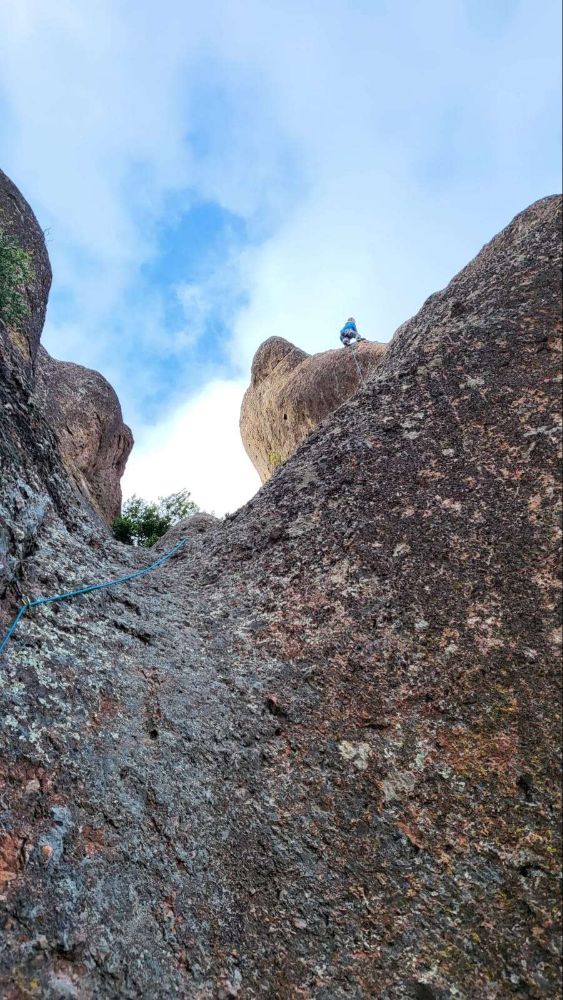
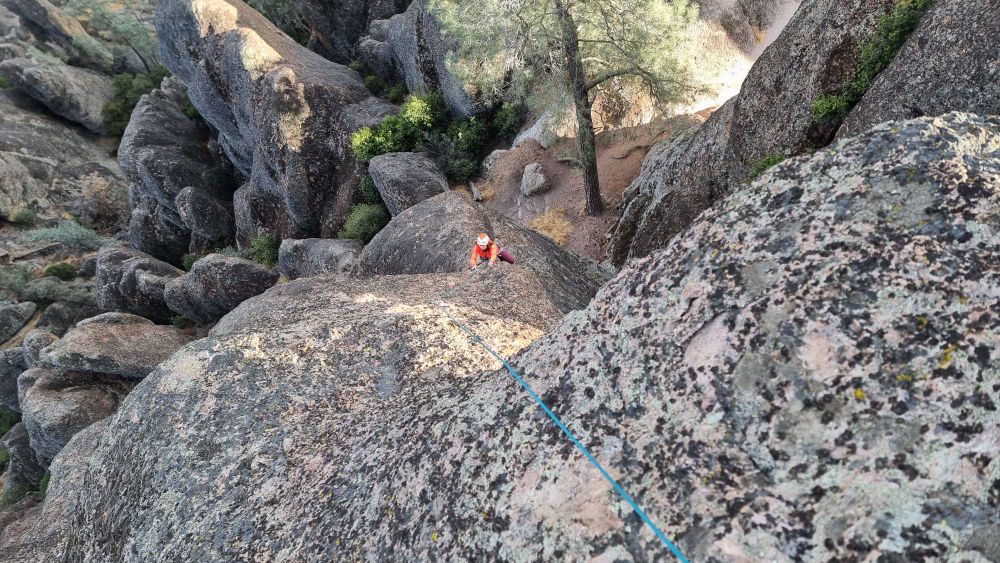

This gets you to the top of the right hand pinnacle in centre of this distant shot of the summit ridge.

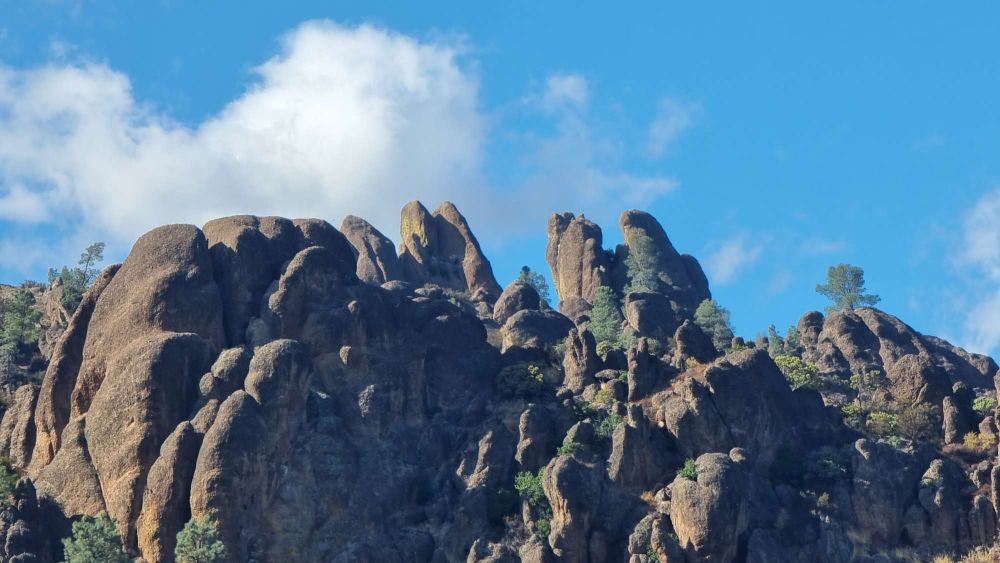
Fab panoramic views….
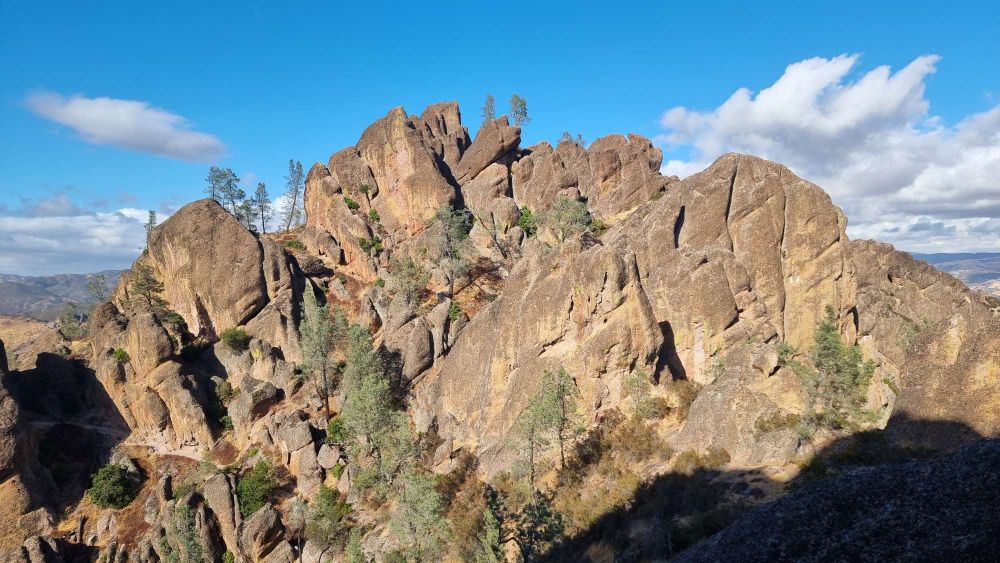
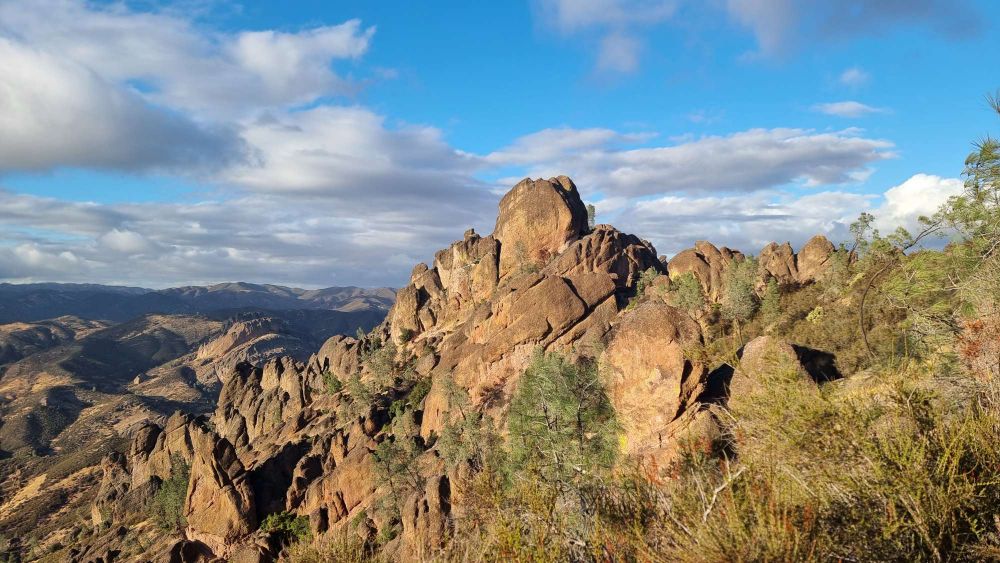
… and you are right in amongst the big birds (close up from a distance below).

Most of these are Turkey Vultures, an impressive bird with a wingspan of up to 6ft. Here’s one playing with its shadow on the crags opposite.
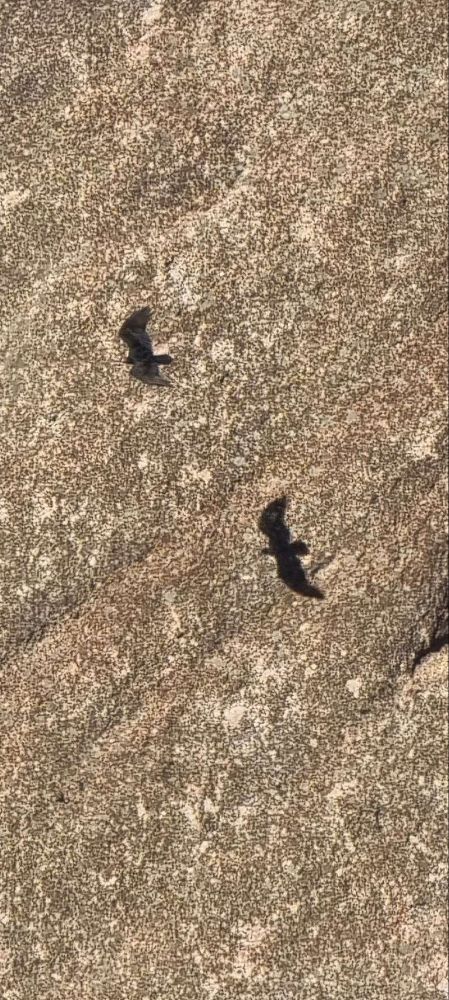
However, these are dwarfed by the mighty Condors, with a wingspan of 10ft, the largest bird in the Americas. There’s a handy “spot the difference” chart in the visitor centre.
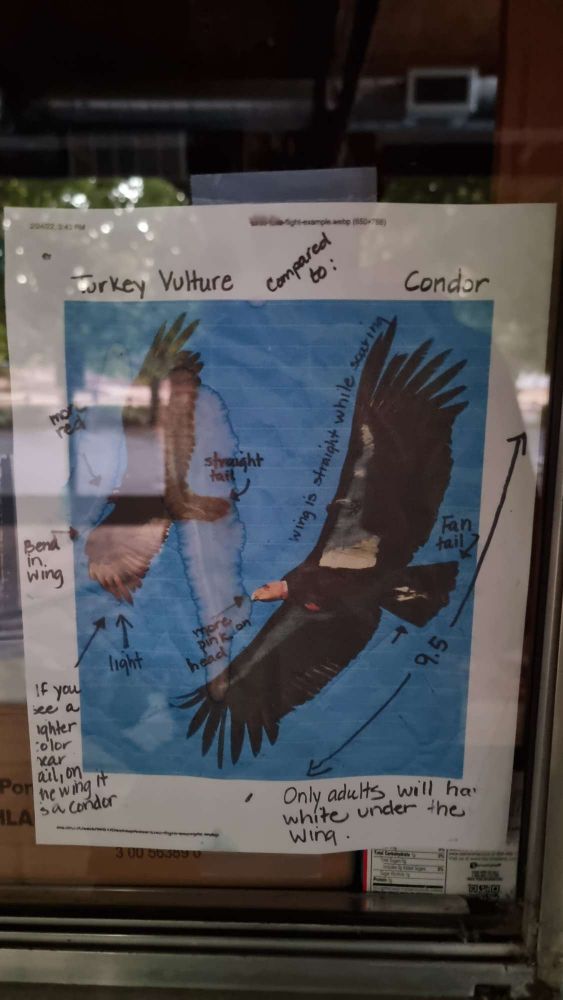
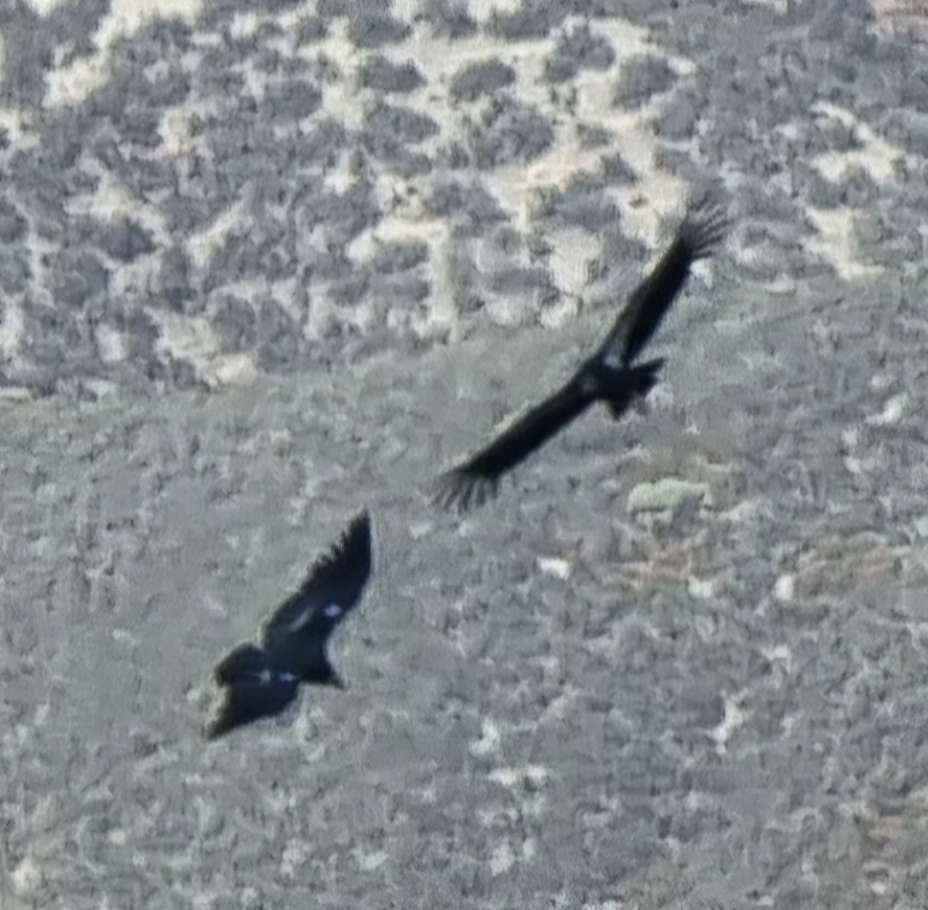
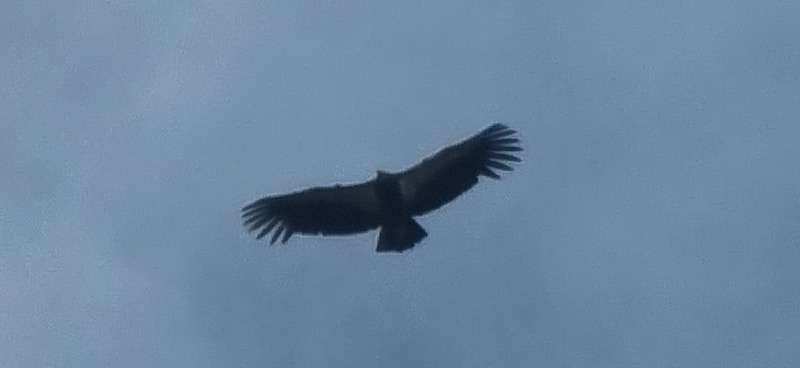
… and I managed to snap this side-by-side comparison.
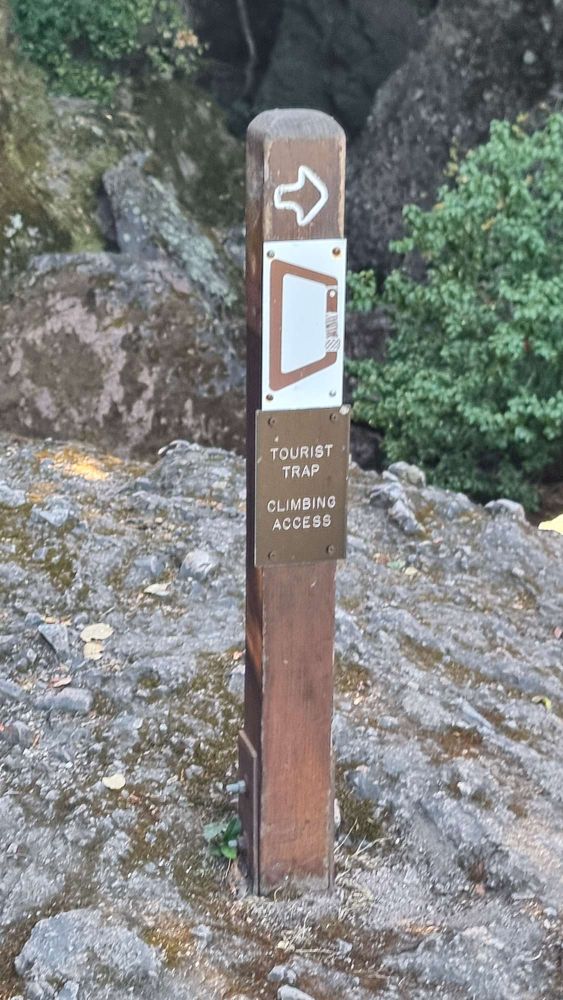
A more leisurely start the following day for Helen’s Birthday and a chance to check out some of the lower level cragging. The more developed and more frequented routes are notably more solid, but still a bit hollow. We visited Teaching Rock, Discovery Rock and found the well-named Tourist Trap Rock (right above the main path) to be the most accommodating of the bunch.
Here’s Helen on Wee Little One, 5.8
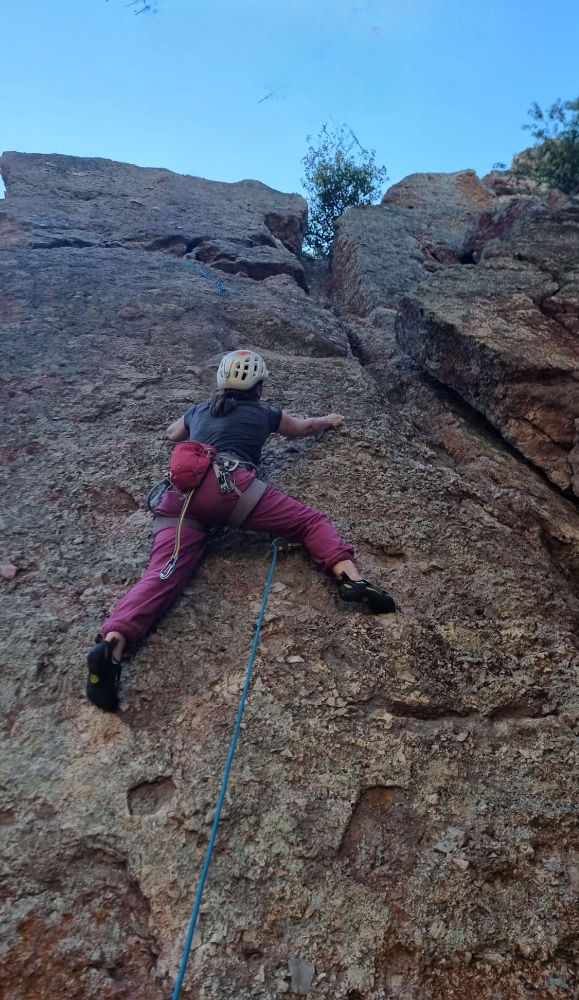
An excellent warm up for an early finish for beer, chip n dip and some distant Condor watching.
Followed by Birthday Cake.


 RockAroundTheWorld