
Central Italy is a bit like northern Scotland (and no, I’m not talking about food, weather or personality traits!) It’s only a couple of hours from West to East and there’s a big hill in the middle. This opens up the likelihood of significantly different weather on the two coasts, and the option to switch if needs be, in search of dryness and sun. So it was that we fled the wet weather system moving in across the Tyrrhenian Sea and headed across into Abruzzo. This mountainous region, east of Rome, contains the highest peaks of the Apennines, such as the Gran Sasso and the Majella massif, as well as a fine stretch of coastline.
There’s an abundance of climbing in the region, although it is quite scattered and not surprisingly tends to be situated at the top of a winding road from the main SS5 artery that links Rome and Pescara. Much of it is also at a moderately high altitude, and some of it is shady, but despite all this we managed to find a base (see “logistics” later) to access four contrasting crags around the Majella massif which would allow for comfortable climbing in March. There would be a wealth of options a bit later into the spring.
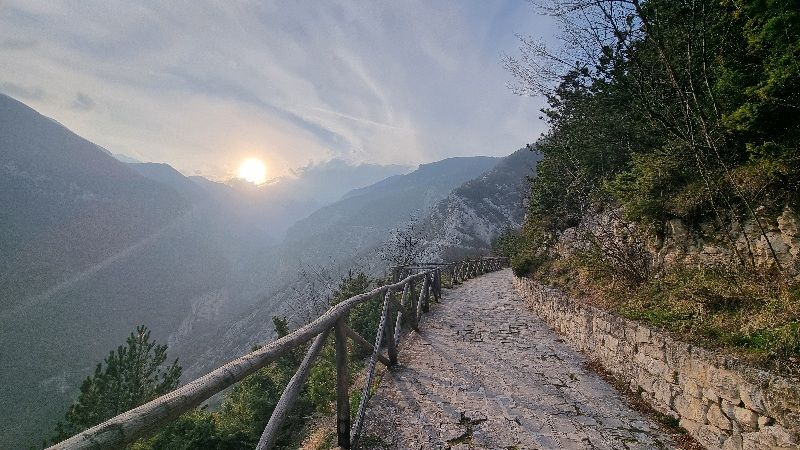
Pennapiedmonte – this series of crags sits high above the impressive gorge formed by the Avella river. There’s a broad, mostly flat path that has been carved across the hillside, part of the G2, which makes this a magnet for tourists, and it was possibly a mistake to visit on a Sunday – the parking was rammed!
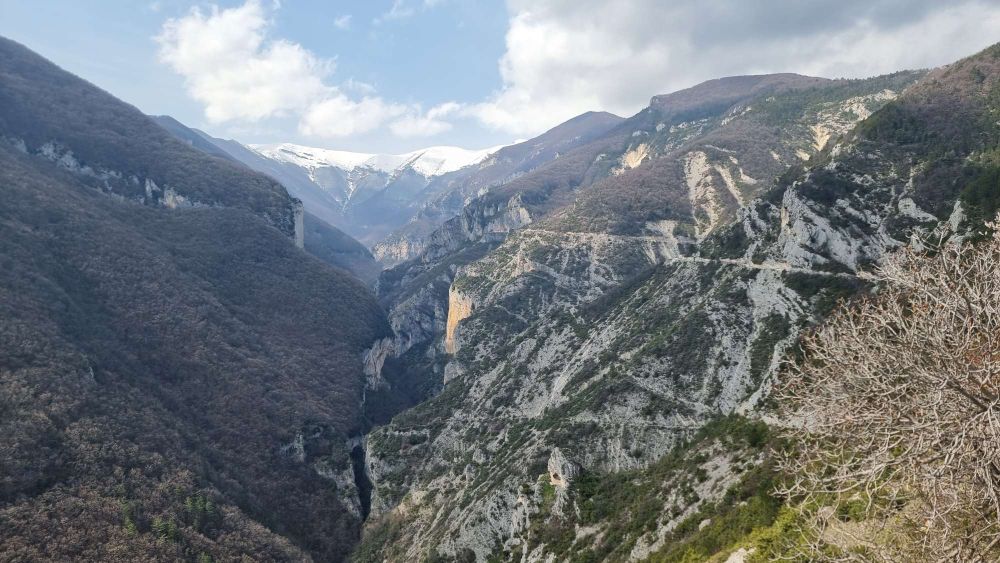
We snaffled pretty much the last spot at the Belvedere Balzolo and headed into the Majella National Park
The Il Torrione sector is the first you come to, just after exiting the tunnel that gives access to the gorge, approached up an obvious ramp on the right of the path.
The local climbers, as well as walkers, were out in force, and there were teams established on most of the routes below 6c.

We trundled up to the far end of the crag and found Peter Pan, 6a+, unoccupied. It’s compact grey/white rock with enough hidden pockets and slots to make progress through the unlikely looking territory (imagine a superior version of the better bits of Chee Dale). Very good but quite tough (to repeat an oft-used phrase from this Italian odyssey).
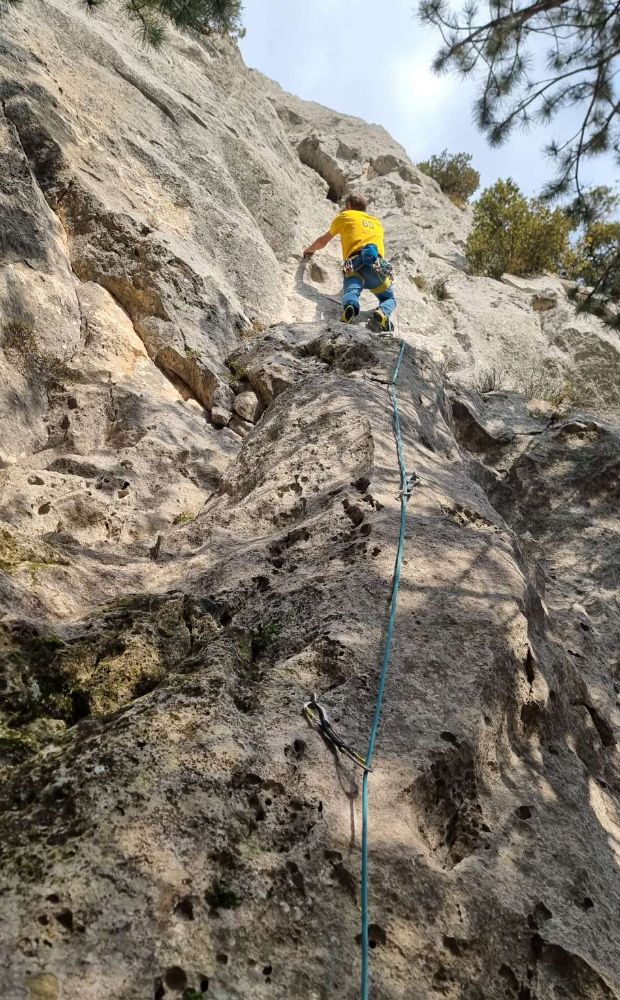
I had a cheeky top rope of Buchetti, 6c, which shared a lower off.
Ghibli, 6a, was also excellent (and for once, fairly amenable!) Se la Mia Pella Vuoi, 6c, was a different prospect – definitely no cigar! Plenty more sectors to explore, above and below the path.
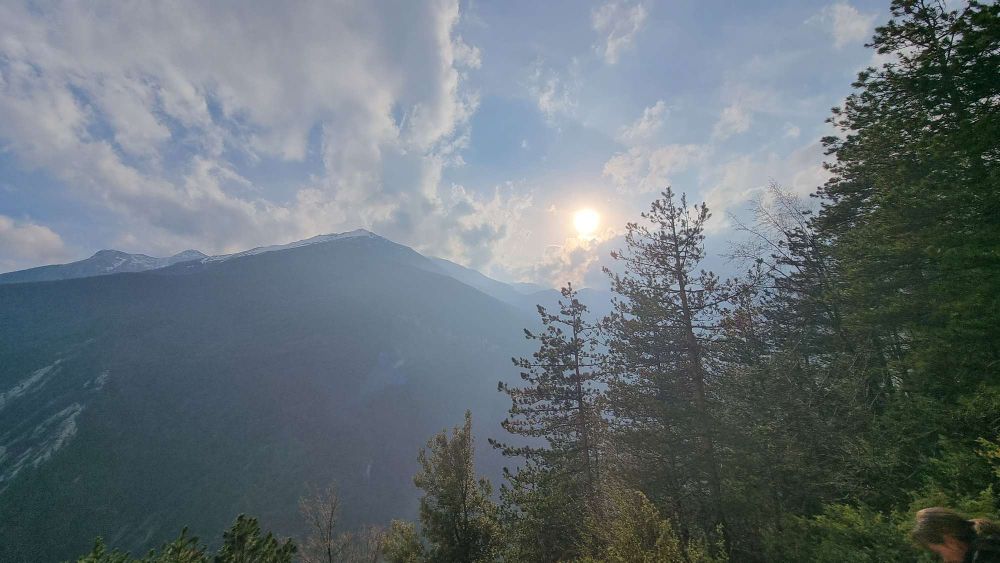
Roccamorice was the crag we’d stumbled across in our research that encouraged us to visit the Abruzzo area in the first place.

300 routes, mostly south facing (just as well as it’s at around 900m) and almost roadside.

The “roadside” bit was quite handy, as we were treated to one of those “drizzle out of a blue sky” weather phenomea, sandwiched between two big snowy mountains.

Not surprisingly, the roadside routes are polished to death. Avantino and Diedrino, both 5b, were quite taxing!
Further up the hill, things improve.

The first sector you come to is…

This is (you guessed it) a tall, grey slab (although it rears up into an overhang in its upper reaches – not my definition of a slab!) Perhaps because of this, a number of routes have a halfway lower off and can be done in two pitches or comb as an extension. Ghermit, has a good but tough 6a first pitch and an excellent (now you’re having a laugh!) 6a+ second pitch. The combo is surely worth 6b or even 6b+.
Fantasia, 6b, promises a “technical crack” and certainly delivers.
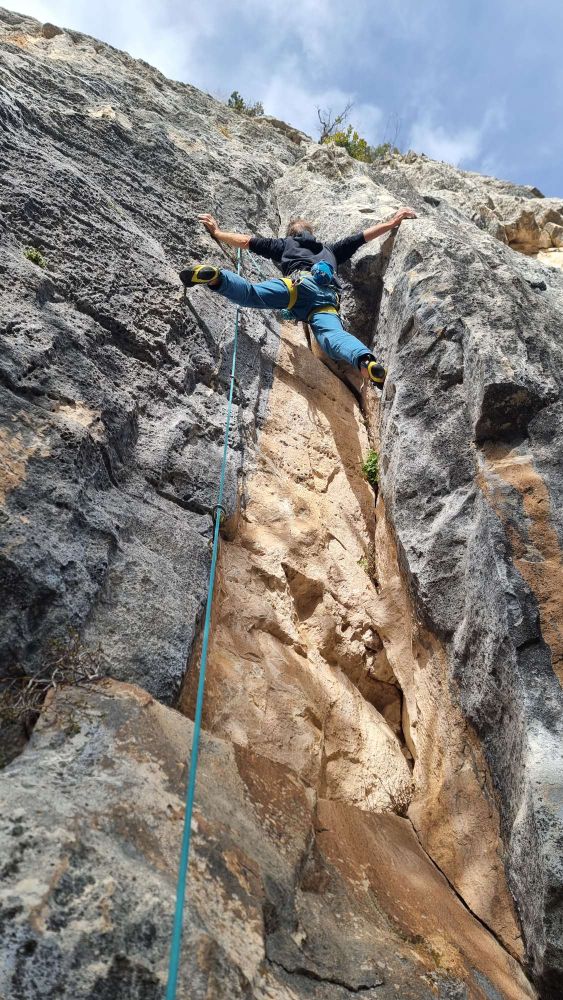
Further right, things steepen up…
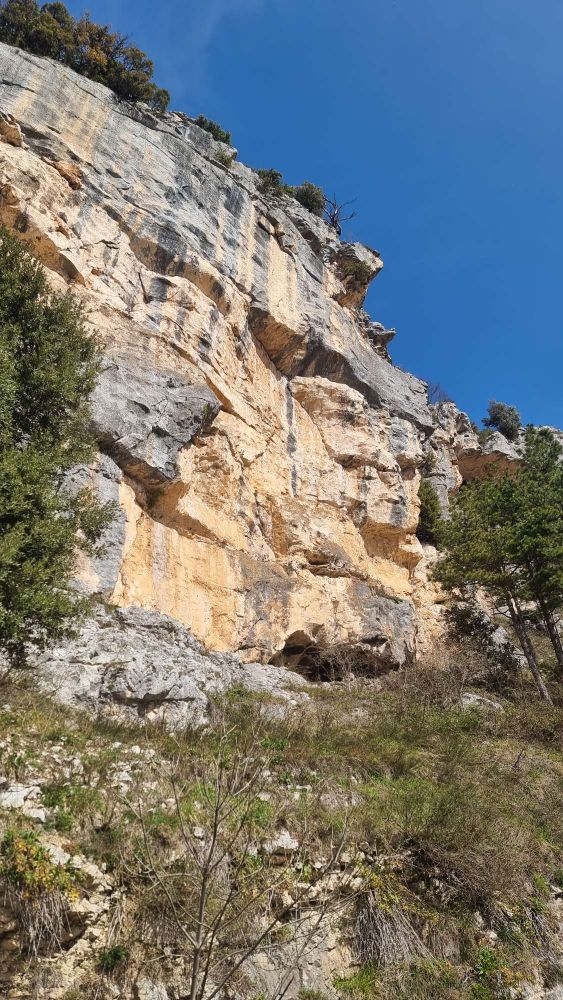
… but the occasional corner or crack feature offers some respite. Monobloco, 5c, is a superb corner resembling a Jenga tower made of giant blocks of Emmental. Fun!

Also on the north side of the Majella massif, Il Guerriero is a more modest crag, but was actually our favourite. Towers of orange and grey limestone set above blossom trees, just a few minutes from the road but in a secluded backwater.

It’s obviously well looked after by local climbers…

… and there’s an honesty box so you can chip in.

Just a few dozen routes, but many of them are 30m or even a bit longer (we managed with a 60 but it involved the occasional bit of down-climbing and of course we had a KNOT IN THE END OF THE ROPE).
Helen warmed up on Commici Renali…
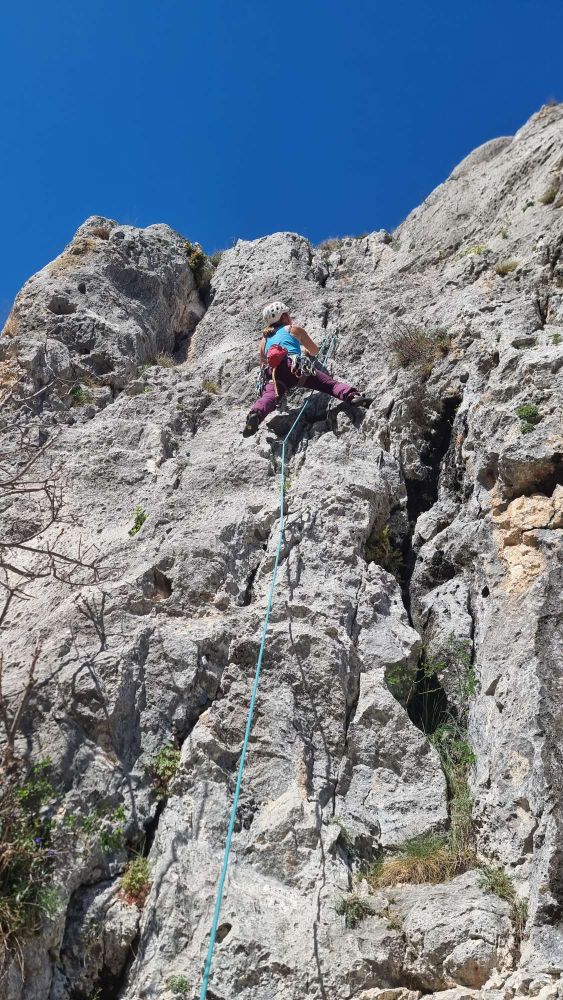
… and also did Quasimodo and Jacintus, both 5c and Donne Vita Libertas, 5b+.
Genesi, 6a+, and Soleado Rock, 6b, were both rope-stretching routes with fairly reasonable climbing rudely interrupted by an uncharacteristic crux. Impressioni di November, 6a+, another 34m outing, was easier if more sustained.

Over on the steeply overhanging left-hand pinnacle – Pilastro Grande – Climbo Rock, 6c, was advertised as a “fissura technica” with the added note: “Dita d’acciaio”. Google translate confirmed that this did indeed mean “Fingers of Steel” and of course I couldn’t resist!
Gole di Fara is a UNESCO World Heritage site that also happens to be home to a bunch of climbing.

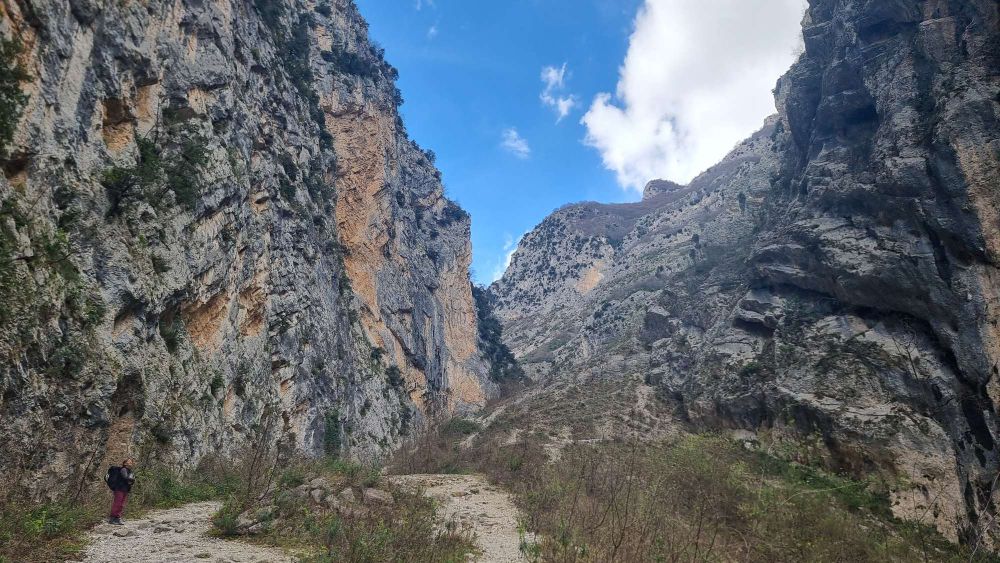
The main attraction here is the gorge which narrows to a 3m-wide slot canyon…

… before opening up into a broad, upper canyon which holds a path that ultimately winds its way to the summit of the highest peak of the Maiella, Monte Amaro (2793 m).
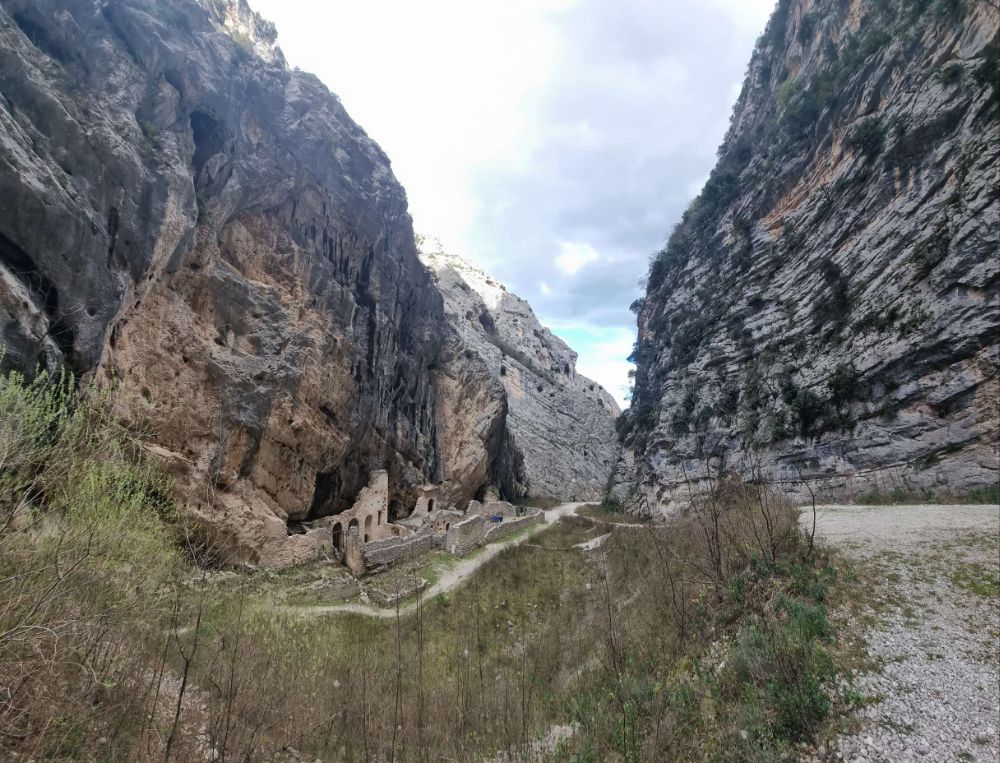
Tucked away, just beyond the narrows, is the monastery of San Martino (or at least its we’ll-preserved ruins).

Dating back to at least 800AD, the Monestary has been regularly buried in debris from floods, and was abandoned in 1818 and only fully excavated as recently as 2009. Here’s the view looking back down the gorge.
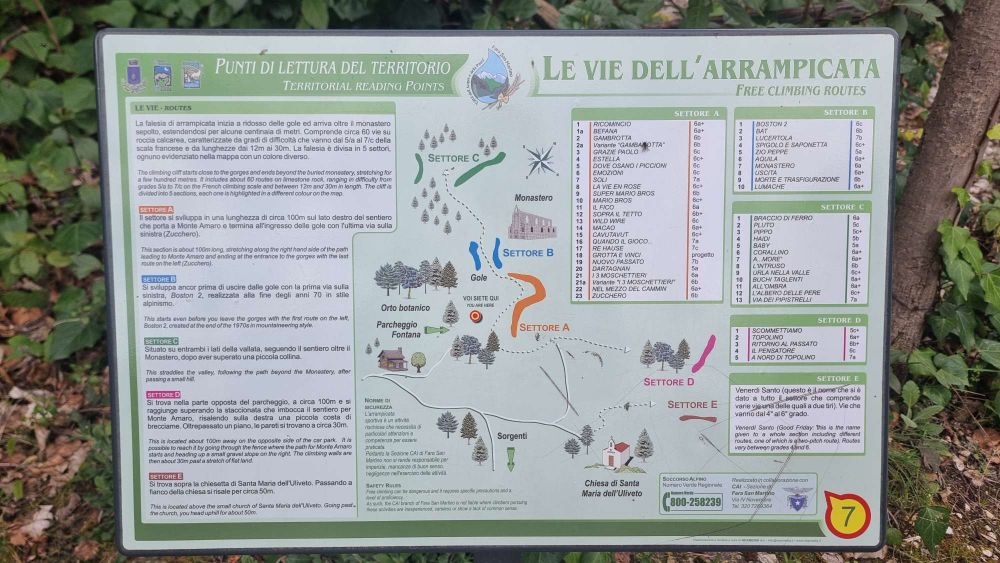
Anyway, enough of ancient monuments – if you’re after an infusion of culture then you should have realised by now that RockAroundTheWorld isn’t the place to find it! The thoughtful National Park people…
… have provided a nice topo at the mouth of the gorge, and there’s plenty to go at.
Inevitably, the lower gorge and narrows are polished to a fine sheen – not by climbers on this occasion, but by the torrents of water and debris that formed the canyon. Further up, there’s some really impressive rock architecture, but the majority of the developed climbing is situated on a couple of walls that run perpendicular to the main gorge. Il Muretto and Piz de San Martin.

To be honest, we didn’t think the climbing measured up to the surroundings. Peppinuchio, 6a, and Via Lattea, 6b had some of the most blatantly “engineered” holds I’ve ever come across. As well as the occasional drilled pocket, they each featured a number of carefully crafted crimpy finger jugs. Bizarre!
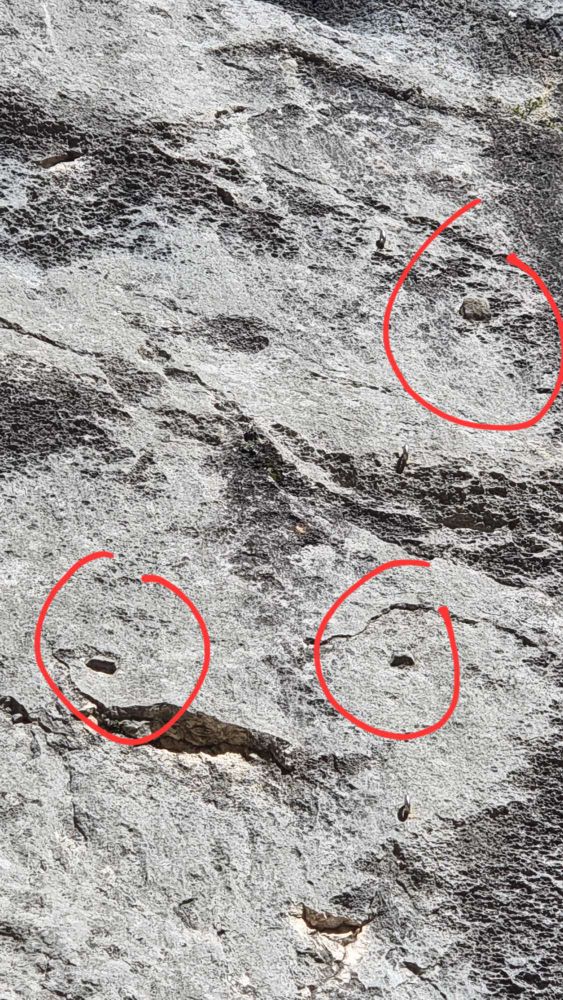
As for Boston 2, the leaning 6c corner crack at the start of the narrows – I really should have known better (there’s now a bailer biner about halfway up to mark the point where my sense of humour ran out!
Probably the best route of day was Helen’s lead of Dietro Langolo, 5b

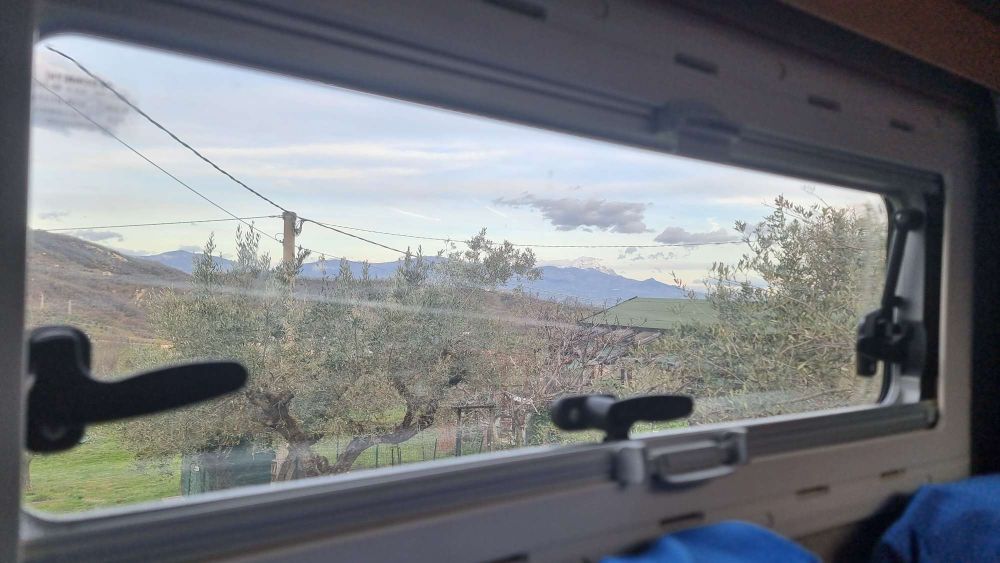
Logistics: We based ourselves at Kokopelli Camping Retreat in the village of Serramonacesca. The website and our subsequent WhatsApp communications were in Italian, so imagine our surprise at being greeted by Kevin and Jacq, an expat Brit couple who abandoned the rat race about 18 years ago and established a new life in the mountainous idyl of Abruzzo. It’s certainly a relaxing spot to spend a few days, and gave access to all these crags in a 30 to 45mins drive.

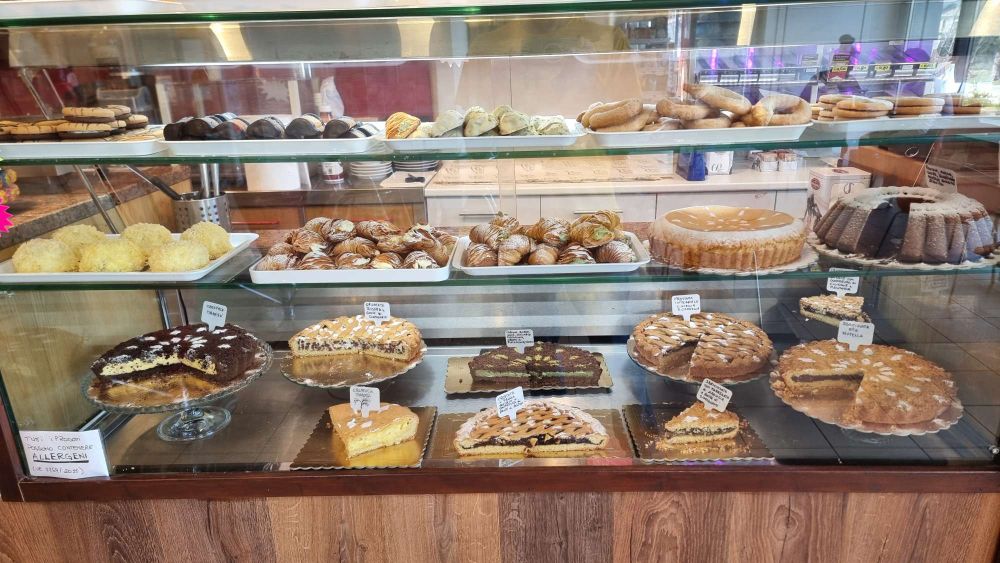
Also worth giving a plug to the Bar della Posta panini emporium on the way to Pennapiedimonte for a great source of healthy (ok, delicious!) crag food, though pretty much every such establishment seems to be similarly tempting.
 RockAroundTheWorld