
Malaga is one of eight Provinces of Andalusia (can you name the others… Almería, Cádiz, Córdoba, Granada, Huelva, Jaén, and Seville). From the perspective of the average British tourist, it’s synonymous with the Costa del Sol flesh pots of Marbella, Fuengirola, Torremolinos etc. British climbers, on the other hand, will speed inland from Malaga airport to the world-renowned venue of El Chorro. I wonder how many realise that, destination venue though it is, it represents barely a third of the climbing in Malaga and less than a sixth of what’s available across the whole of the region.
The latest addition to the guidebook series for Andalusia covers the southern half of Malaga – alongside some crags near the coast and others in the vicinity of El Chorro (but not EC itself) it also has a section on Sierras Interiors (Inland Mountains) and that’s where we headed.
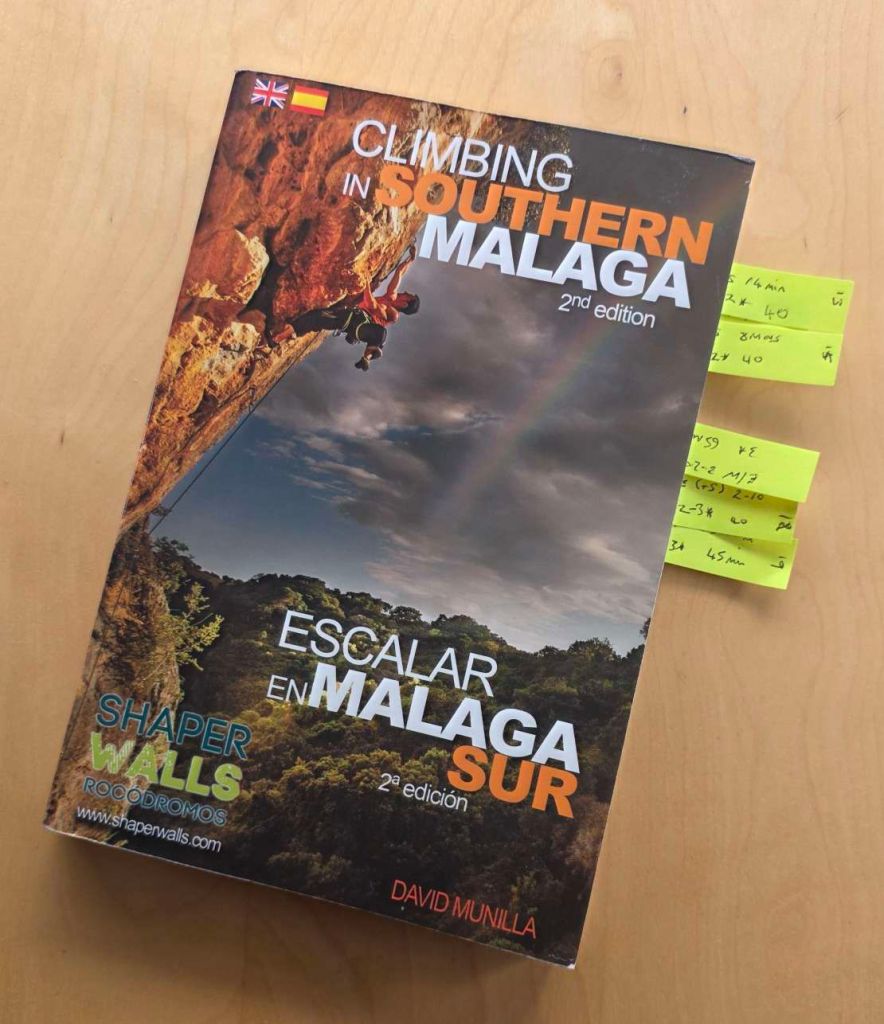
We actually based ourselves in Olvera, just over the border in Cádiz (see next post). The forecast was iffy, to say the least, across the whole of Spain, but no worse in the Malaga Hinterland than anywhere else (Costa Blanca looked like a washout). This post contains a higher proportion of reccying to climbing than most, but you know what they say about reconnaissance. Here goes…
Bufones
Much of the Inland Mountains climbing is situated around the pretty town of Teba, a classic Pueblo Blanco (albeit one that’s outgrown its pueblo status). After a day of biblical rain, we were scratching around for any bit of dry rock, and Pared Bufones, with the promise of a southerly aspect 15mins from the car, looked to be as good a bet as any.
We were quite surprised to find the small parking area already occupied by a couple of vehicles, and even more so on arriving at the crag to find an eclectic team of three Norwegians and a random French-American. They were surveying the wet streaks forlornly, but were galvanised into action by our arrival.
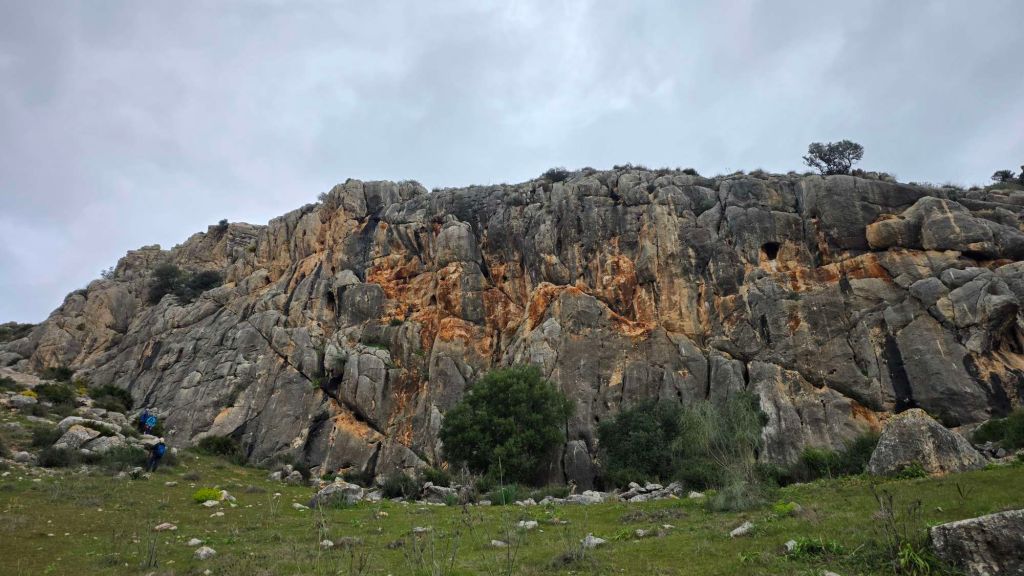
Most of the routes only have numbers rather than names in the guidebook (funny how much this detracts from the experience, even though the names would otherwise be in a foreign language). Starting on the righthand side of the crag, we navigated a few damp streaks to get a rope up #4, 5c and #5, 6a+, by which time things had started to perk up a bit.
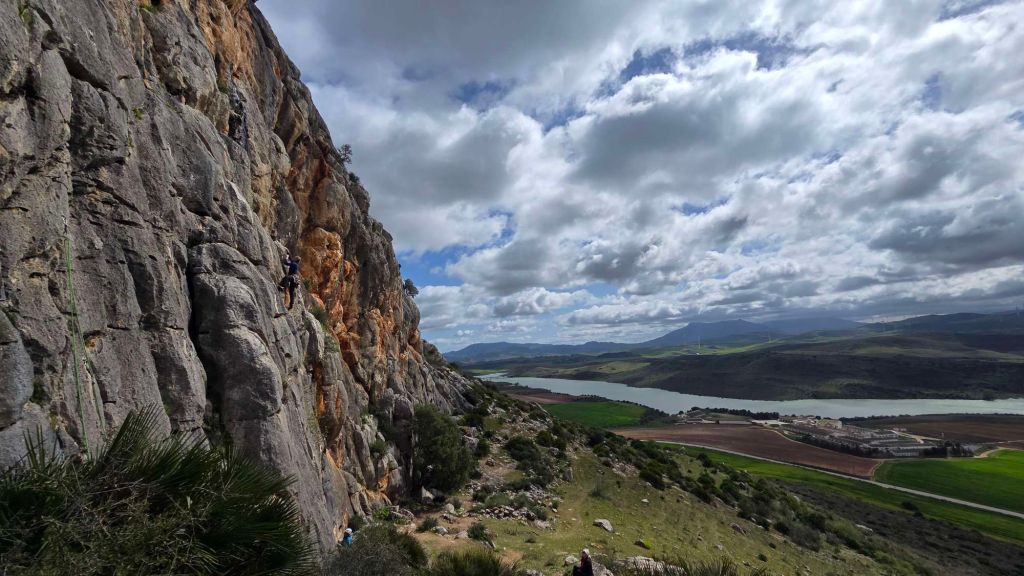
Helen did a clutch of routes on the left hand side, including #24, 5c
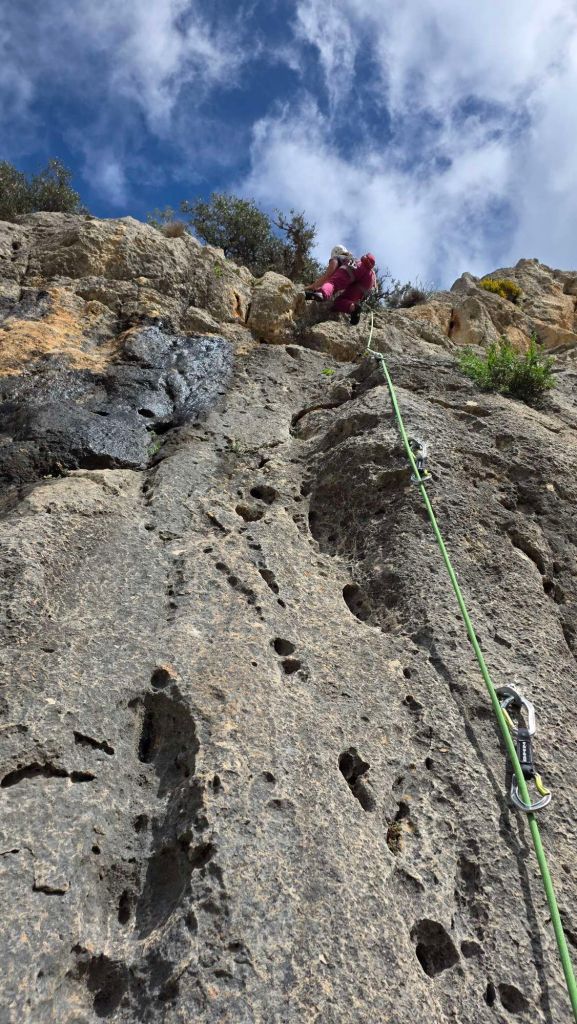
… and #21, 6a…
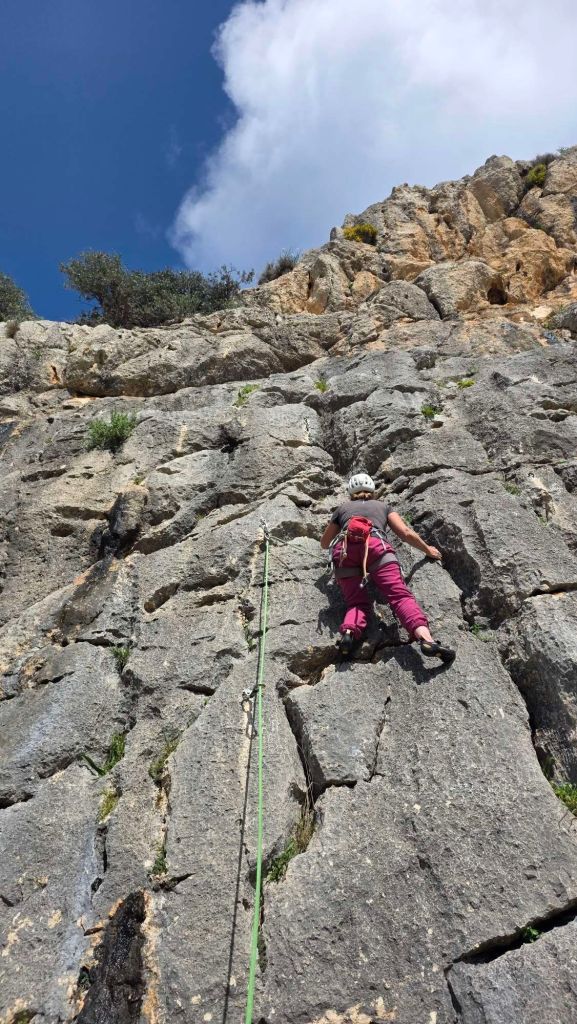
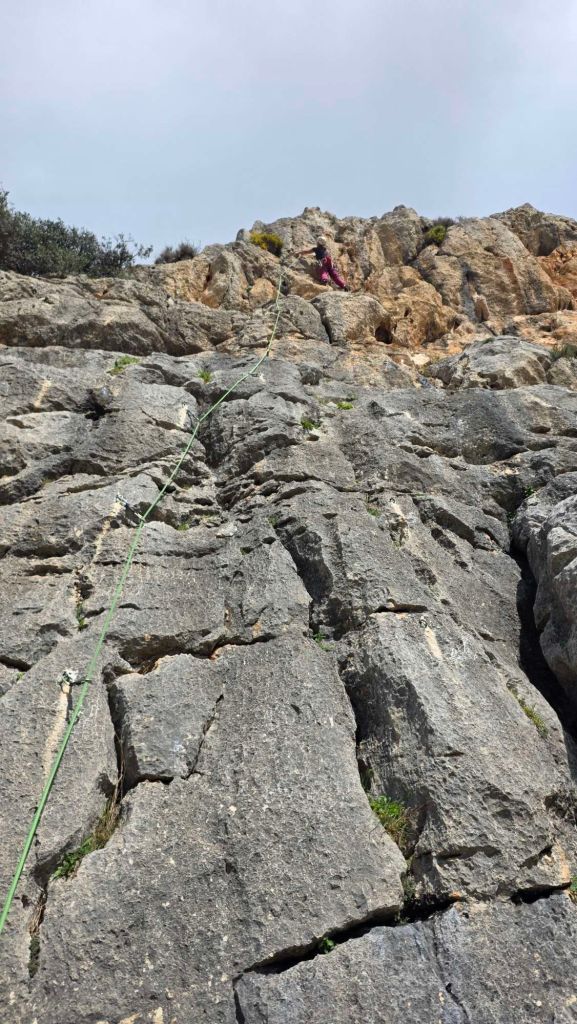
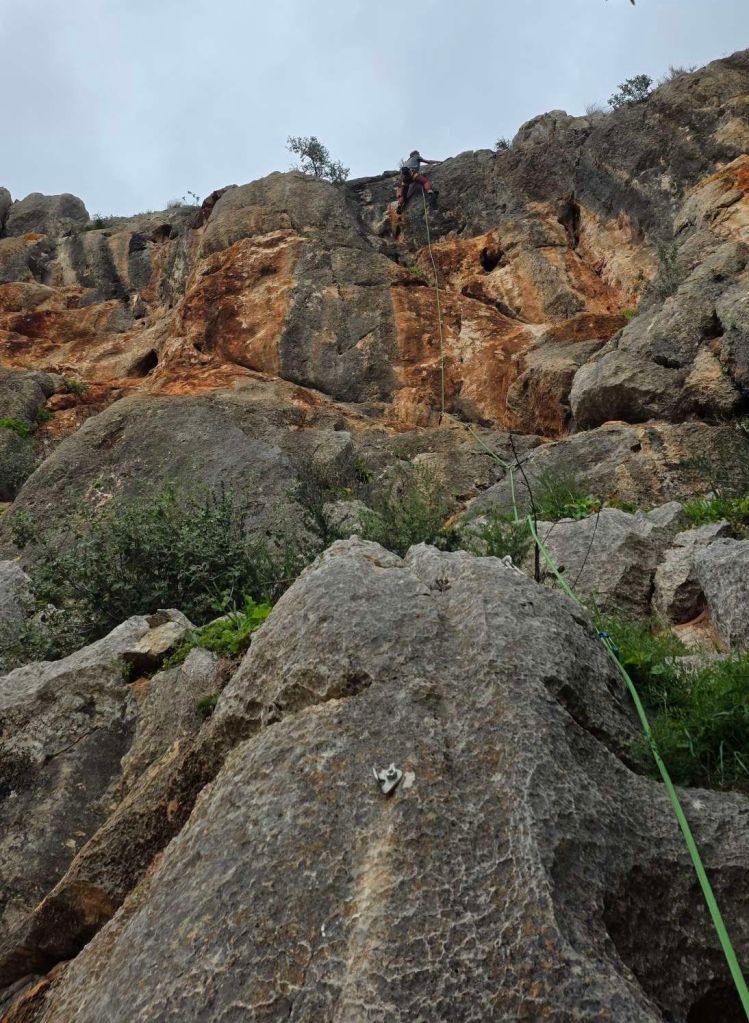
I did one of the routes up the central overhanging cave sector, #12, 6c (nowhere near as hard as it looks!)
Castillo de Teba
Great view across to Teba itself and the Castillo Sector.
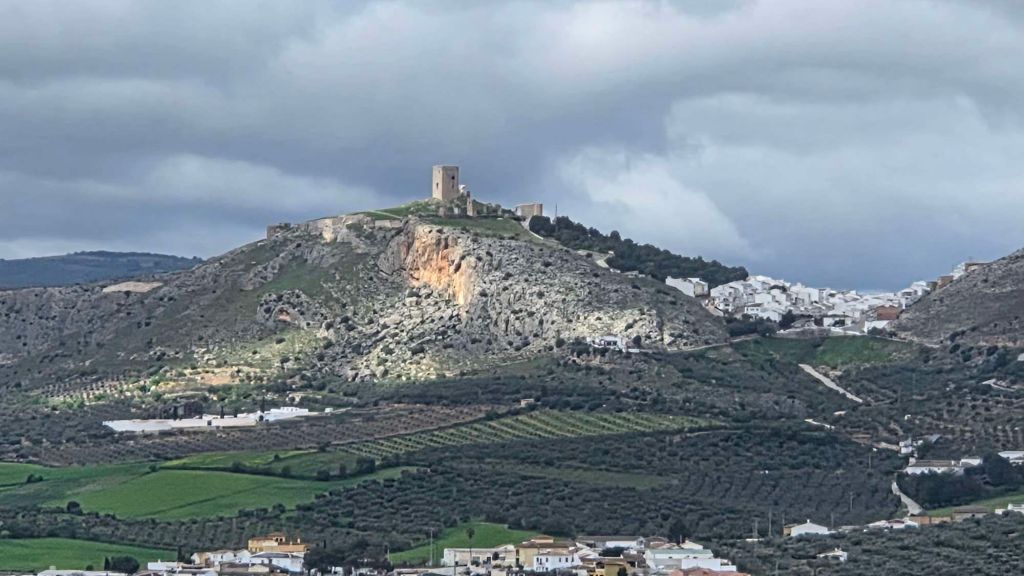
We gave this a drive-by recce, but didn’t get around to climbing there. Over 50 routes, mostly in the 7b to 8a range but with a day or two’s worth for mortals. Well worth returning for on a future occasion.
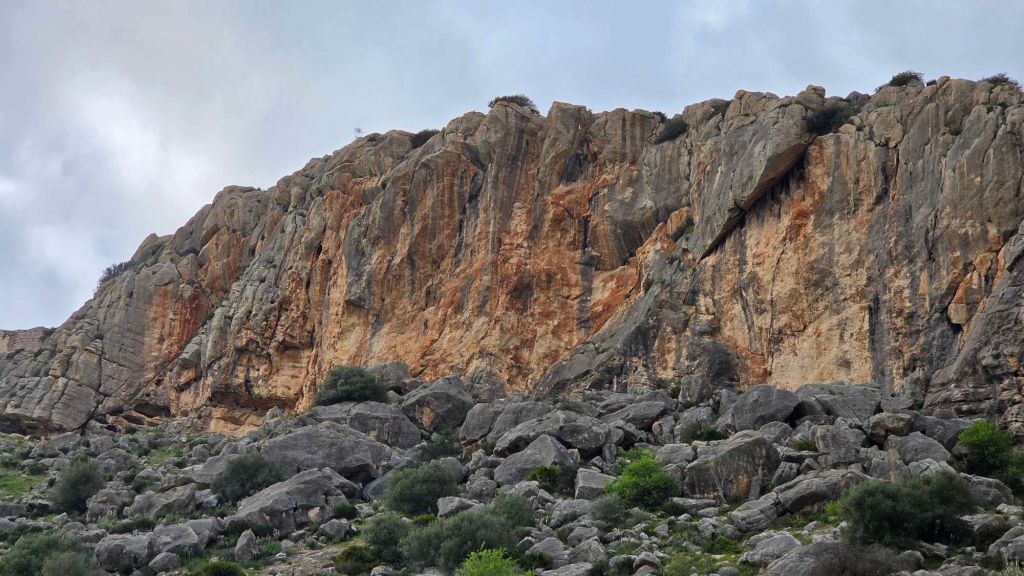
Tajo del Molino
We also literally drove by this sector, with another 70 routes on either side of quite an impressive gorge (the amount of water is probably unusual as there’s been a LOT of rain). Sadly bird banned January through August.
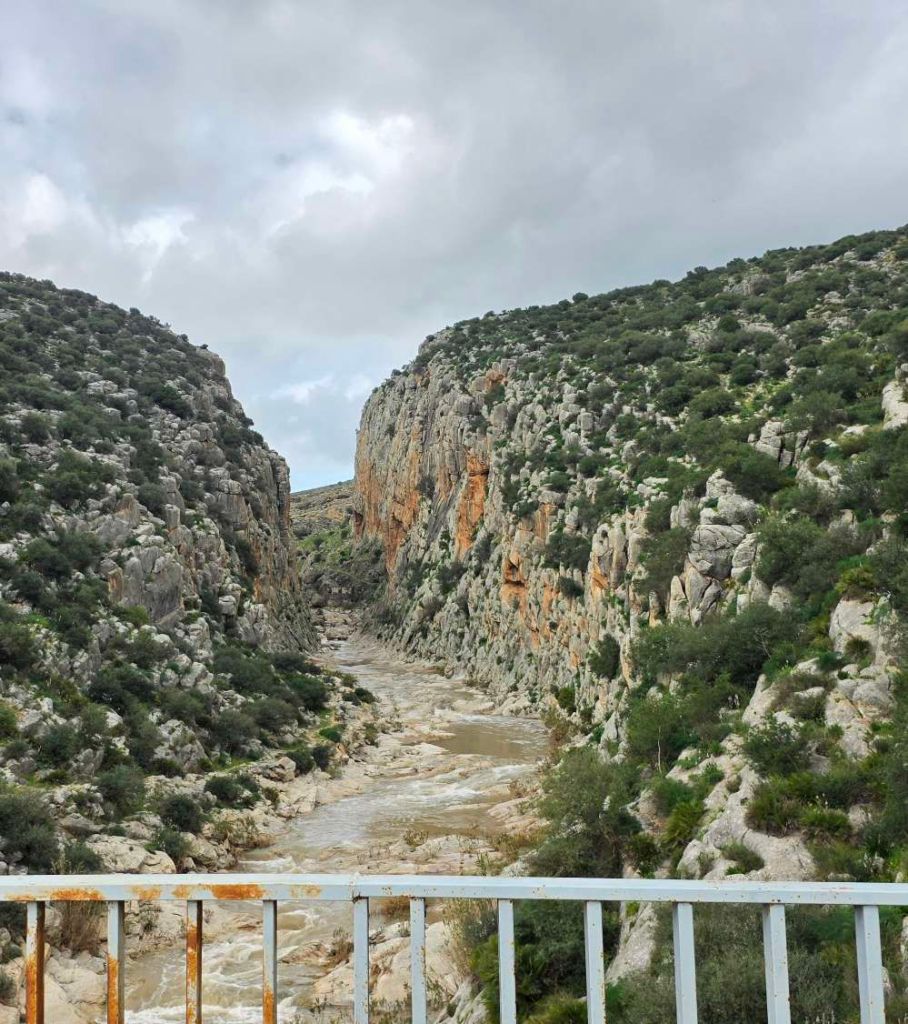
Tajo de los Rojos
This is a stupendous crag, tucked out of sight around the hill from the town. If you head towards the second parking area mentioned in the guide it makes for a very easy approach – a more or less flat walk of less than 10mins on a well-made path.
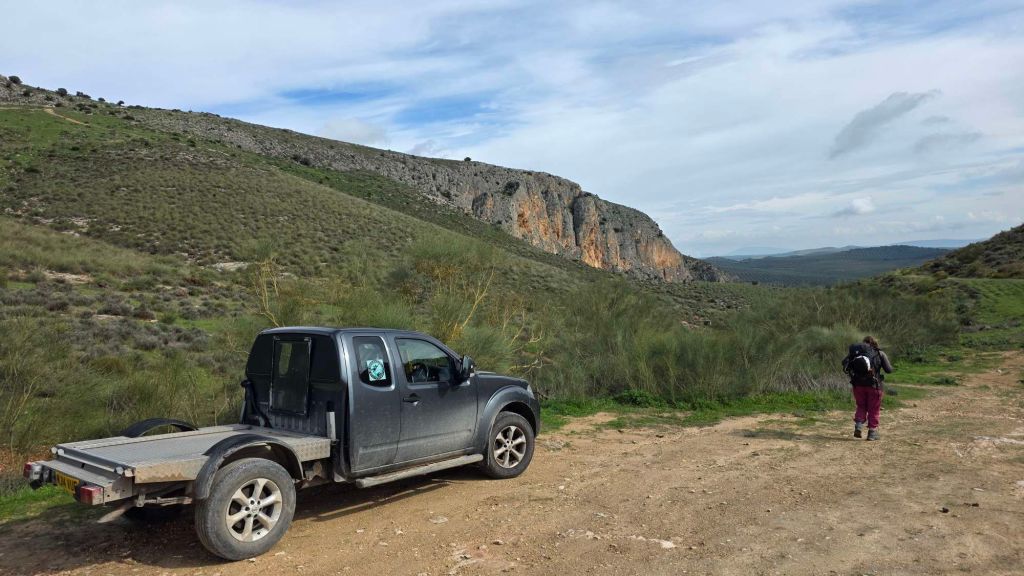
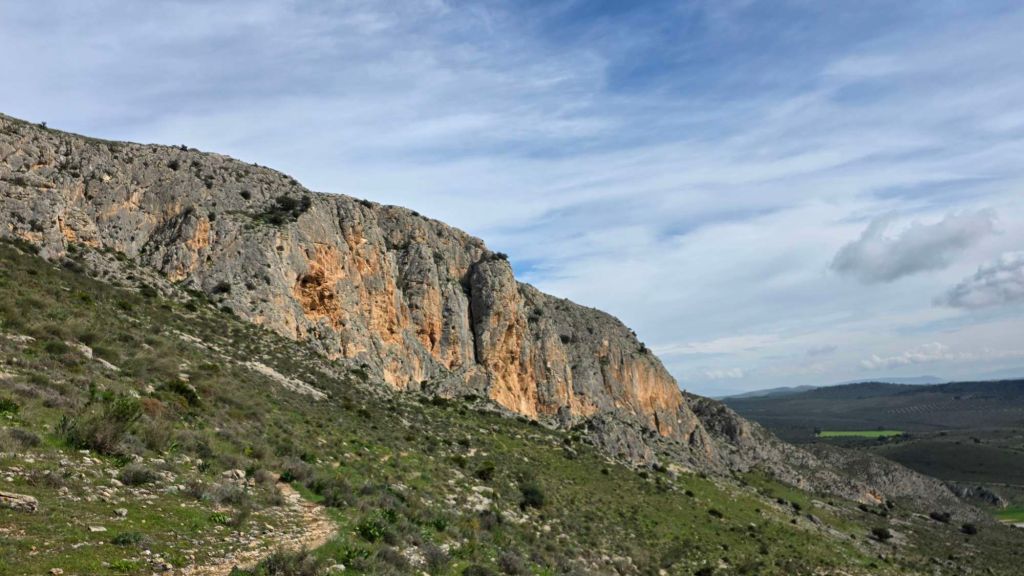
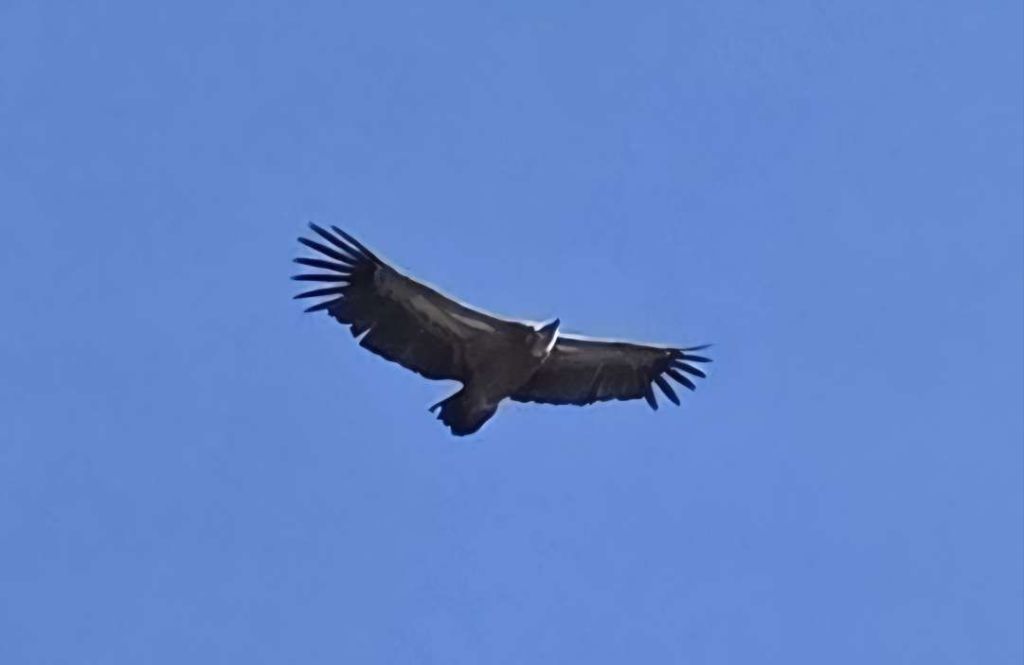
Endless circling Vultures – you wouldn’t necessarily associate Malaga with squadrons of these magnificent creatures, but they’re ubiquitous in the skies.
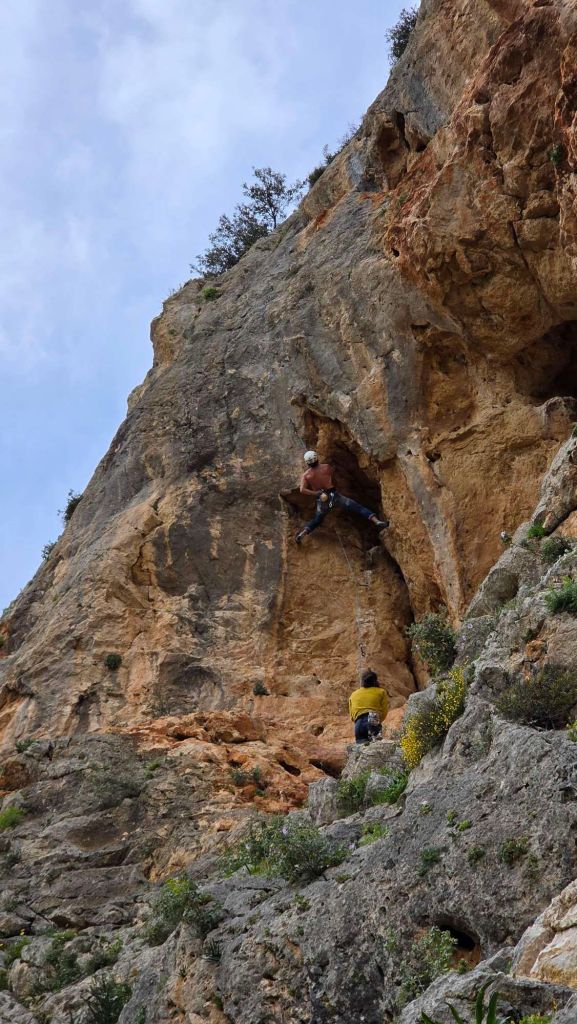
For once, we didn’t have the crag to ourselves, with a pair of local wads projecting this 7b+ on Sector A (again, a dearth of route names in the guide).
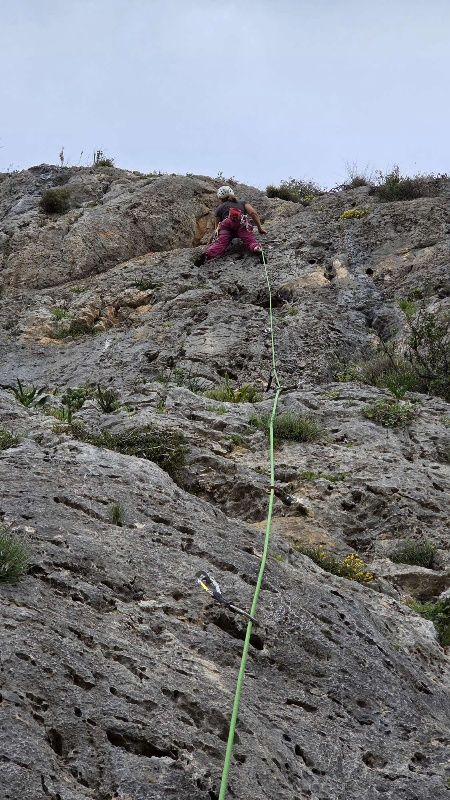
Helen did a trio of V+s on the left hand side, all pleasant…
I did #8, 6a+, and #9, a 40m rope-stretching 6c extension.
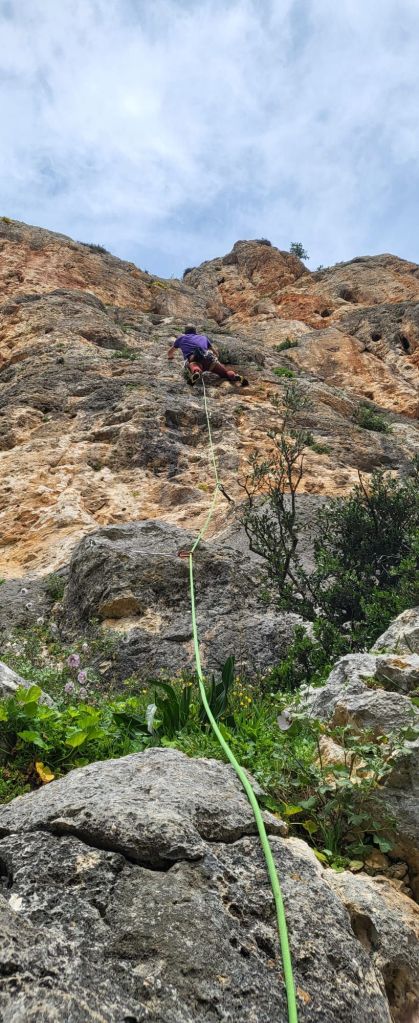
… and another of the 6cs on Sector B.
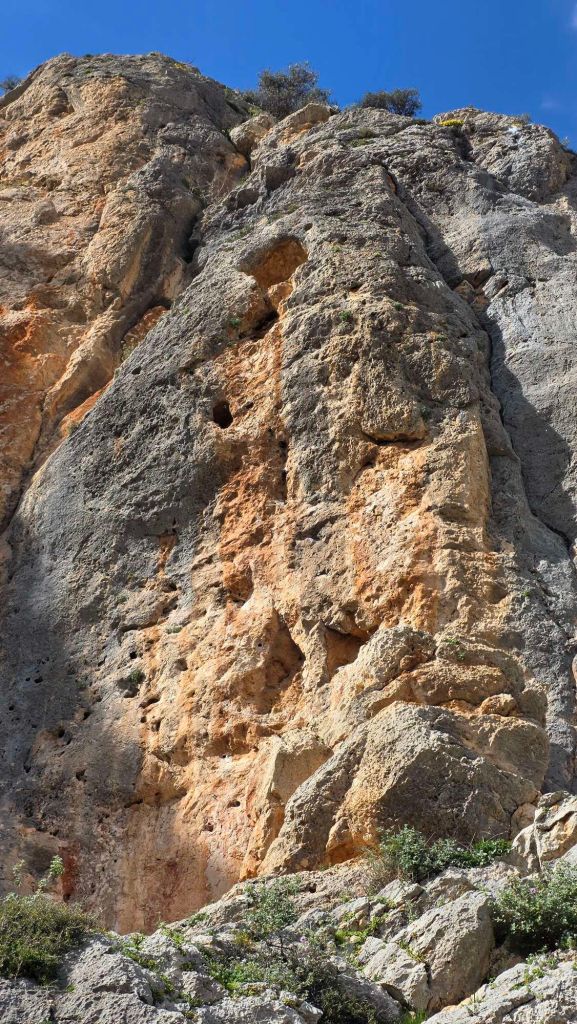
Helen raved about the long corner of #7 on Sector D, just left of the impressive orange wall of Sector E. Loads more to come back for.
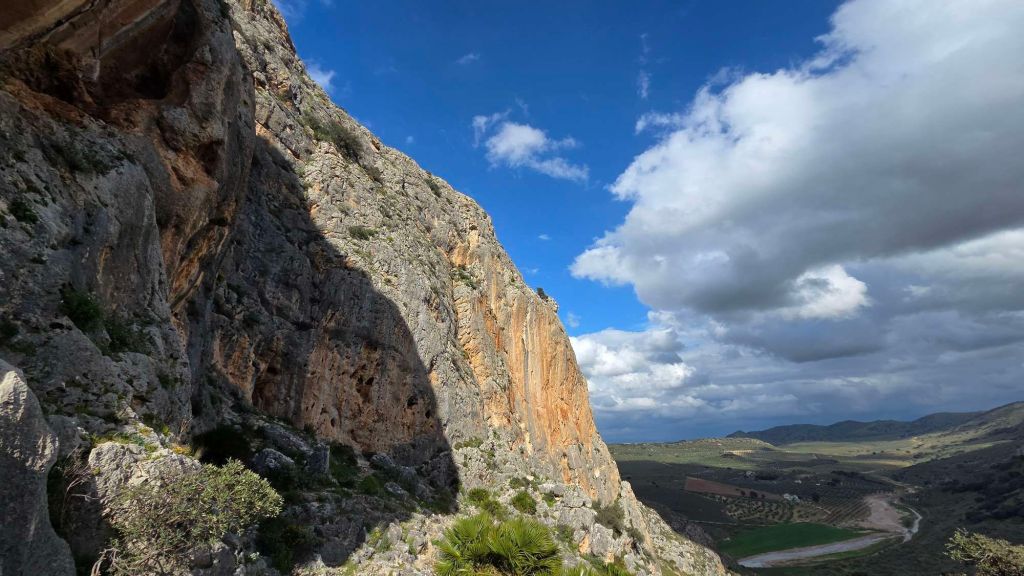
Cañete
Not far from Teba, the village of Cañete has an unusual urban crag beneath the castle walls, which we didn’t explore. We were much more inspired by the long line of cliffs strewn across the hillside above.
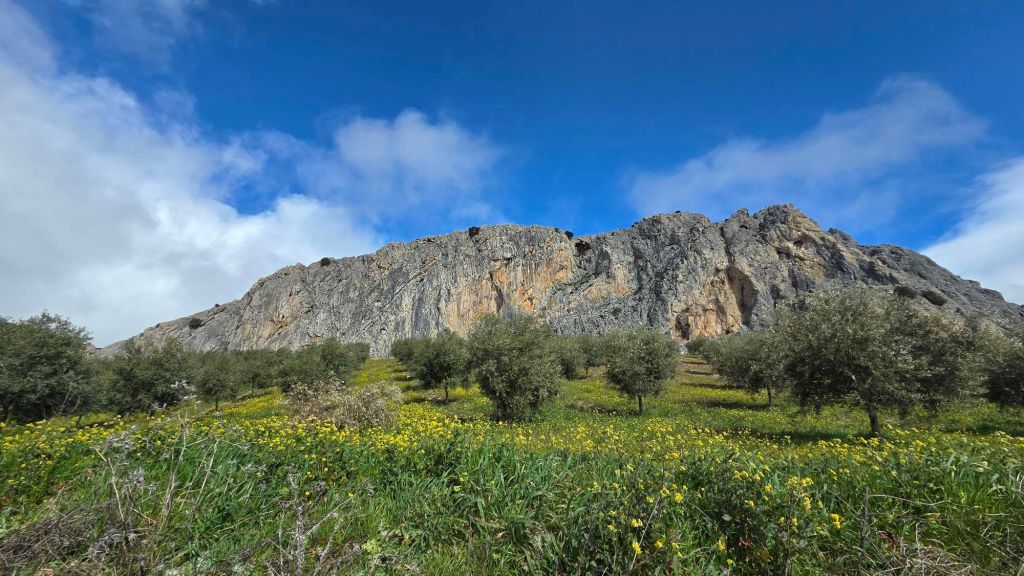
The guidebook is a bit vague about the parking and approach, suggesting it is possible to drive up a (private?) track, but this access is blocked and you’re much better off parking near the school on the roundabout and walking up the Sendero de las Carboneras…
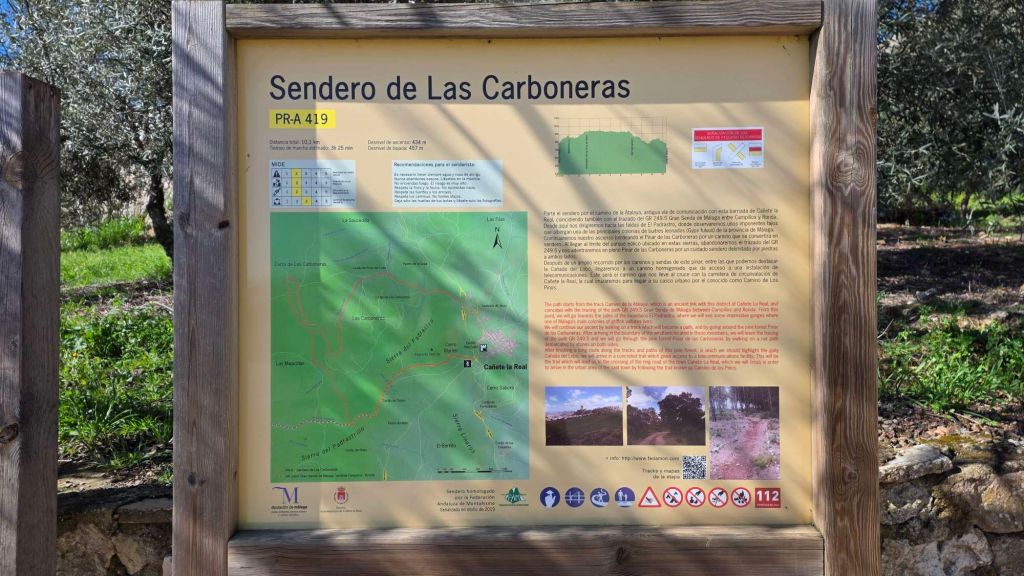
… which skirts the foot of the crag.
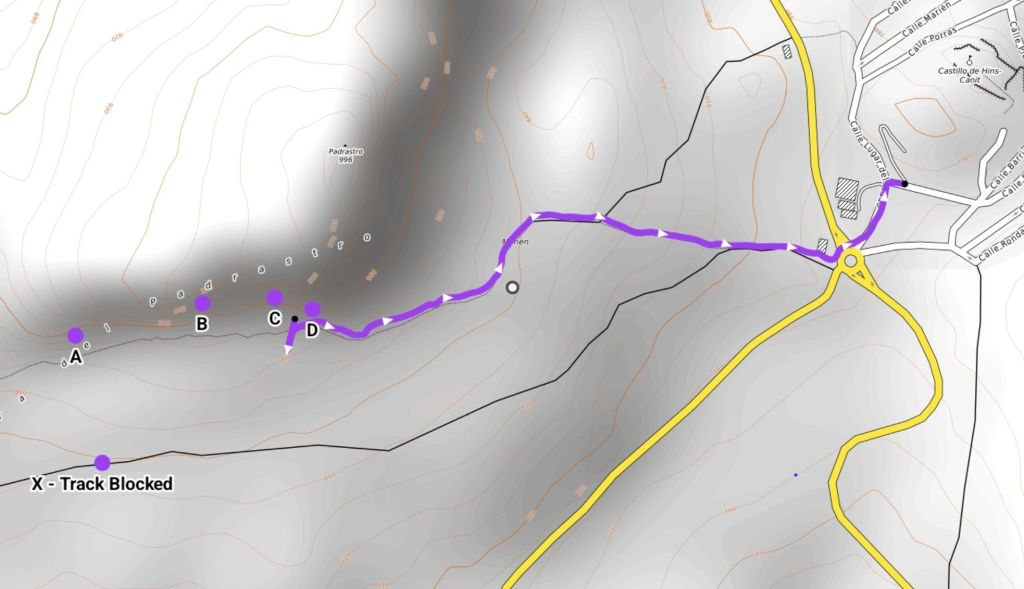
We started off on the far left hand Canada de los Chinos sector A, and did Gabilla Arvejas, 6a.
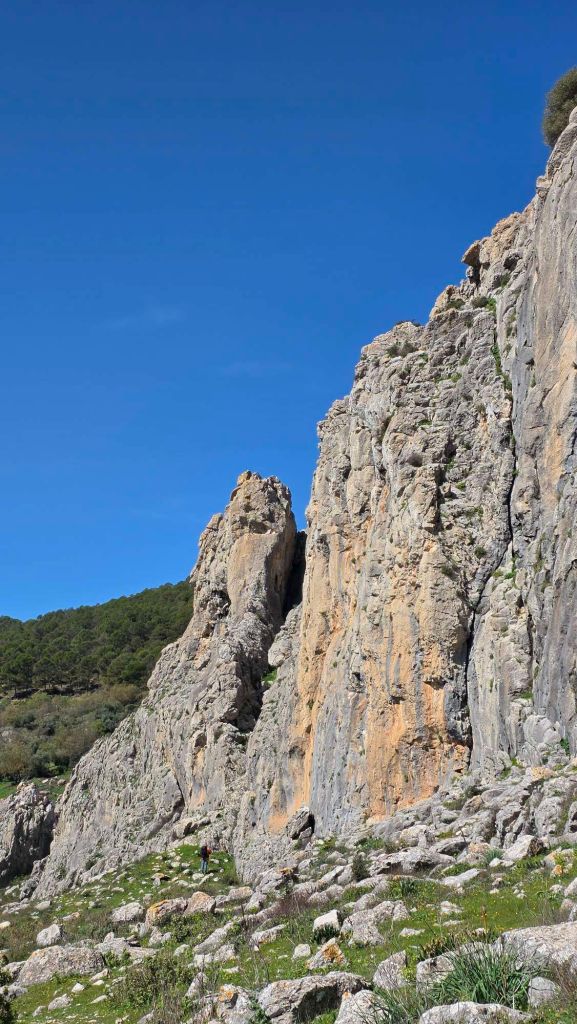
The central Cuevas de los Aviones section B of the crag is quite impressive, with some tough routes and long extensions.
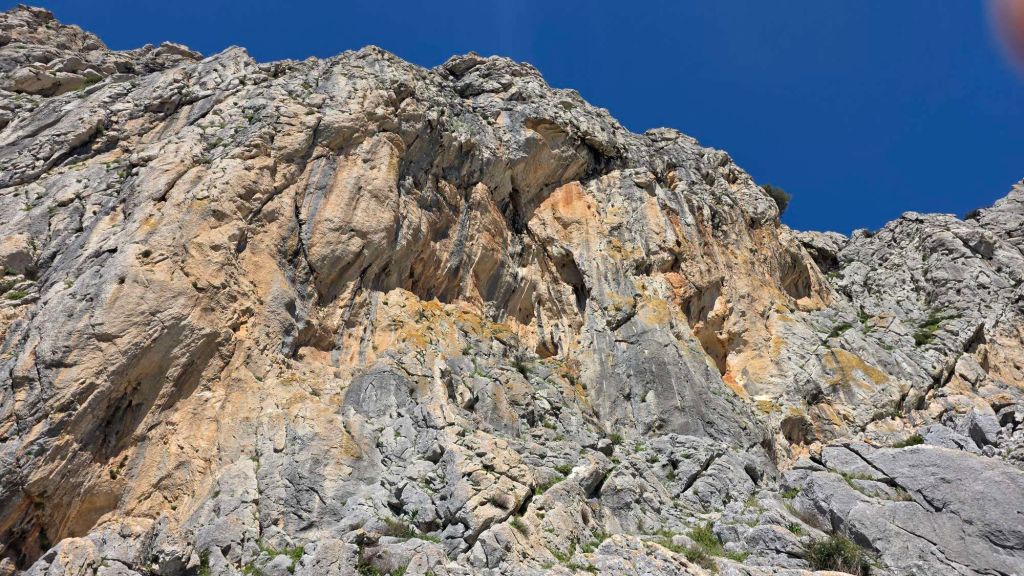
I did La Ventanita which starts with a V+ pitch up the hourglass shaped pillar in the centre of the cave before hauling through a roof with a 6c extension to the full height of the crag.
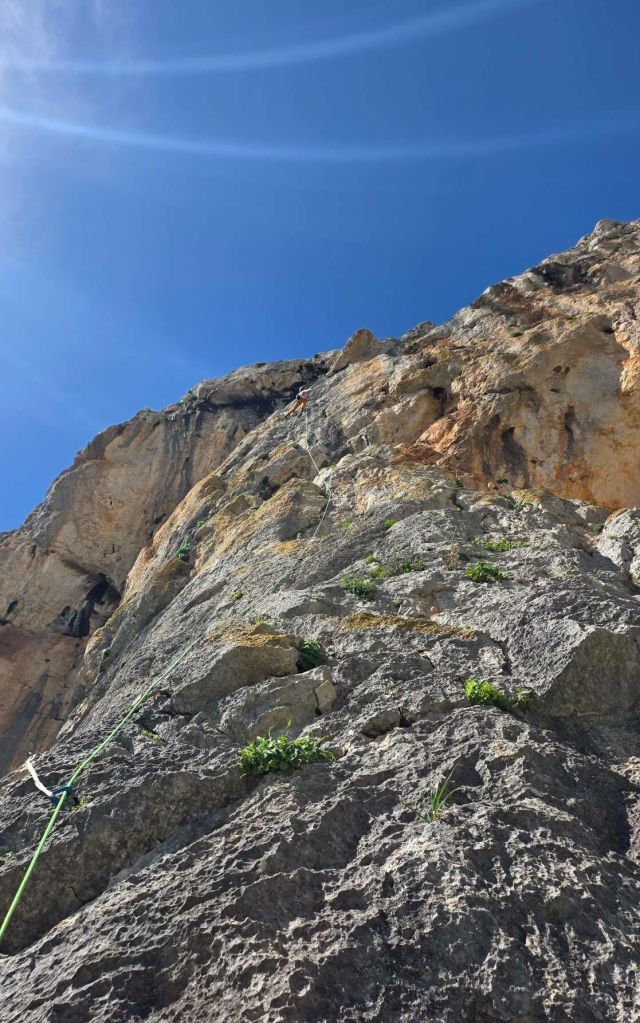
Further right, sector D, Dias de Escuela, has some shorter but fun routes on good rock with surprising holds, including Artimana, 6a.
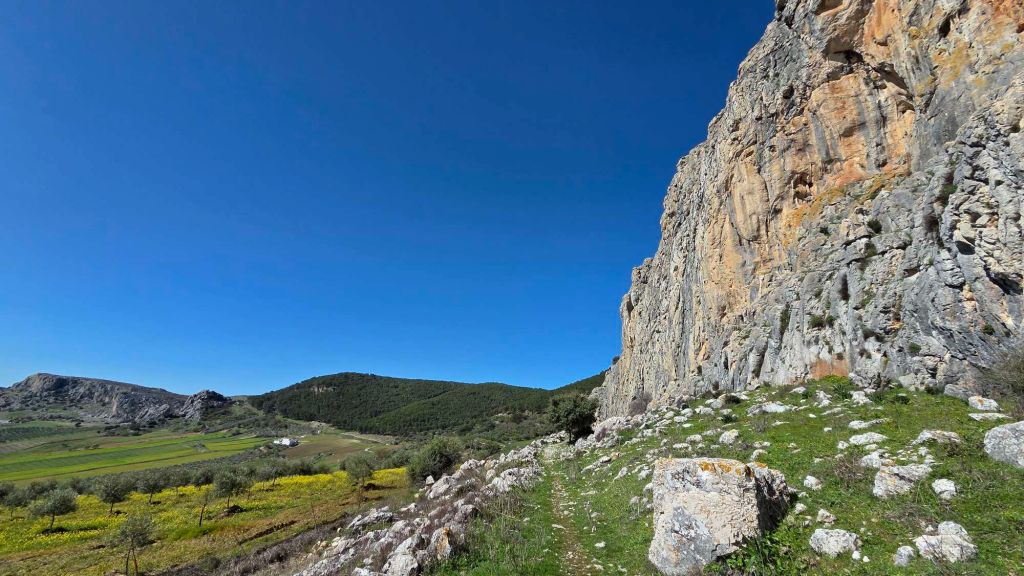
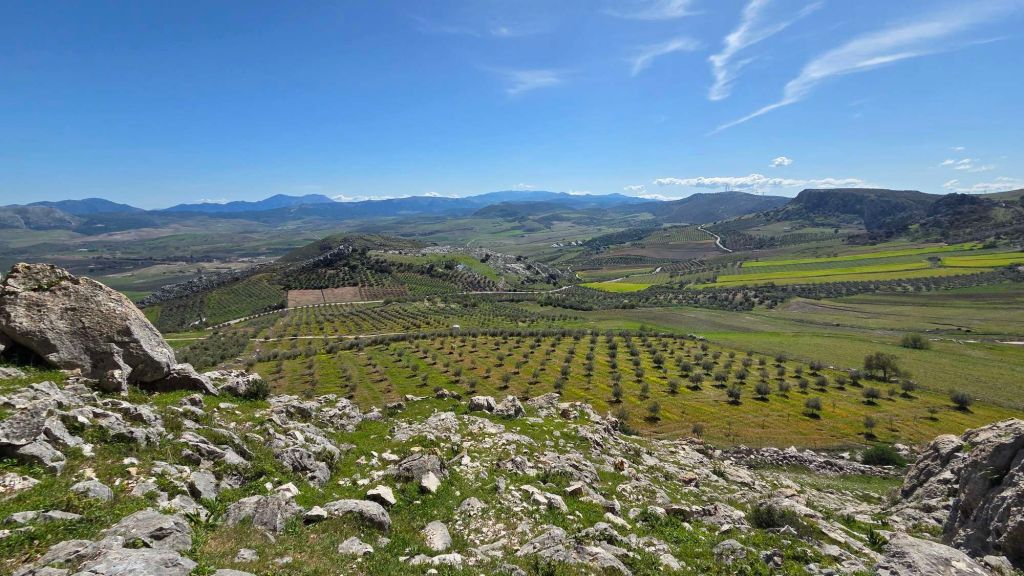
Gorgeous outlook over neatly ordered olive groves…
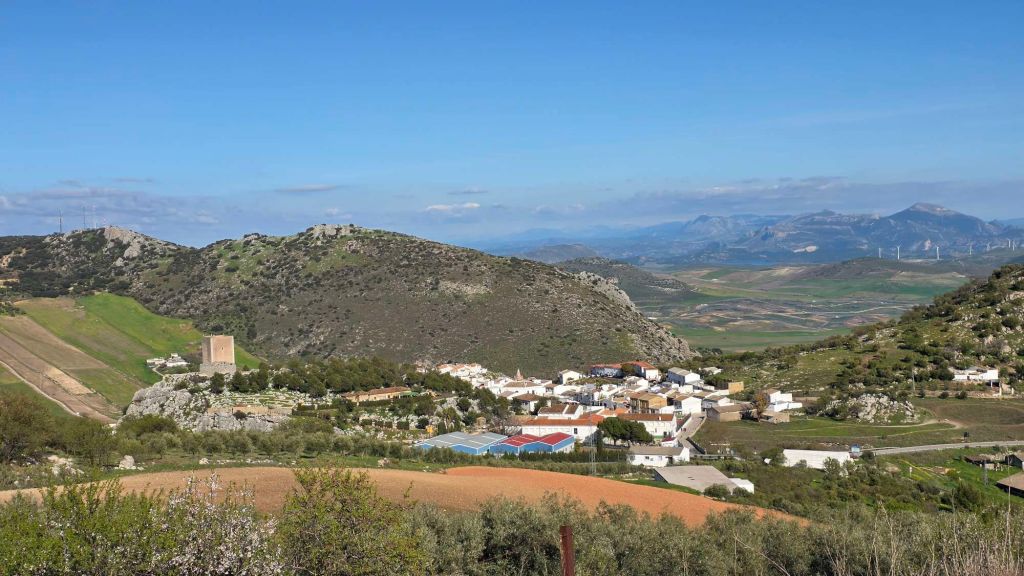
… and down to the pretty town.
 RockAroundTheWorld