
Our (or rather “my” if I’m honest) rather ambitious agenda for this Paroi de Légende trip came in two parts: 1) aiming to bag three 1,000ft plus EDs on three separate Pyreneean mountains before 2) whizzing over to the Picos de Europa for a grand finale on Spain’s most iconic mountain: Naranjo de Bulnes or Picu Urriellu, all in little over a week. In theory at least, the “whizzing over” bit should have been a rest day. However belatedly doing the maths on the earliest breakfast in Vallée d’Aspe, the 7:30hrs drive, and the hut walk (2:30hrs to 4hrs depending if we could find a parking spot), it was looking like quite a stretch. Rolling in the fact that we’d stood firm in the face of Thrifty (LOL!) Rentals’ randsom of €140 for a second driver, and it might not be very restful at all!
The last hour or so, as you leave the A8 coast road and wind your way up into the Picos de Europa, you begin to appreciate the unusual geology that formed this 2,600m high mountain range only 30km or so from the coast. Up close, the foothills are a bit like Dovedale on steroids – steep limestone valleys, pinnacles and caves. You’re heading first to the touristy town of Las Arenas, and then on to the village of Sotres. There’s parking here for the walk to the Refugio Vega de Urriellu, but you can save yourself 5km and at least an hour by driving the dirt road towards Colláu Pandébanu
https://maps.app.goo.gl/3EWgwG4ZTDwJTiHA8
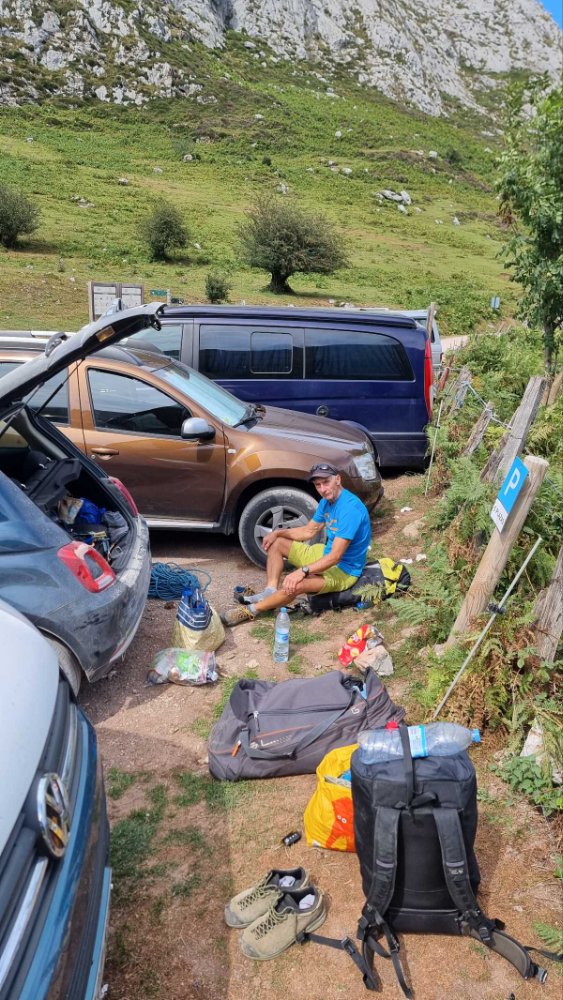
Not surprisingly, this has put pressure on parking along this track, and in recent years the authorities have clamped down. Every sensible spot is marked with a blue post indicating the number of permitted vehicles. Park beyond the quota and expect to get towed. As our tiny Fiat 500 crawled up the gravel, we counted off each signpost: 2 Plazas, 2 cars; 5 Plazas, 5 cars… all the time thinking how annoying the return drive would be when we failed to find a space, let alone the hot, dusty grind of the walk. Approaching the start of the path proper, we’d not seen a single spare place, until the final signpost for 5 Plazas… which had just 4 cars parked at it! If in doubt, be lucky!

Major kit sorting and lightweighting ensued (there’s still a good 2:30hrs walk) and we pared down to a single set of cams and a single set of superlight wires. This was in part to compensate for having to take bivvy gear (we’d booked the last two available nights in the hut, but wanted a third). Tip – you book online and pay a 50% deposit, then the balance by cash. You can reserve meals (and even a “picnic”) even if you aren’t staying in the hut, but you must do so in advance.
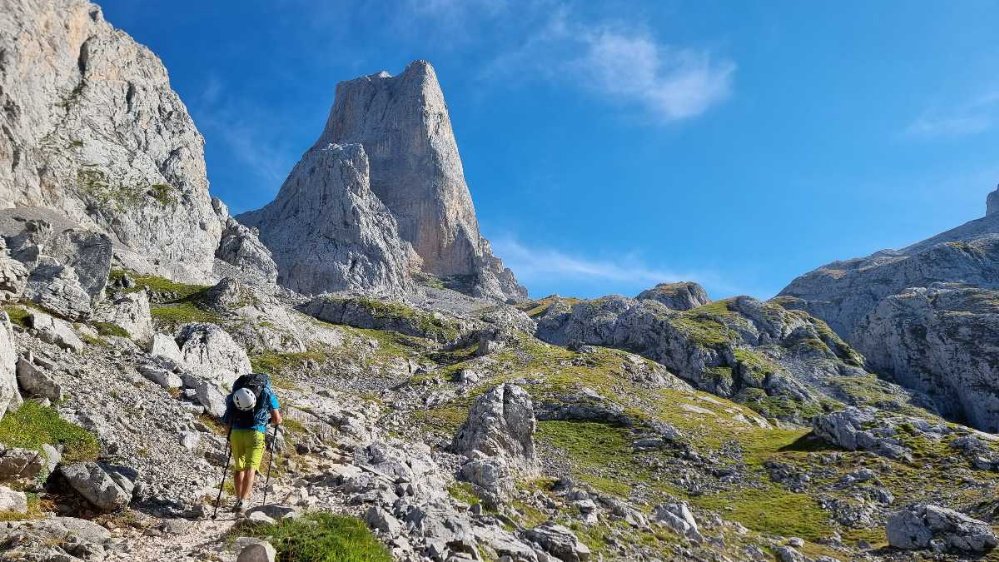
You get an early glimpse of Neranjo de Bulnes, and it is mightily impressive! Comparable in “Wow!” factor to your first sight of El Cap or Cima Grande, it’s west face drops almost 600m vertically down to the Rifugio at its foot.

It’s a well-graded path, and the scenery is stunning, but we were more than pleased to arrive at the hut after a speedy 2:20hrs stomp, and 5mins before 7pm when we’d guessed dinner might be served. Phew! Happily dinner time is actually 8pm so we could have a lounge about and a well-deserved thirst quencher in the sun.
Next morning was a bit of a disappointment – overcast and VERY windy. The guardian passed on the bad news of 40kph winds, and judging by the occasional “knock you off your feet” blast, it was gusting higher than that. That confirmed our provisional plan not to jump straight on one of the huge west face routes, but we took some advice from the locals and decided to take our chances with Amistad con el Diablo, literally Friendship with the Devil. This coincided with a recommendation from Paul who’d recently visited, so that was settled! This is a significant undertaking in its own right, taking a line on the Cara Est (East Face) of over 300m and 10 pitches, with a crux runout 6a pitch and an overall MD grade.
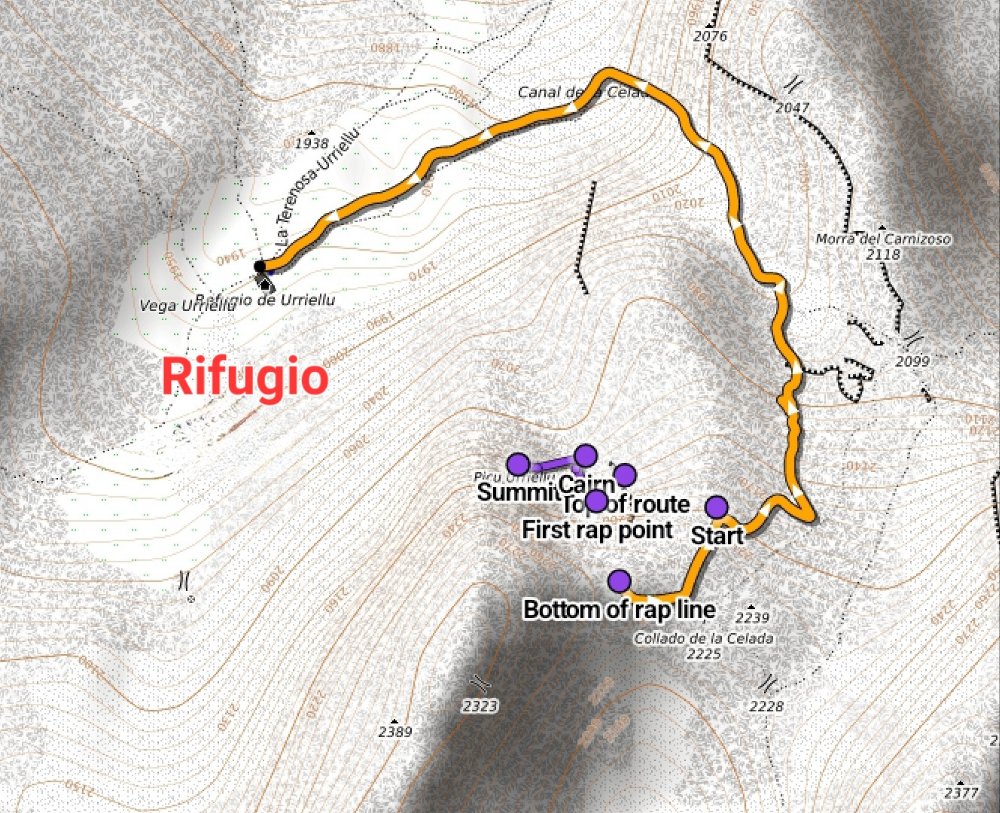
The Rifugio is immediately under the West Face, so to approach the route you wind clockwise about half the way around Picu Urriellu. Here’s a trace of the route, also showing the start of Amistad con el Diablo and the rap line:
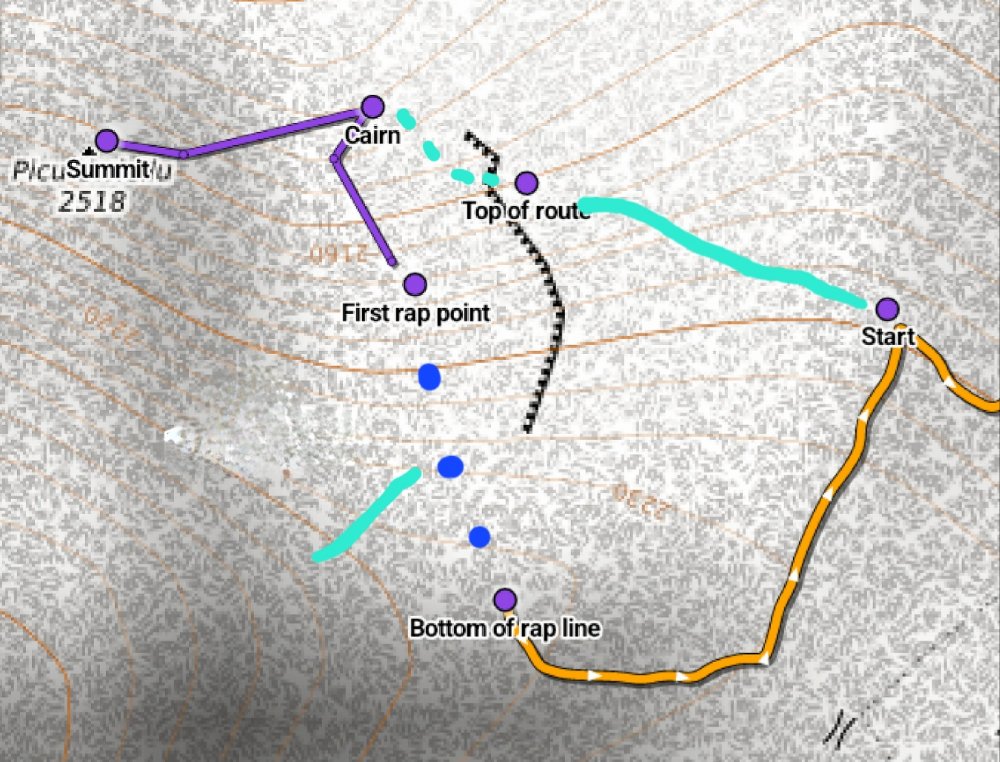
It’s an impressive face, and though the angle is fairly benign, the rock is incredibly compact (and amazingly solid) so there isn’t a huge amount of gear.

Pitch 4 is the 6a crux (feels about E1) with just 3 bolts in 30m, and not a lot of scope for natural reinforcements.

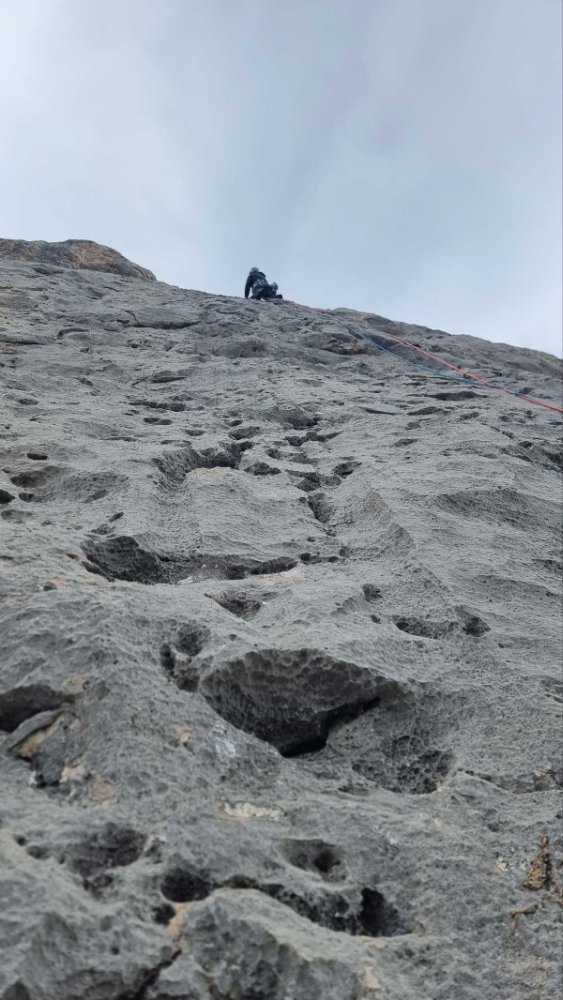
Pitch 6 is also quite runout, and after 200m you join the adjacent Cepeda for the final 100m or so. Still pretty chilly!

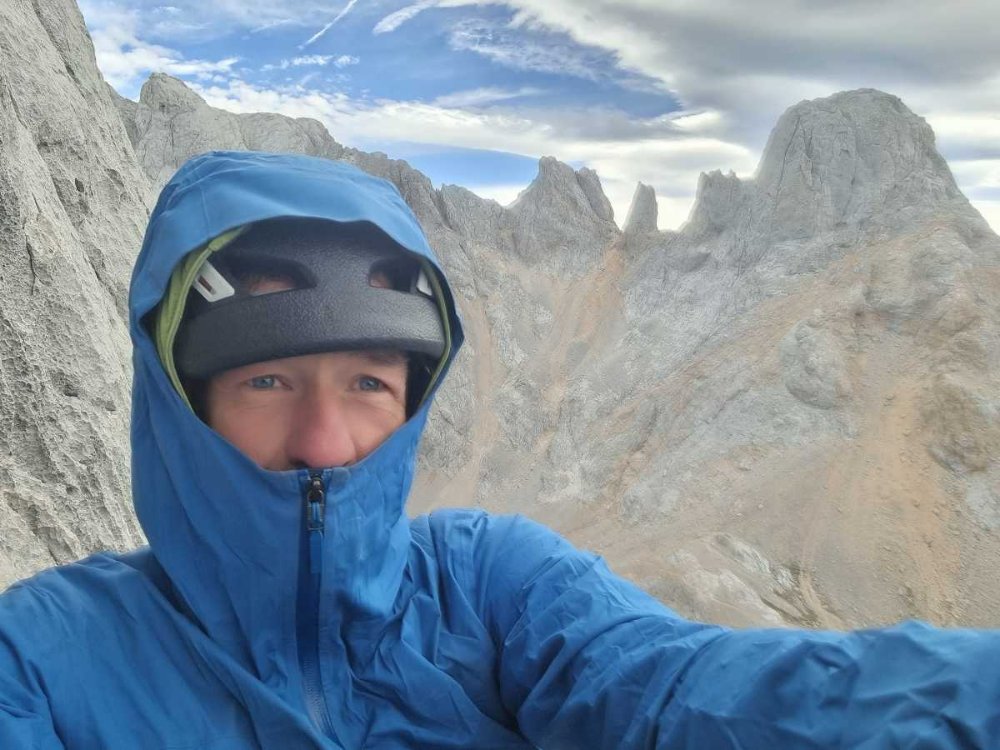
Inevitably the confluence of a number of routes results in a bit of a log jam (and the only polish we encountered all trip!)…

… but nothing that a bit of polite but assertive parallel climbing couldn’t overcome, and we were soon coiling ropes for the final scramble to the summit, after about 4hrs of climbing.
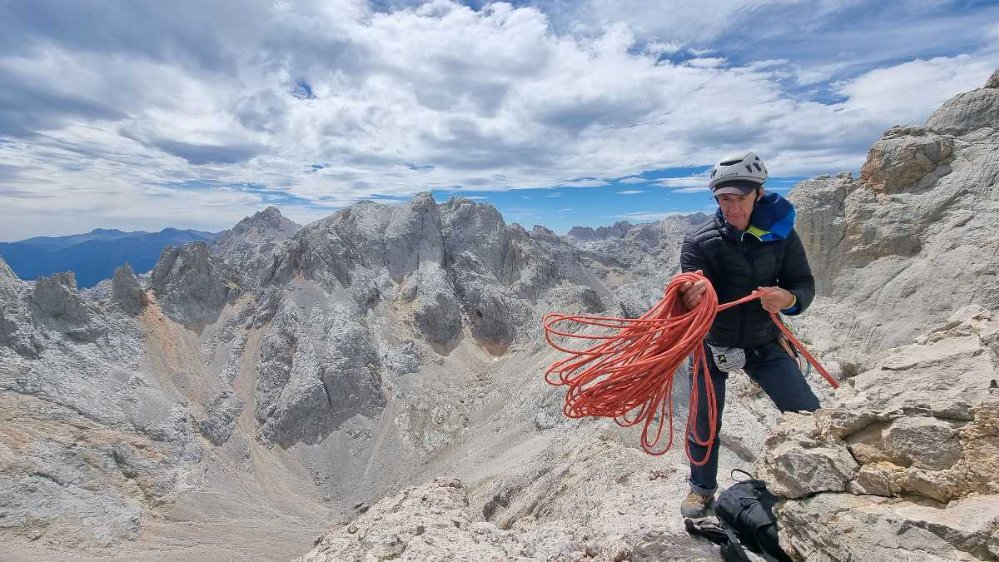
Obligatory summit selfie, with the sunshine finally emerging…
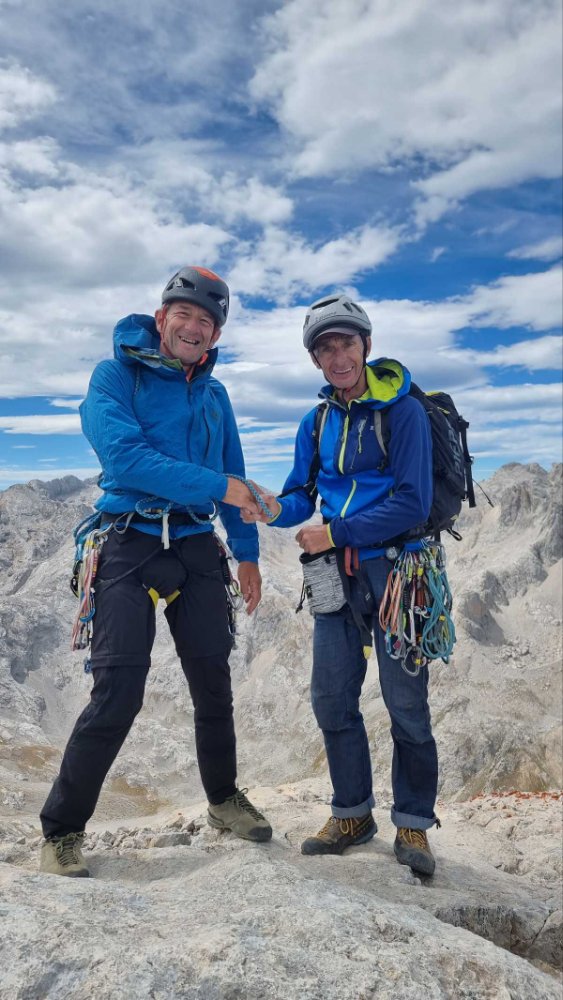
This shot is taken from a pitch below the top, looking across onto the south face which provides the normal descent. There are a number of possible rap lines using the belays of routes on this face, but keep your wits about you – from above it’s not always easy to tell the brand spanker from the two pegs and a piece of string jobs!
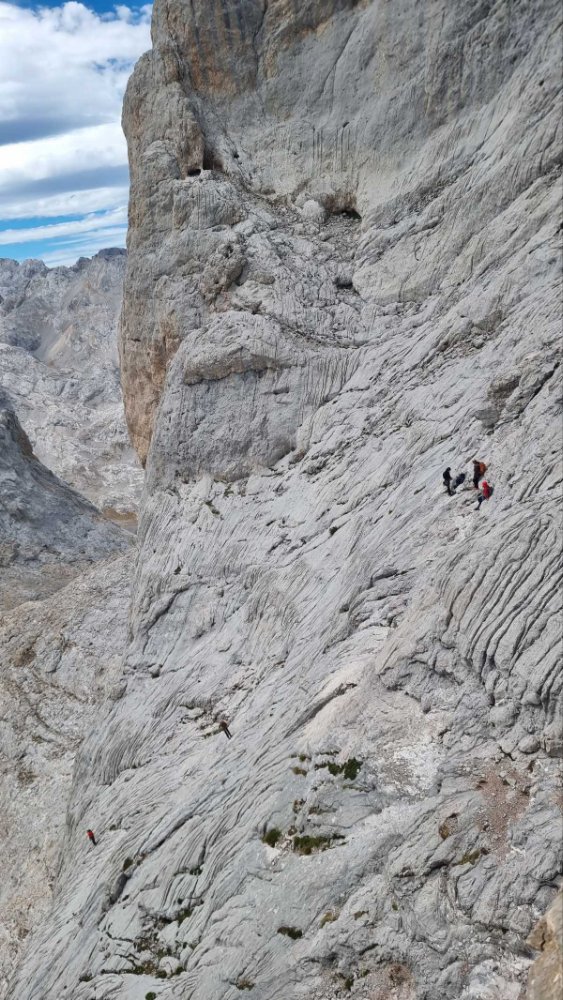
View of the rap line from below.
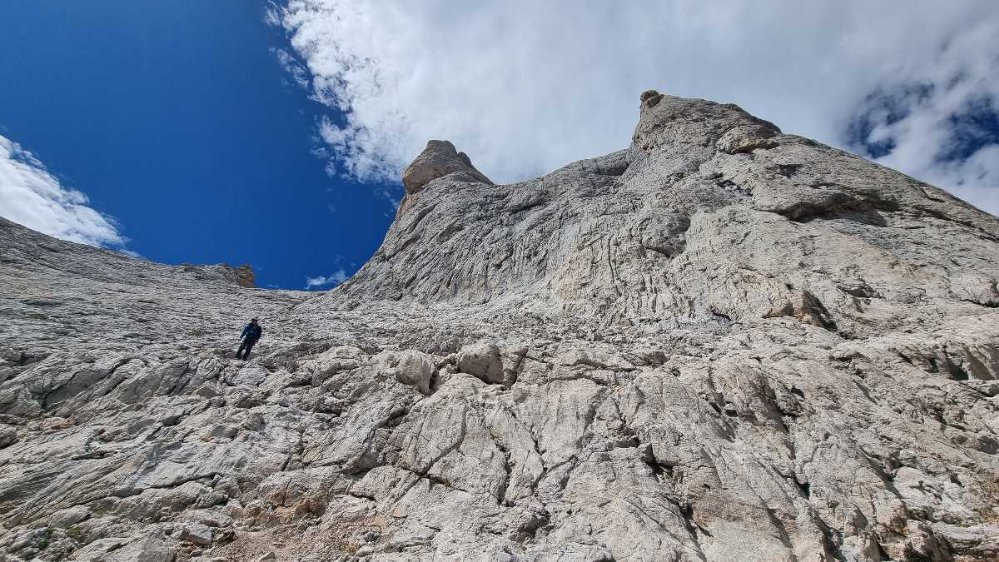
Having managed to grab an El Neranjo ascent from unfavourable weather, I’d have been more than satisfied with the haul from the trip, but we had a spare day and the PdeL ticklist was calling. The book features three routes on the Cara Oeste, of which Rabadá-Navarro is the original classic, but takes a sinuous line covering 750m. We opted for Murciana 78, which is the most direct, shortcutting the zigzags but with harder, more sustained climbing.
Any hopes for an amelioration in the weather were undermined by the rattling of window frames through the night, but a few gaps in the clouds made for great sunrise pics.
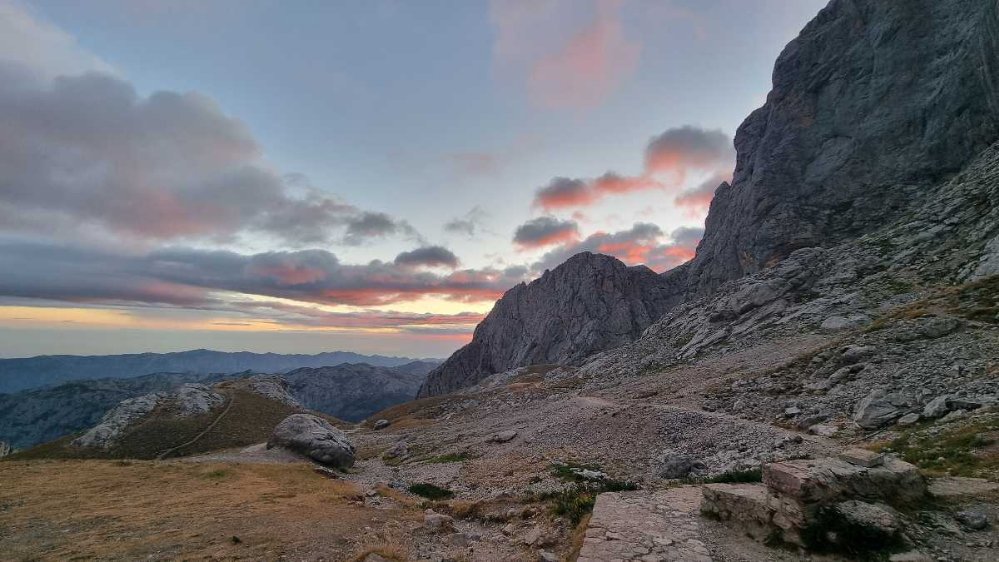

We comforted ourselves with the thought that we’d had a taster of the rock the previous day (and been fairly speedy); knew the way off (if it came to doing it in the dark!); and could always bail down the route if things went pear-shaped (there are good bolted belay stations; not a luxury we’d had for the rest of the week).
We found ourselves gearing up behind a young Spanish team, which would normally be a bit of a downer, but Alfonso and Juan were great company and it was really enjoyable to share the experience of this magnificent route with them as we swapped over at various belays. They’re both super-strong climbers and Alfonso has plenty of big-route experience under his belt, but Juan was “in at the deep end” (a phrase we passed on) and coped magnificently with the ropework faff and huge exposure of this major undertaking.
Here’s Alfonso getting the ball rolling with a slightly polished and thrutchy first pitch.
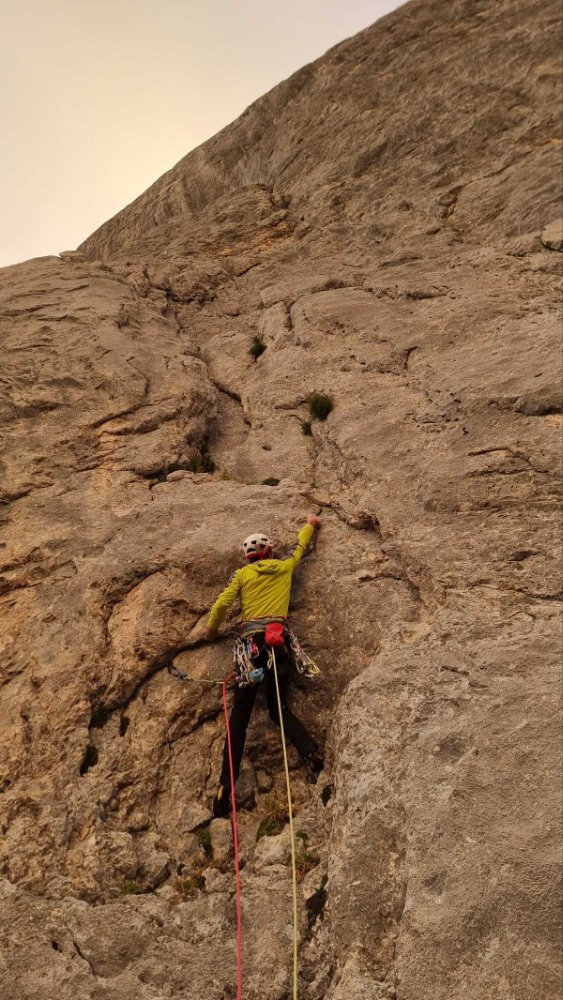
… and a quite demanding P2 which starts with a poorly protected, thin traverse:
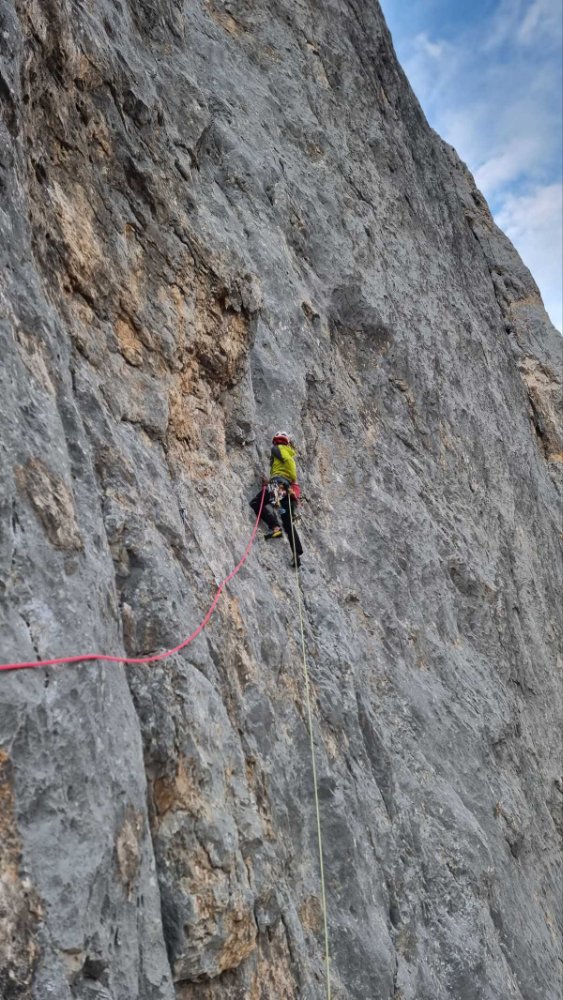
Pitches 3 and 4 are wildly steep, and out of character with the rest of the route. 7c and 7a+ respectively, our Spanish friends made a pretty good attempt at the onsight…
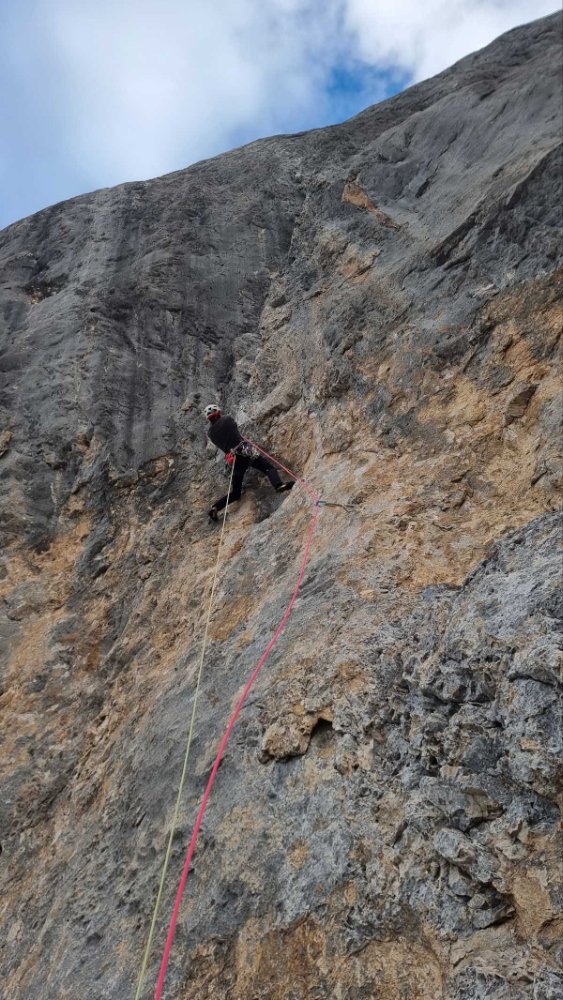
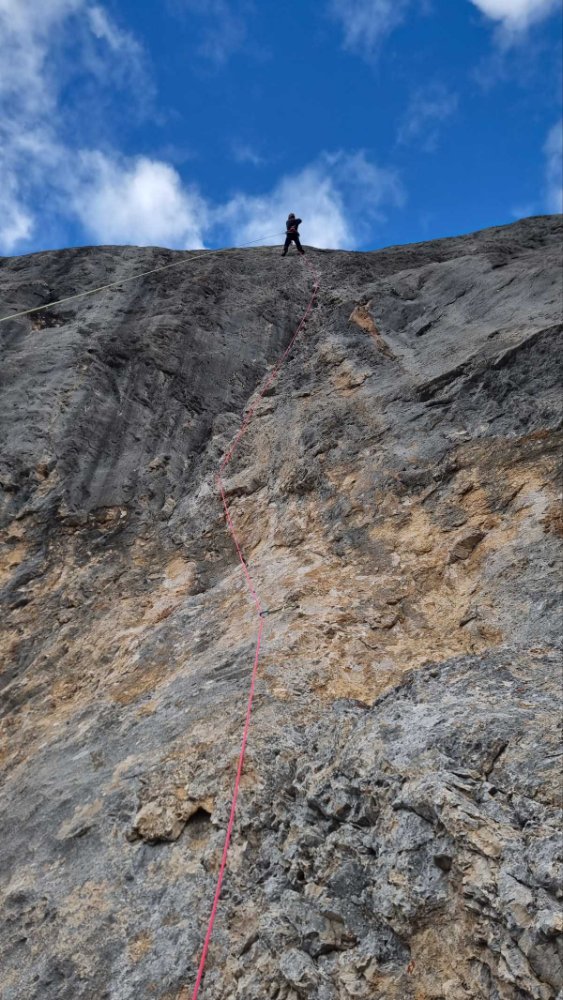

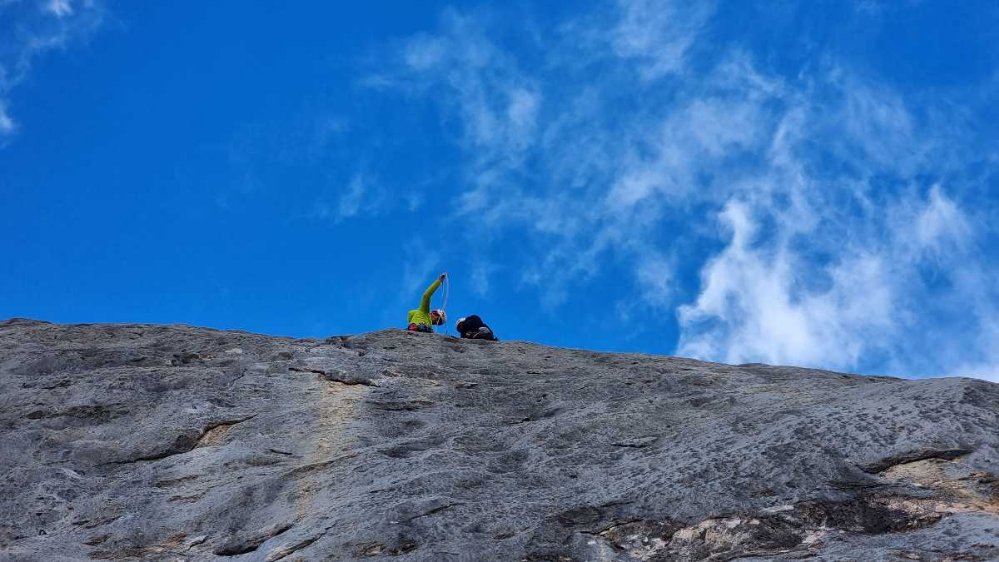
Bill arriving at the stance before the steep bit.

Sensibly, we opted for a bit of more traditional A0 (or probably A1 for a few moves) with a few burley pulls thrown in. Meanwhile, behind us, a VERY strong pair of French lads were on our tails, and I got these photos of them onsighting the 7c+ pitch, which was a pretty proud send. They were also good company, so all in all it was quite a jolly grande équipe moving up the hill – we didn’t exchange names, so I nicknamed them ‘the basket boyz’ as they changed into approach shoes for the remainder of the route!

P5 is a bit of a transition, with 6a climbing but a smattering of bolts, but beyond that for the next 300m you’re into steady V/V+ territory but with very little fixed gear or placements (to either mark the way of protect the leader). Think of it as a 1,000ft of HVS/E1 terrain and you won’t be in for a shock. The rock quality is absolutely exemplary (the best I’ve ever experienced on a ‘mountain’ route and far more akin to what you might expect in the Verdon) and we had some helpful pointers on route finding from Alfonso and Juan blazing the trail ahead.
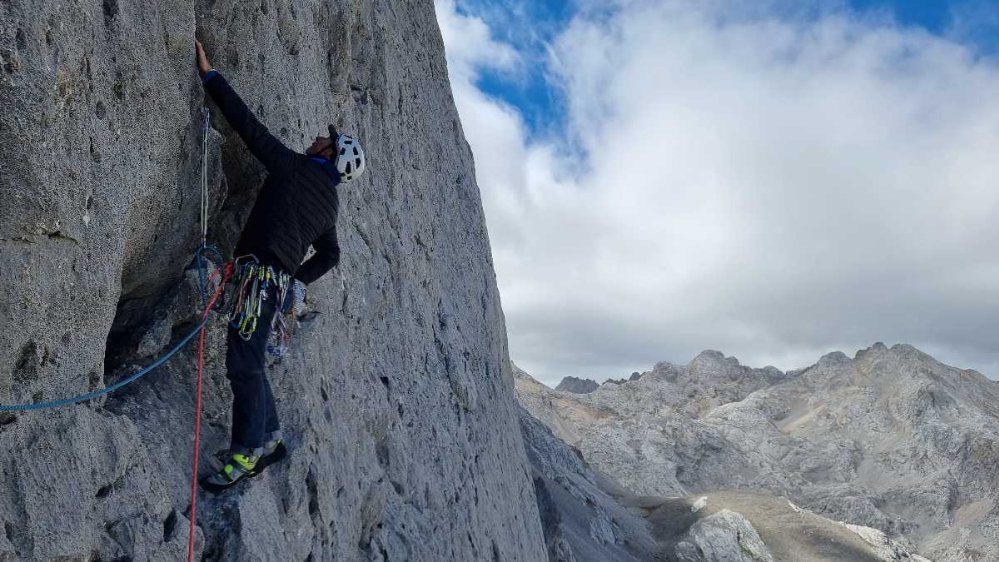
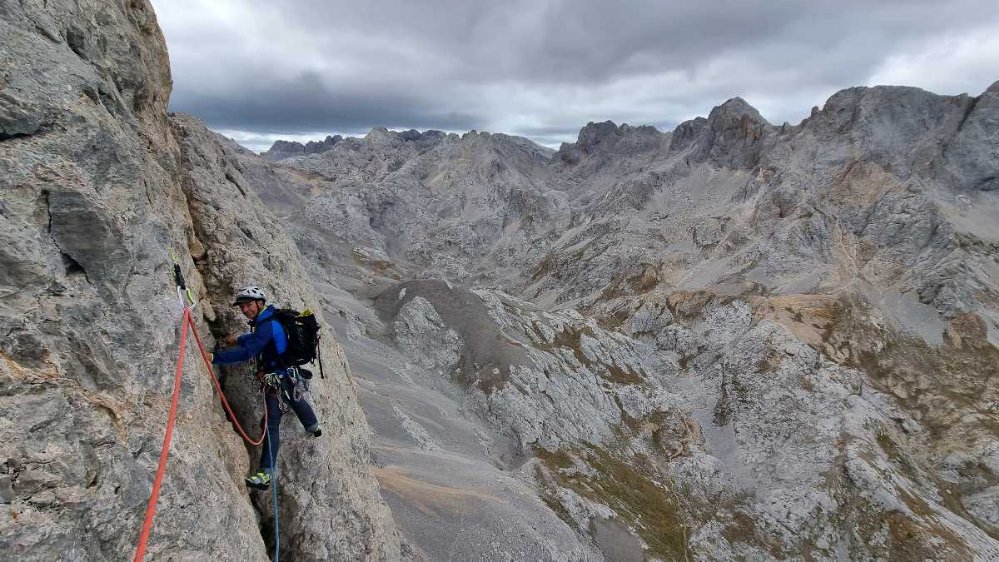

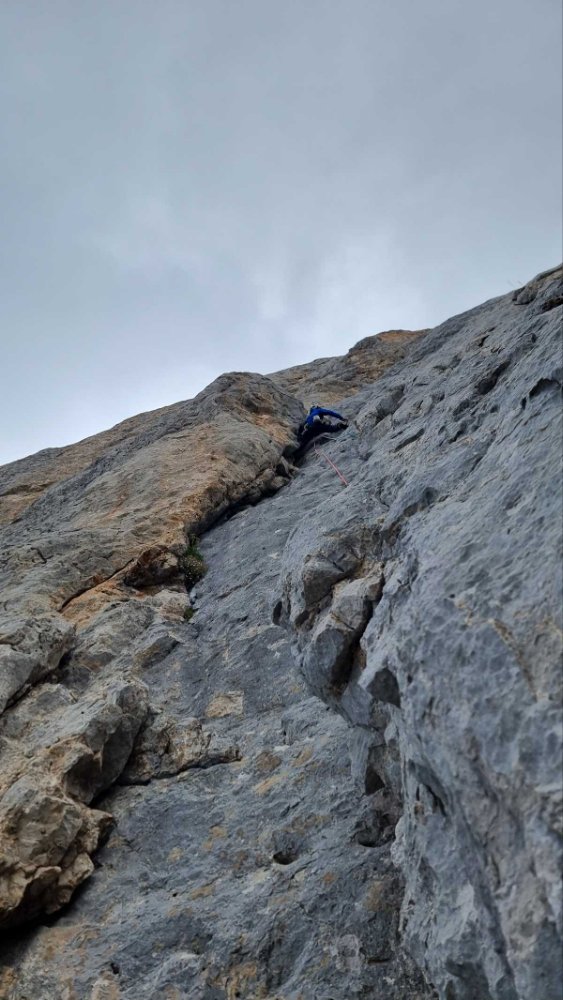

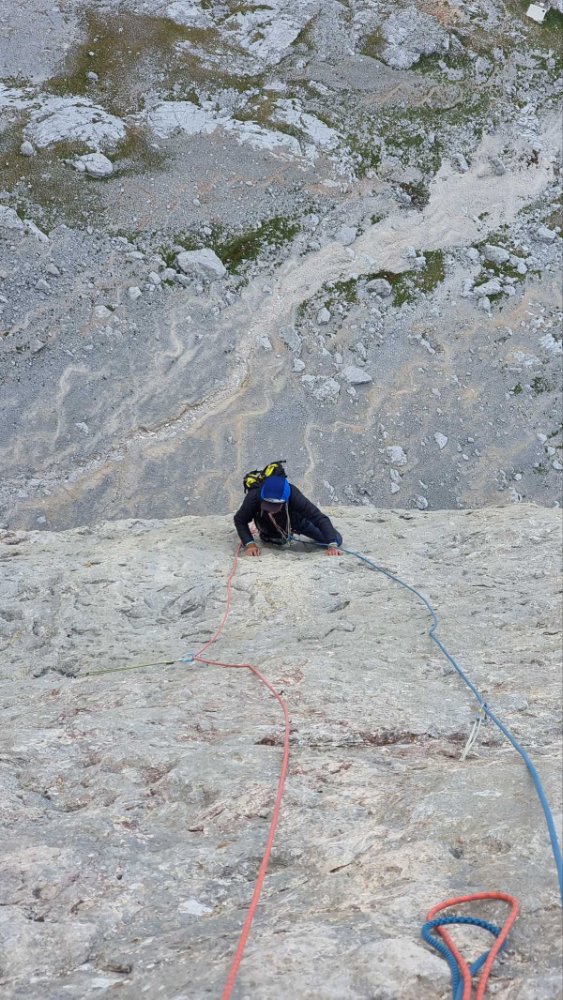
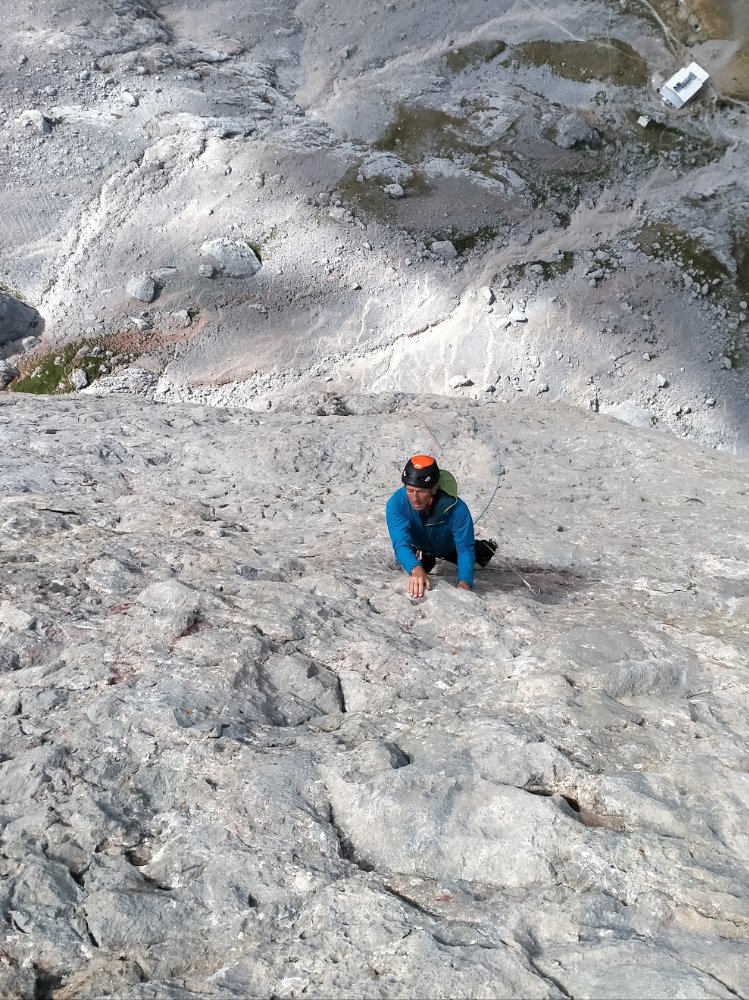
The only pitch where the rock quality deteriorated was P10 (a slightly crumbly corner which Bill got – below), but it settled down to immaculate again for the final push for the top.
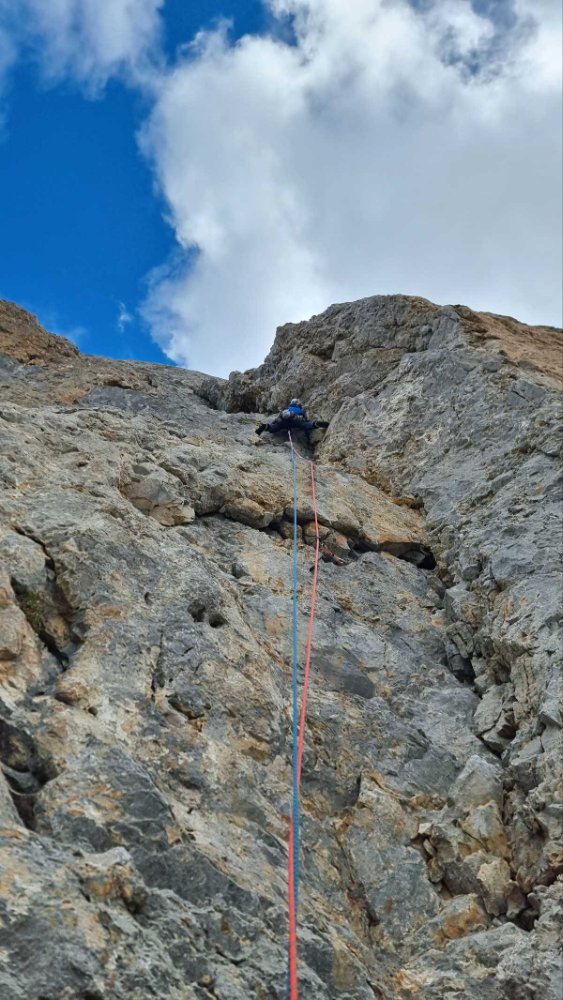
Stupendous exposure on the upper walls…
A couple of short videos from Alfonso give you an idea of the exposure (and the blustery conditions!)
Here’s an ‘almost there!’ team pic of the guys on the penultimate belay:

…and Bill making a bid for the summit:

Another summit selfie – pretty chuffed after spending only about 8hrs on the route, and with any prospect of missing dinner (let alone benightment) now well off the agenda 🙂

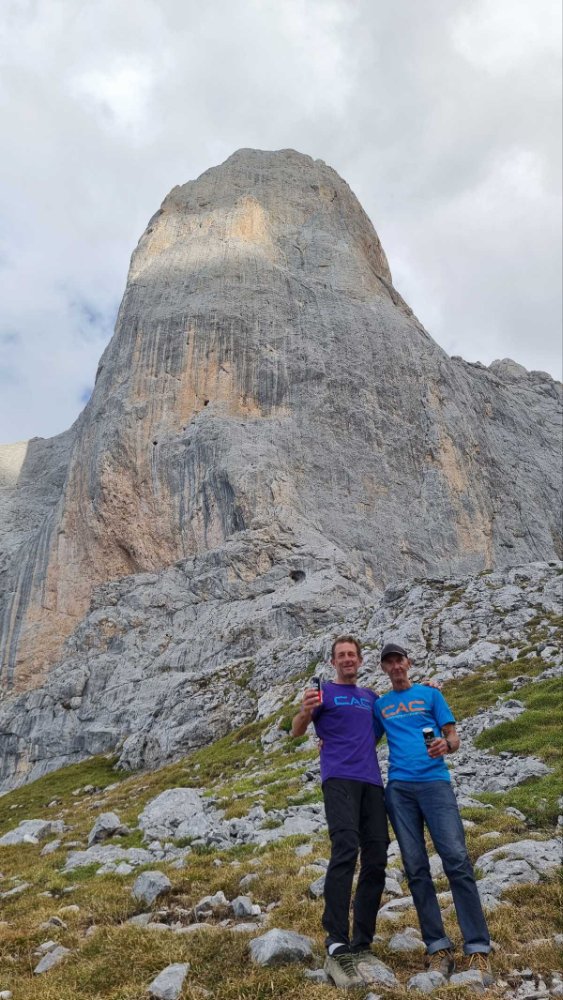
Meadows-style ‘team beers’ -‘You went up there? With those arms?’
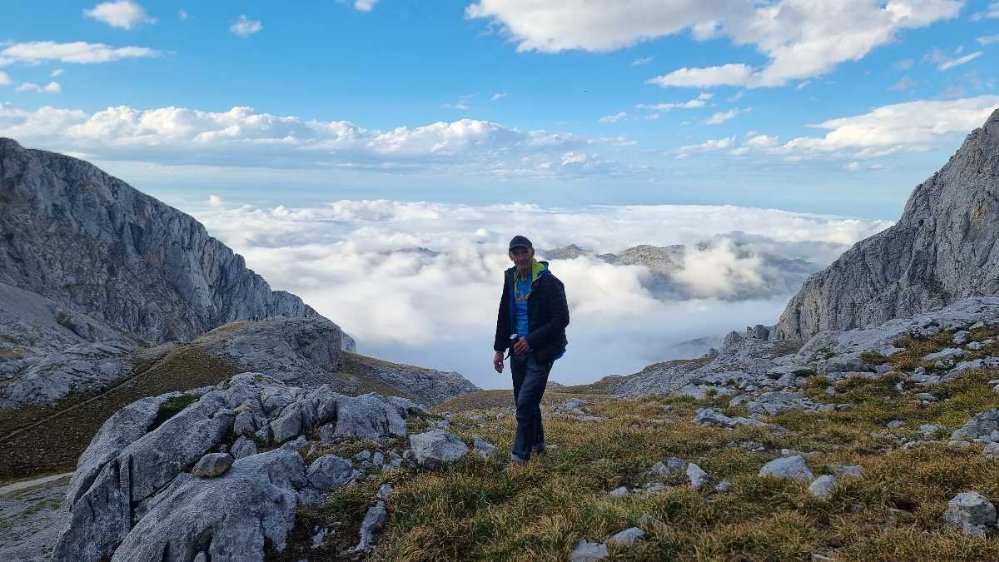
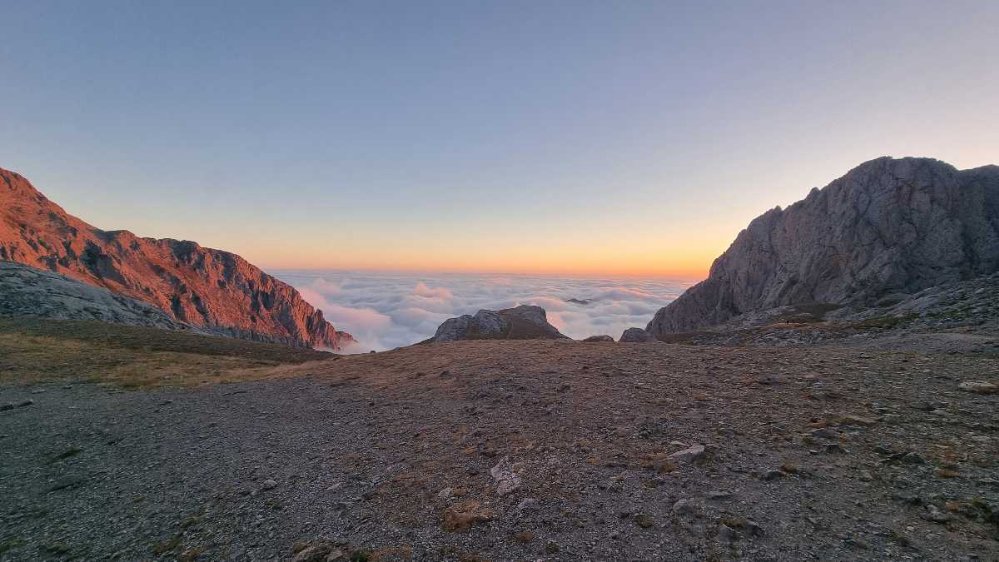
Another approaching cloud inversion (you actually get views all the way to the coast when not covered in cloud)
…and a team selfie with the boys

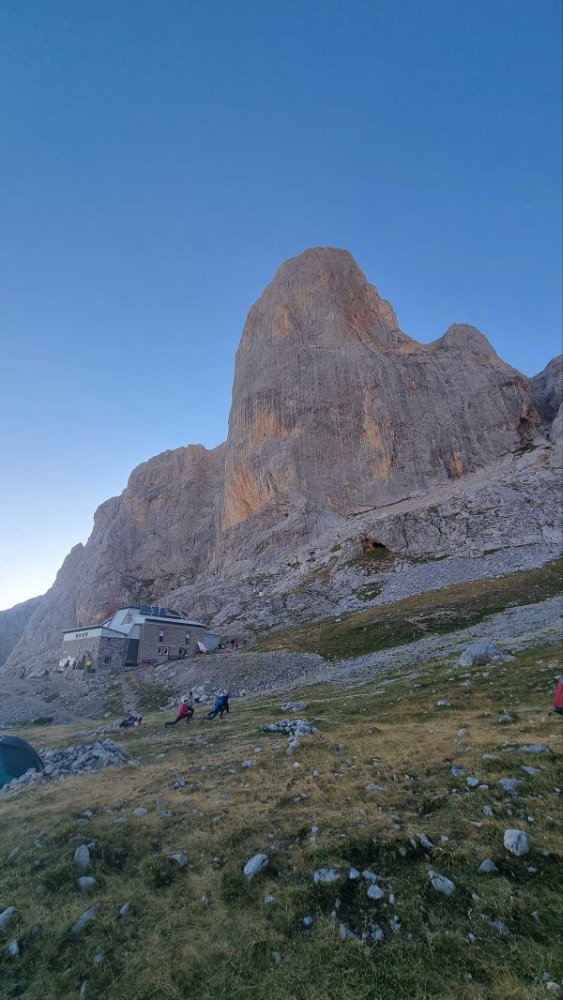
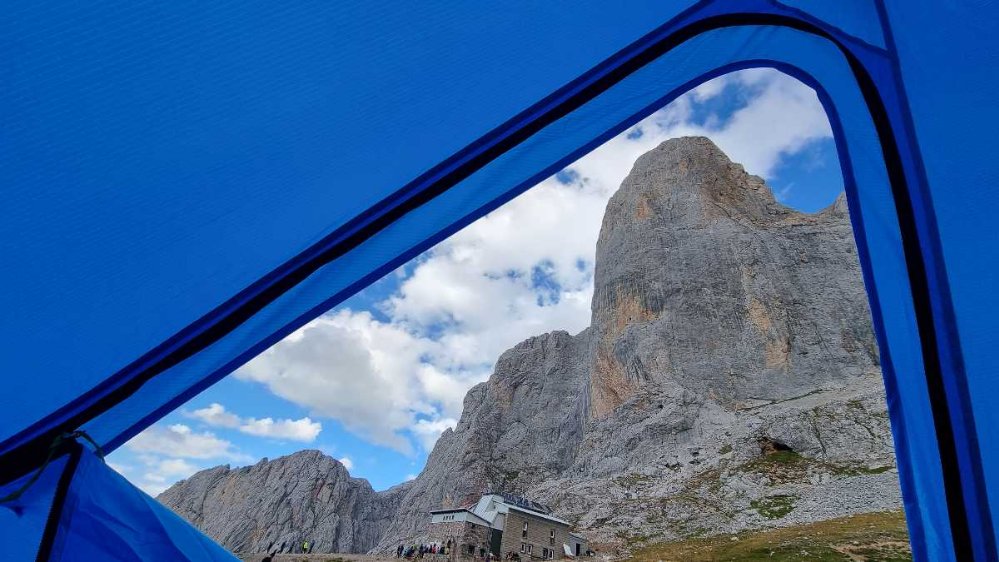
No real hardship bivvying outside the hut – not with this view (and no snoring!)
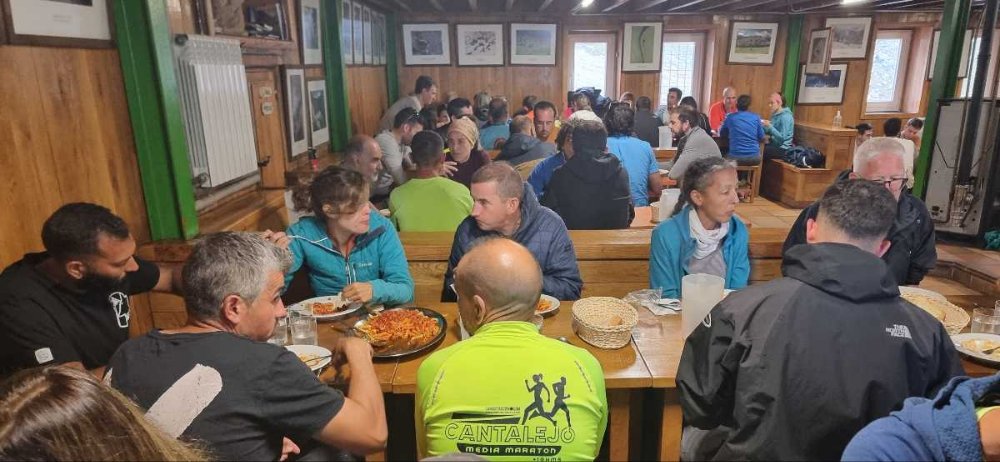
…in fact a winning combo when you have the fine dining experience and post-climb banter of the hut catering:
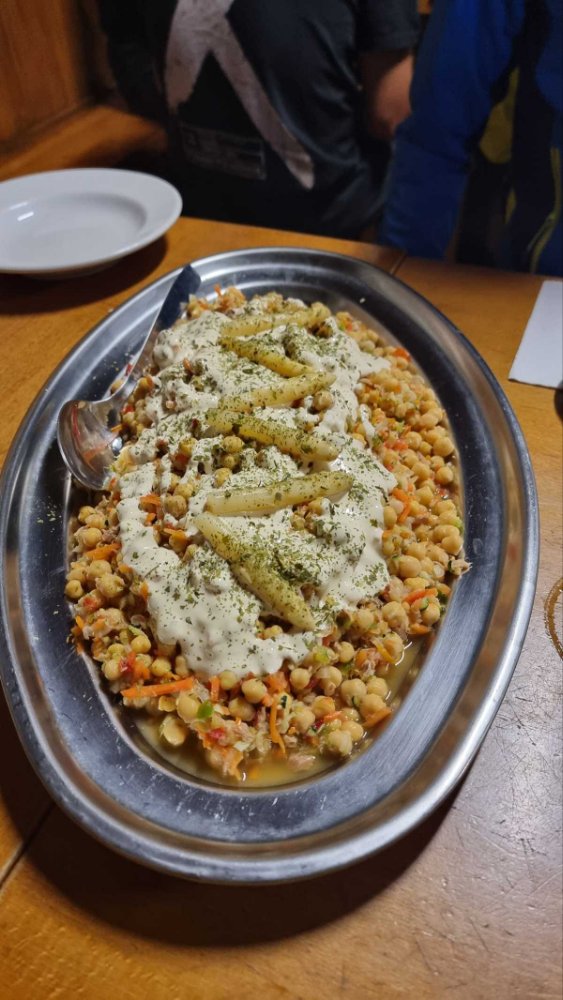
…and this was just the starter!
Another stupendous cloud inversion the next morning, as we bid goodbye to the Rifugi Vega Urrielu and head down for the trip home via Bilbao airport.
Murciana 78: ED-, 7c+, 6c compulsory (probably worth a pinch of salt in the other direction for a change – maybe a couple of 6b pulls) 520 m, 12 pitches.
A fitting end to the trip, when we racked up four ticks in Parois de Légende (all ED/inf) and a bonus MD up the back of the Neranjo be Bulnes: over 2km of wildly steep rock on some of the most aesthetic mountains in Europe, each blessed with a walk-in that would be a contender for ‘Top 10 walks’ in their own right.
 RockAroundTheWorld
Once upon a (long) time (ago), a certain Nick Pope and I climbed the easy way to the top of El Naranjo! I think it was a Severe grade and we enjoyed it immensely!!
John
… In a galaxy far, far away…? Fab spot isn’t it? Cheers, Dom
Great post!!!
It was a pleasure to share chat and belays on Murciana!!
Good luck with the Paroi de Légende ticklist!
Alfonso
And you two! Good luck with your PdeL ticking, while I’ve got a headstart I think you’ve got more time (and talent!) Cheers, Dom