
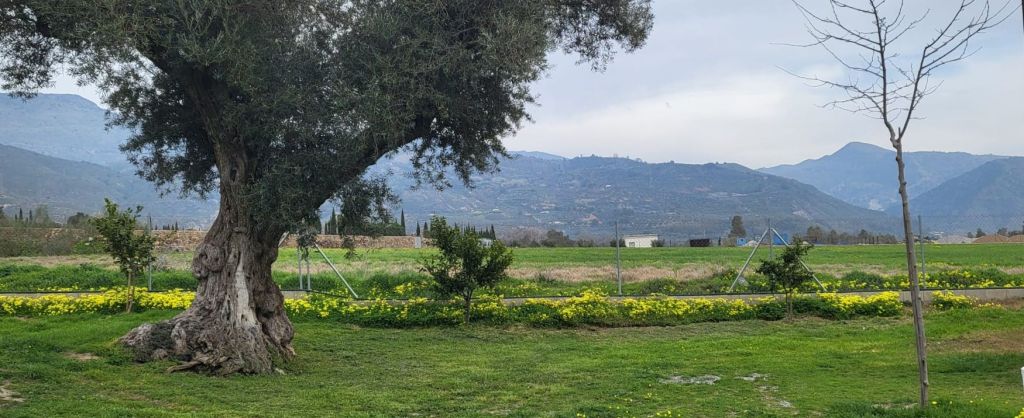
Las Alpujarras is a natural and historical region in Andalusia on the southern slopes of the Sierra Nevada. The average elevation is 1,200 metres, and there’s generally a view of sparkling snow caps somewhere on the horizon (at least in February) despite it being less than an hour from the Costa del Sol. The administrative capital of the region is Órgiva, a quirky town with a definite hippy vibe. It’s also got a really charming campsite, particularly attractive this spring (as is the rest of the region) following torrential rains the previous month which have left everything in verdant bloom.
Los Vados
The Órgiva campsite was our base for a flying visit from Jim and Claire. We headed to the region’s Premier Crag, Los Vados, about 20mins down the hill. We’d visited on a couple of occasions almost a decade ago, when we’d been escaping a major cold snap and been very grateful for the “giant solar concentrator” effect of the concave crag:
A couple of factors are currently conspiring to reduce the appeal of Los Vados. The recent storms (combined possibly with some ill-considered attempts at hydro-engineering) mean that the river is uncrossable, putting half of the climbing out of reach. There’s also a major motorway closure resulting in more traffic in the valley and quite a noisy atmosphere. Despite all that, it’s an impressive set of crags.
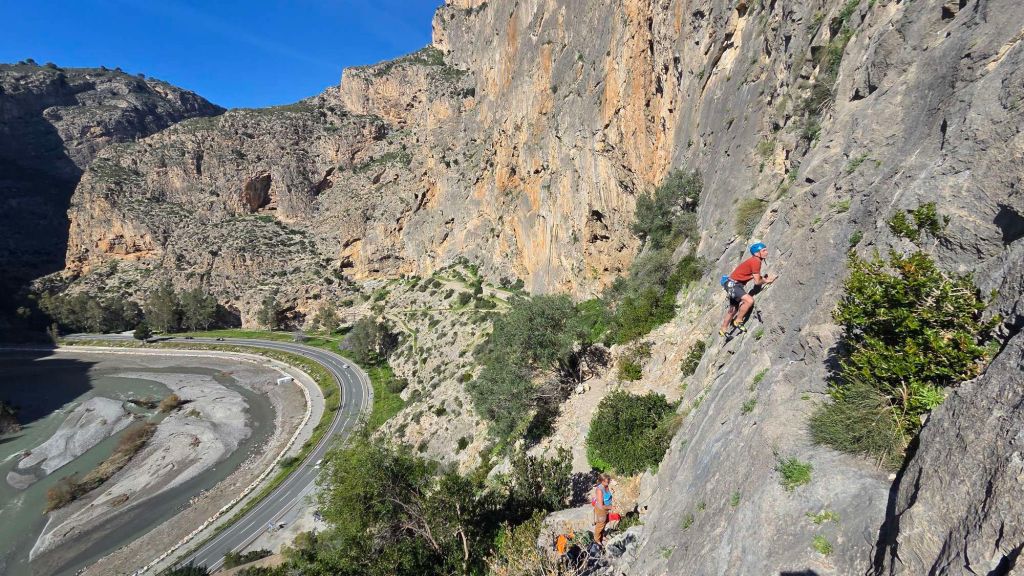
We headed along the handy irrigation channel to reach Placas Negras (cool in the shade but sweaty in the sun, which sweeps round like a giant sun dial, arriving around 2pm). Here’s Helen on Raton Articular, 5b
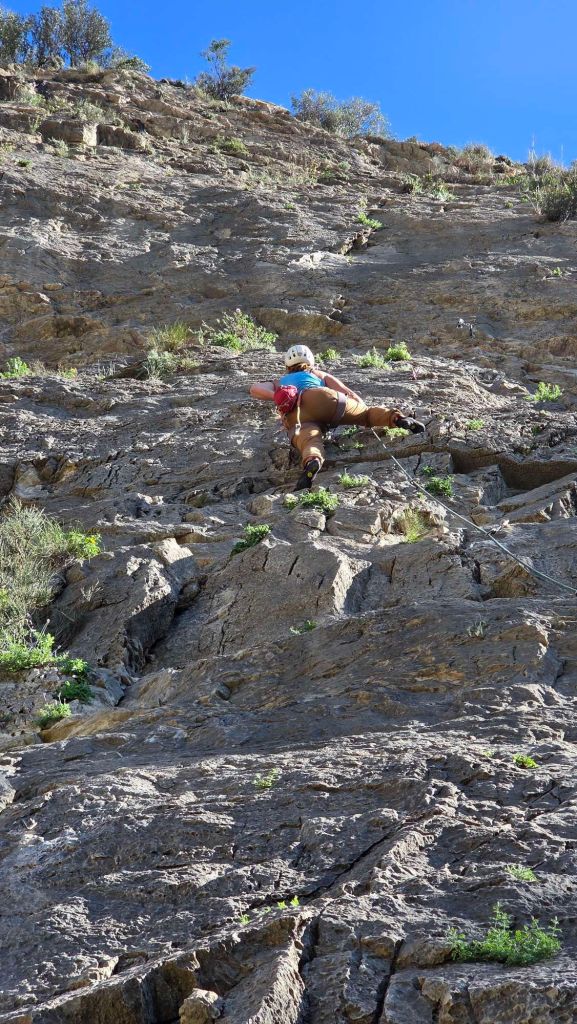
… and Jim on Gataca, 5b
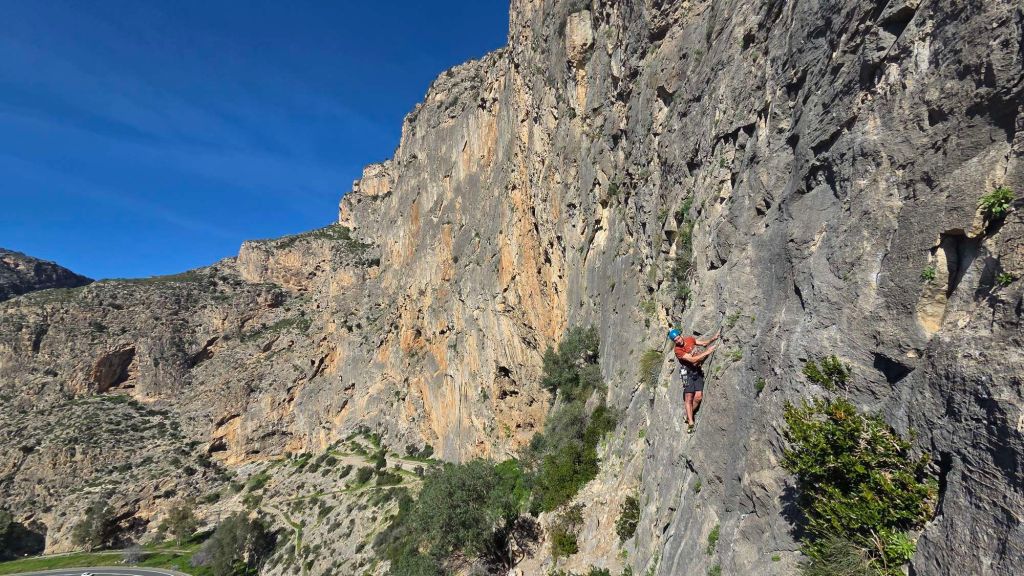
I did a couple of the routes with 40m extensions: Buzz Lightyear 6a+ (didn’t have a long enough rope for the adjacent Hasta El Infinito y Mas 😉) and Todo Para El Psicotico, 6c (after a brief cul-de-sac on the adjacent 6c+).
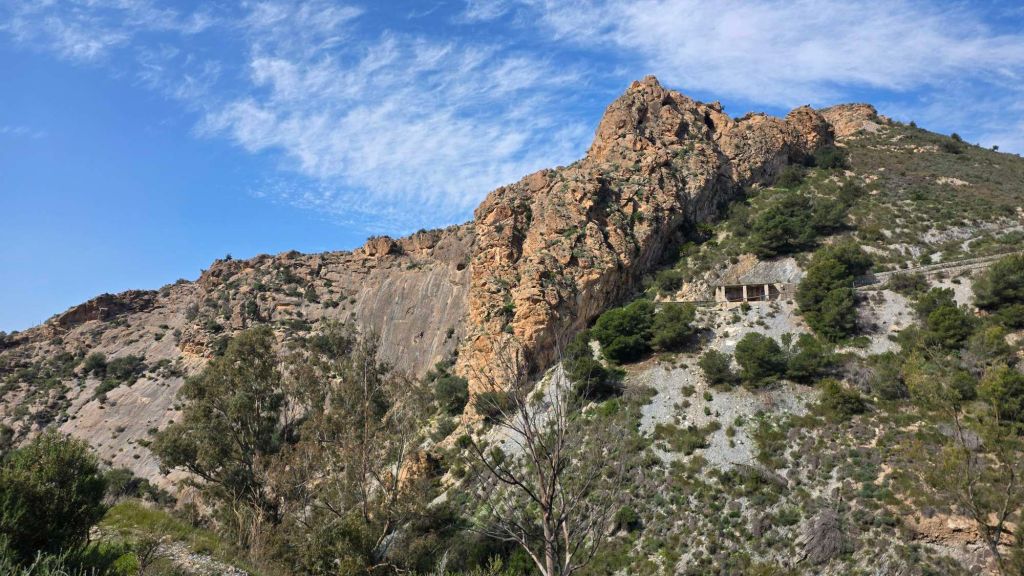
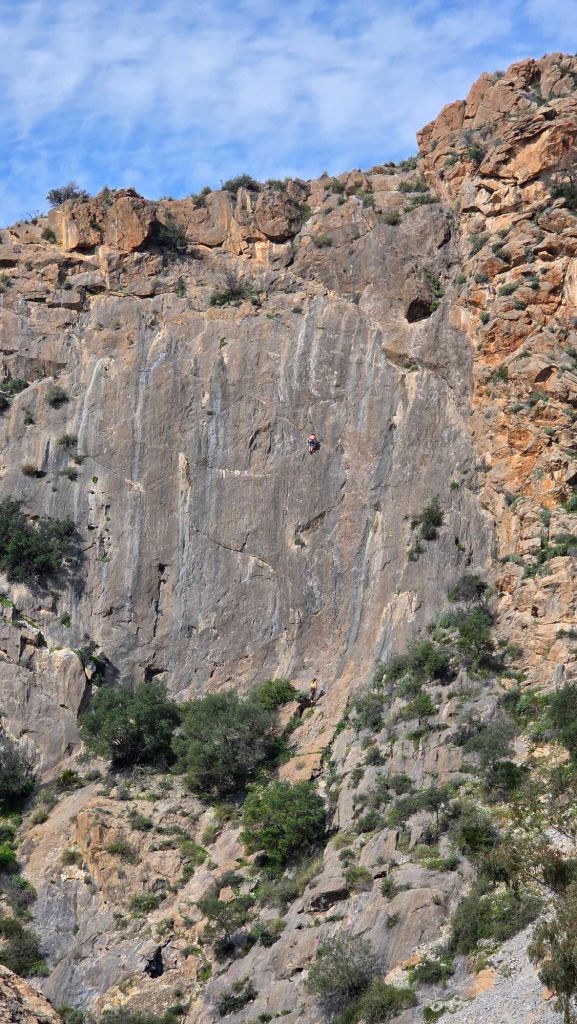
Looking up to Placas Negras from the parking you can just about make out Helen and Jim on a final route of the day.
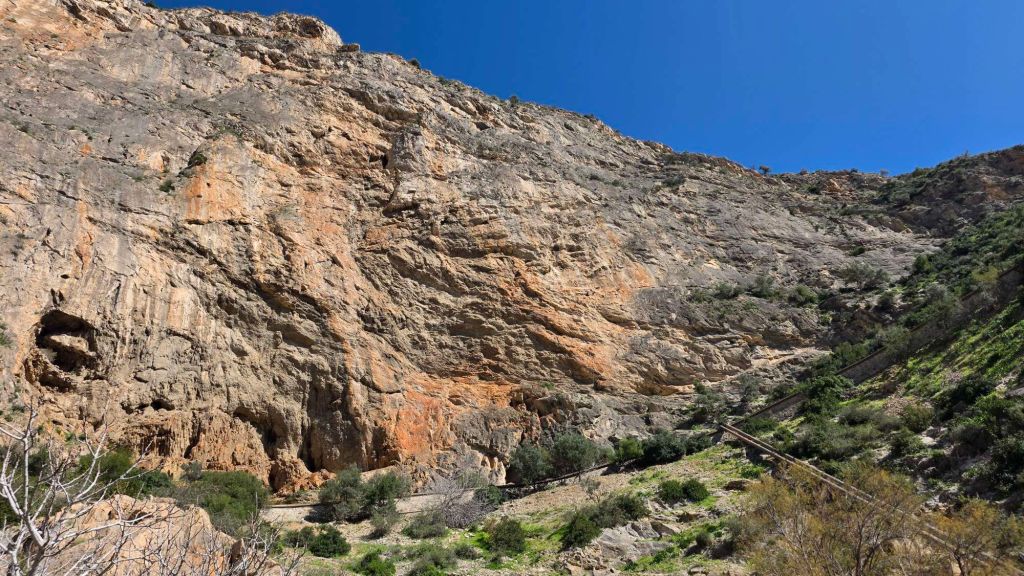
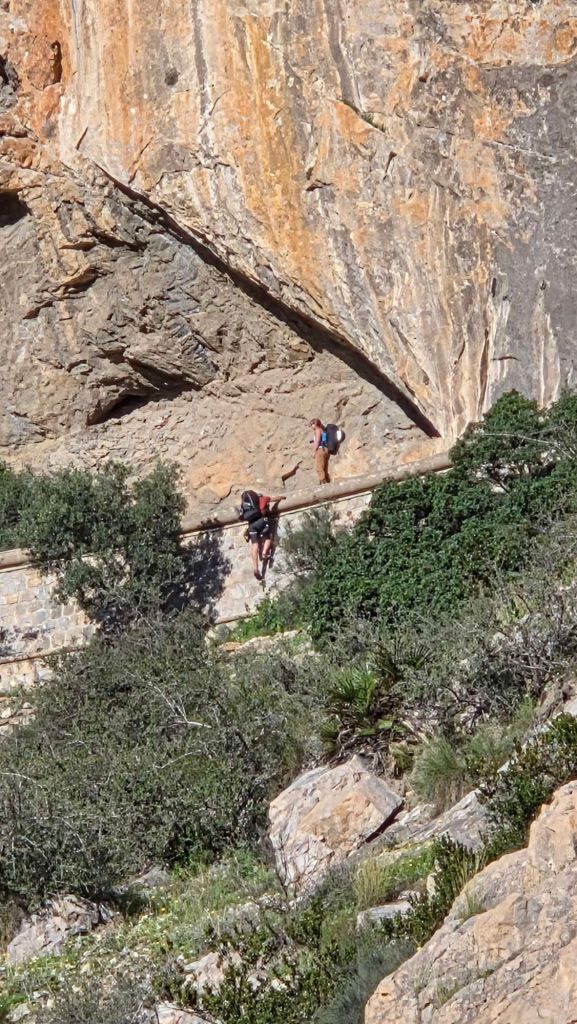
… and reversing the steel ladder access to the top of the aquaduct.
Órgiva
Most of the rest of the areas that are featured in our new Granada guide are quite a trek from Órgiva (especially with the motorway closure) but a bit of Googling threw up this handy resource listing an additional half dozen crags of more “local” interest.
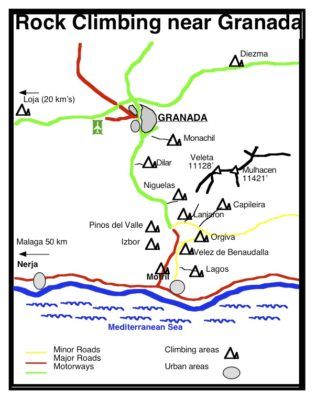
Rock Climbing in Spain’s Granada Province
… including one just down the road. We’d actually reccied the Órgiva climbing in very chilly weather about ten years ago, but been repulsed by the cold (and not hugely impressed by the ambience. It looks somewhat more inviting on a sunny day, though still not a destination crag, and ironically we found ourselves craving the shade!
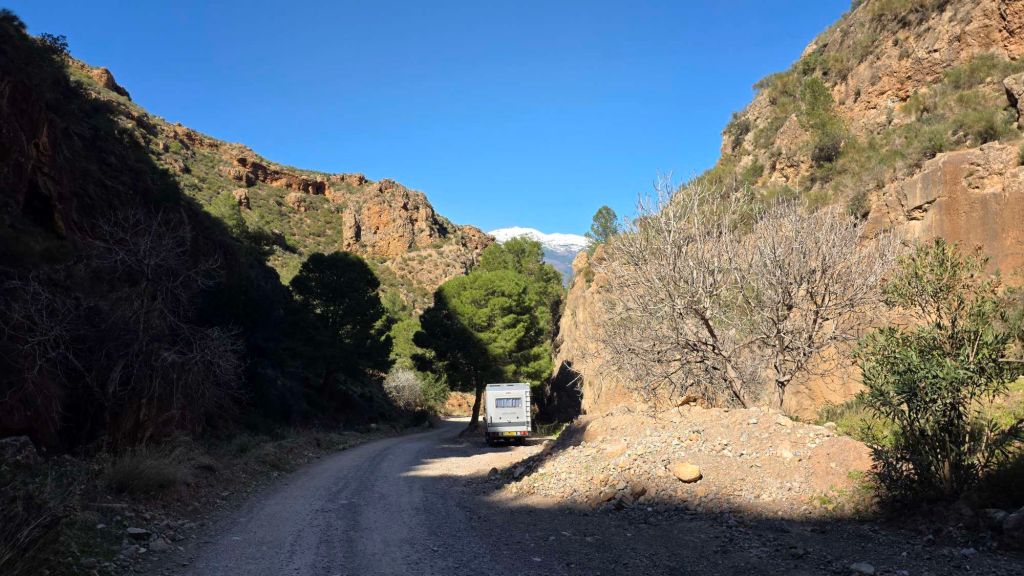
There are routes scattered across about a dozen micro sectors either side of a dirt track that serves a mine. This is passable in a regular car, though bumpy in places, and it’s worth parking carefully to avoid the occasional large lorry.
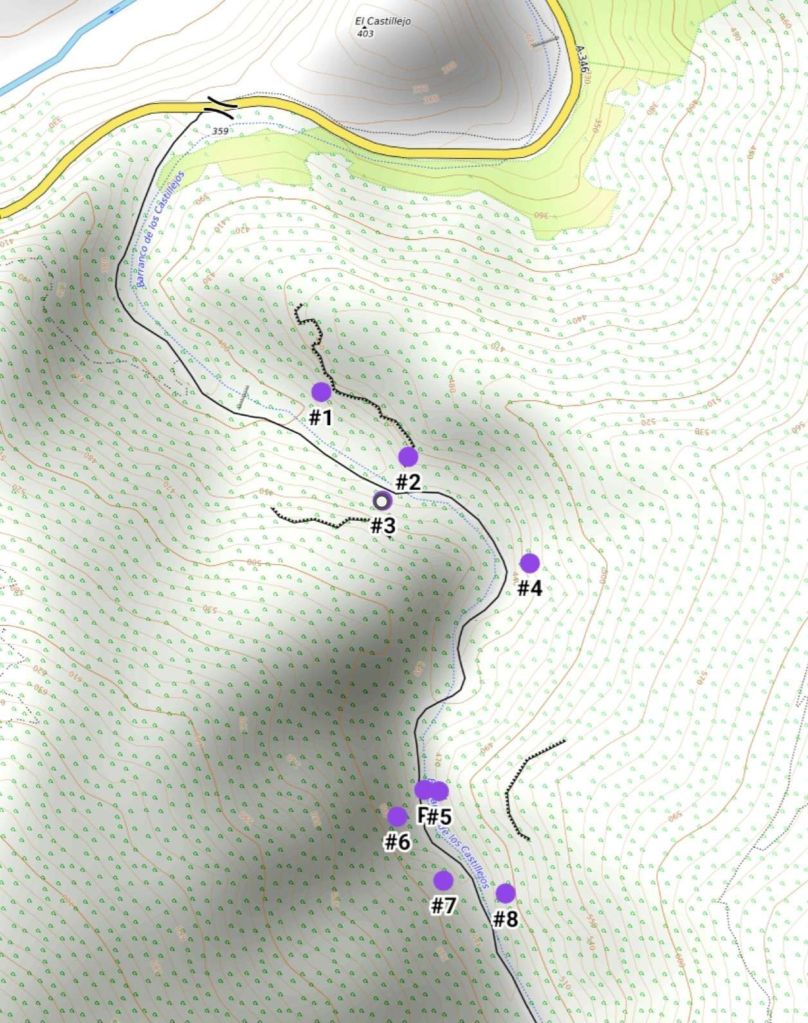
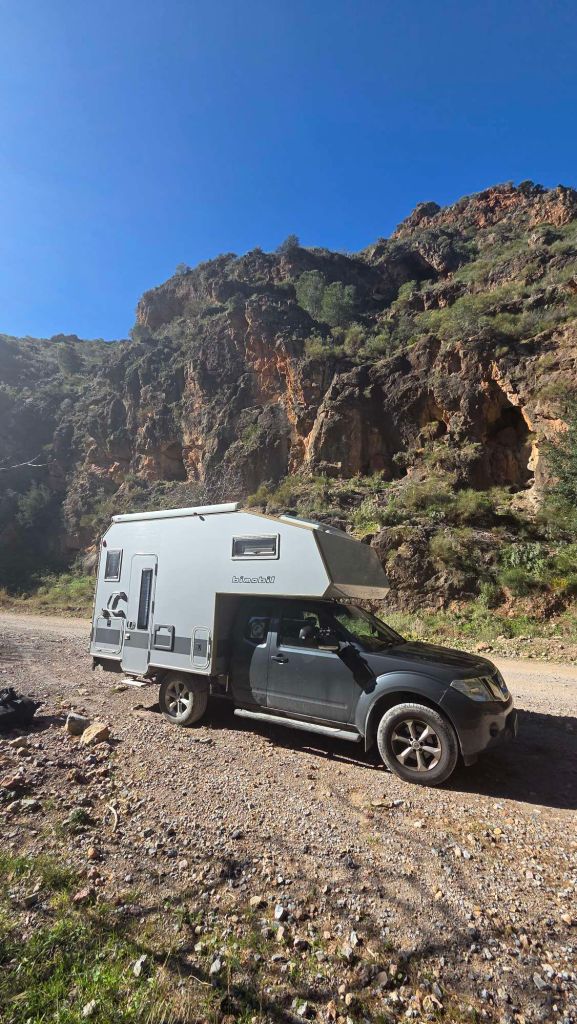
There are sectors both sides of the road, for sun or shade as preferred, and some of them are “belay from the bumper” handy.
We did a couple of routes on Sector 6…
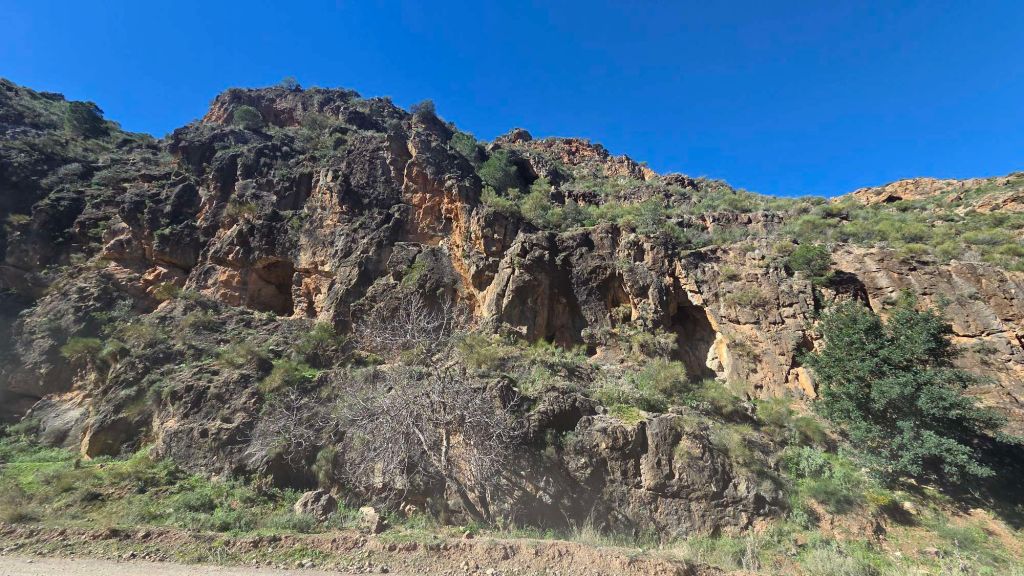
… including B52, 6a+ and Chiquita Pero Bonita, 5+ (better than they look).
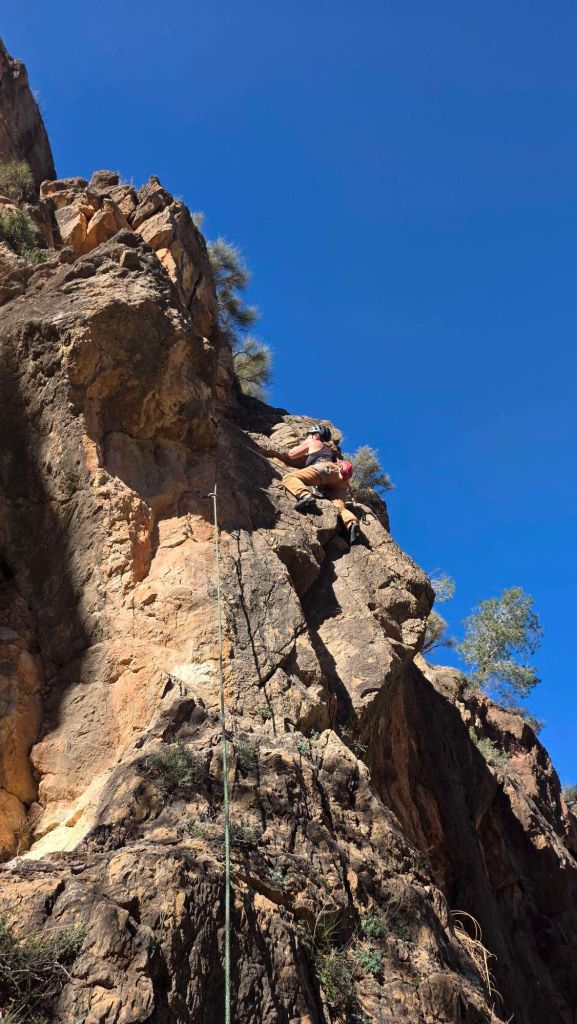
Tumbamientos, 6a, on Sector 8 (okay climbing but borderline dangerous bolting with 4 in about 15m); and La Zarzalea, 6a, on Sector 3 (almost over-bolted in contrast!)
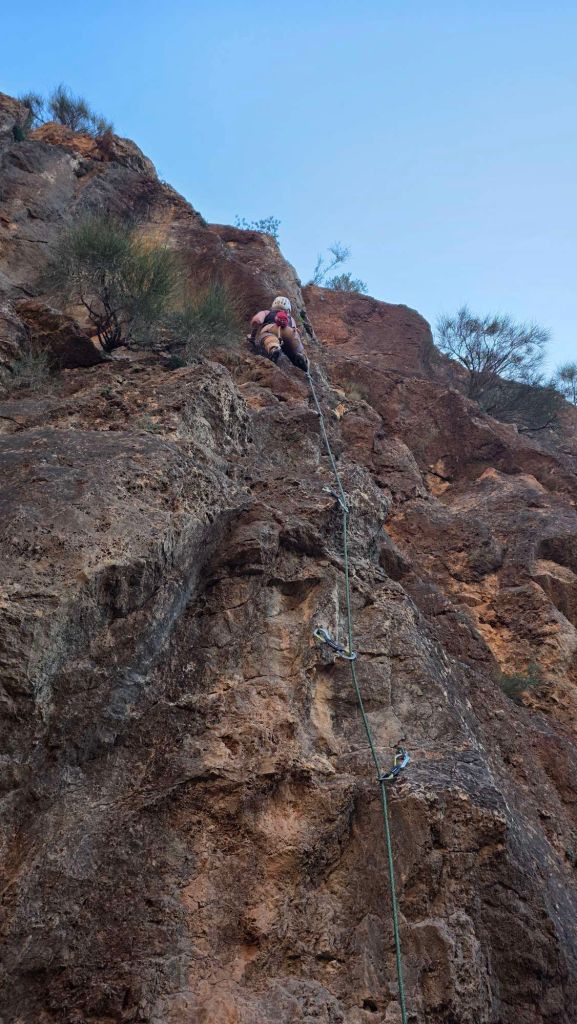
A very handy spot if you are passing or staying at the campsite.
Capileira
The picture postcard village of Capileira is visible high on the hillside above Órgiva, but it’s a torturous windy road, and that’s before you get to the crux; traversing the village is a tight squeeze in a tiny hire car (we were very grateful for Jim’s taxi service and thankful we hadn’t tried it in the van!)
If you get this right you’ll emerge (hopefully with your wing mirrors intact) at this pretty Belvedere parking area, and you’re only a 5mins horizontal stroll to the crag.
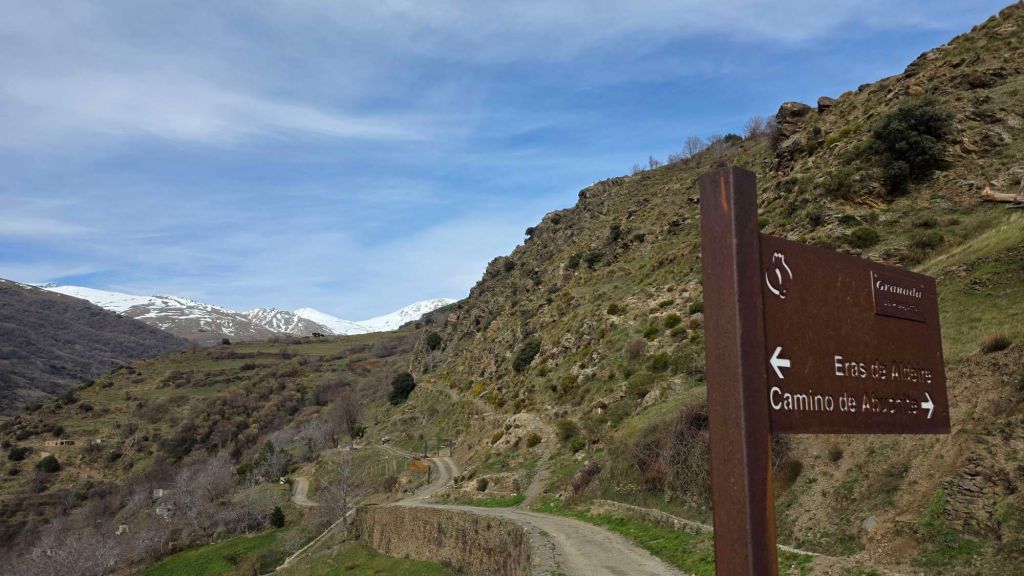
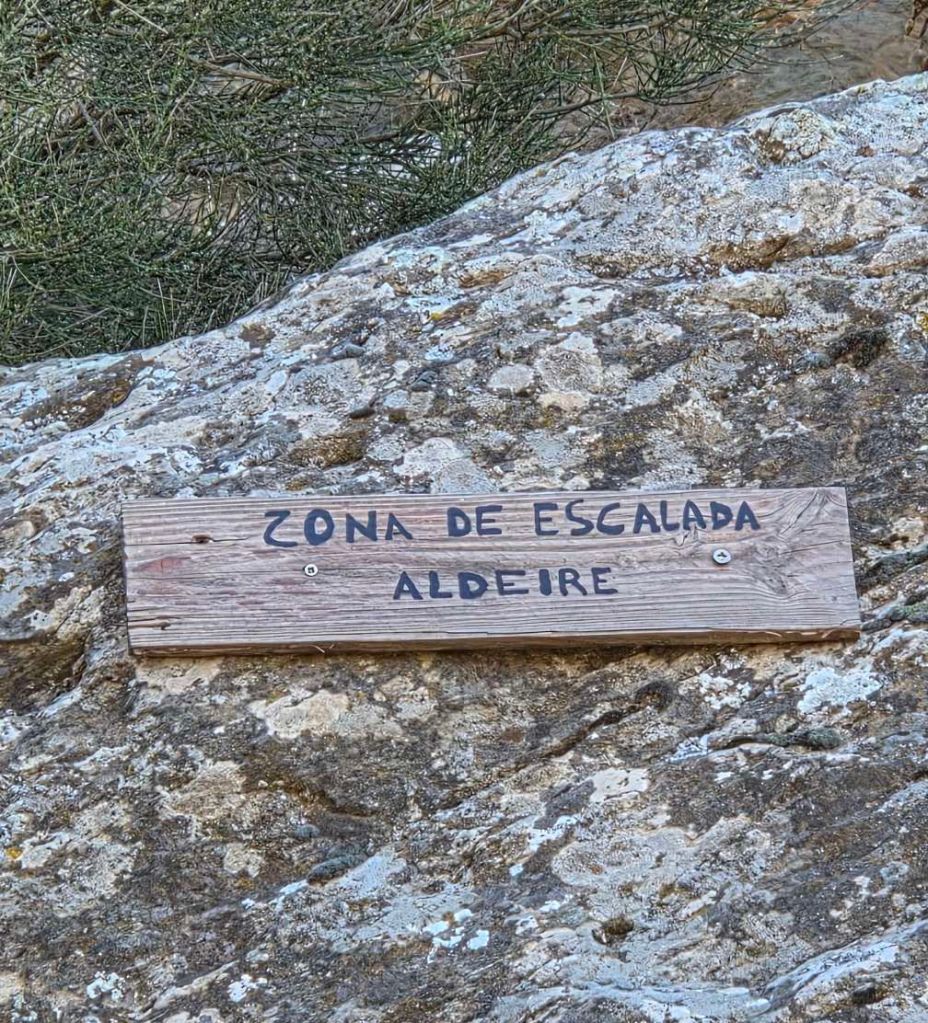
The crag is an anomaly, as the rock is some kind of slate / shist stuff (okay, I’m no geologist, but it’s definitely not limestone!) It doesn’t come into the sun until about 2ish and at 1,400m it’s a tad chilly in the shade in February! The topo at the above link is a bit hard to interpret and the grading is a tad on the stiff side to say the least.
The starts of the the routes vary from steep to brutally overhanging, and whilst the holds are generally generous you still need to pull quite hard on them. Here’s Jim on El Nido, 4 (you’re having a laugh!)
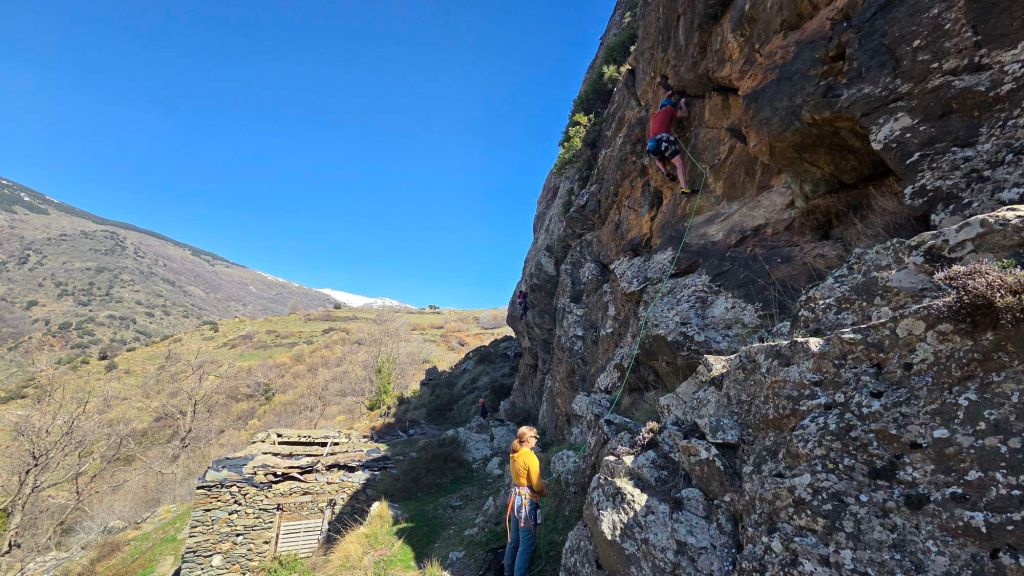
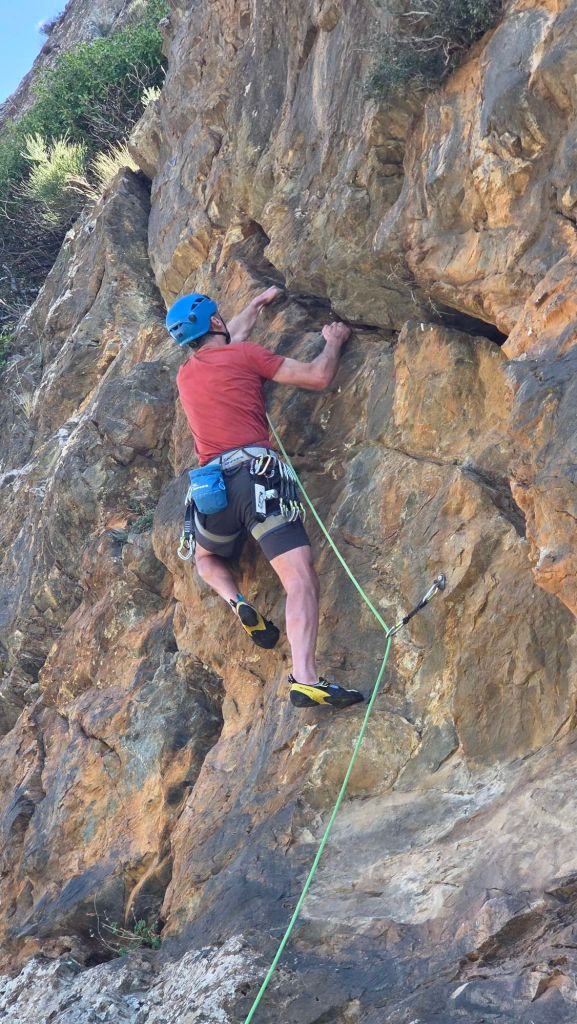
On the main cliff, Limon Amargo, 6a, and La Pradera, 5, Noche de Brujas, 5c, and La Hiedra, 4, we’re all fun but similarly sandbagged. The central routes have extensions to the full height of the crag, where the climbing turns crimpy. You pass this poignant plaque on the belay ledge:
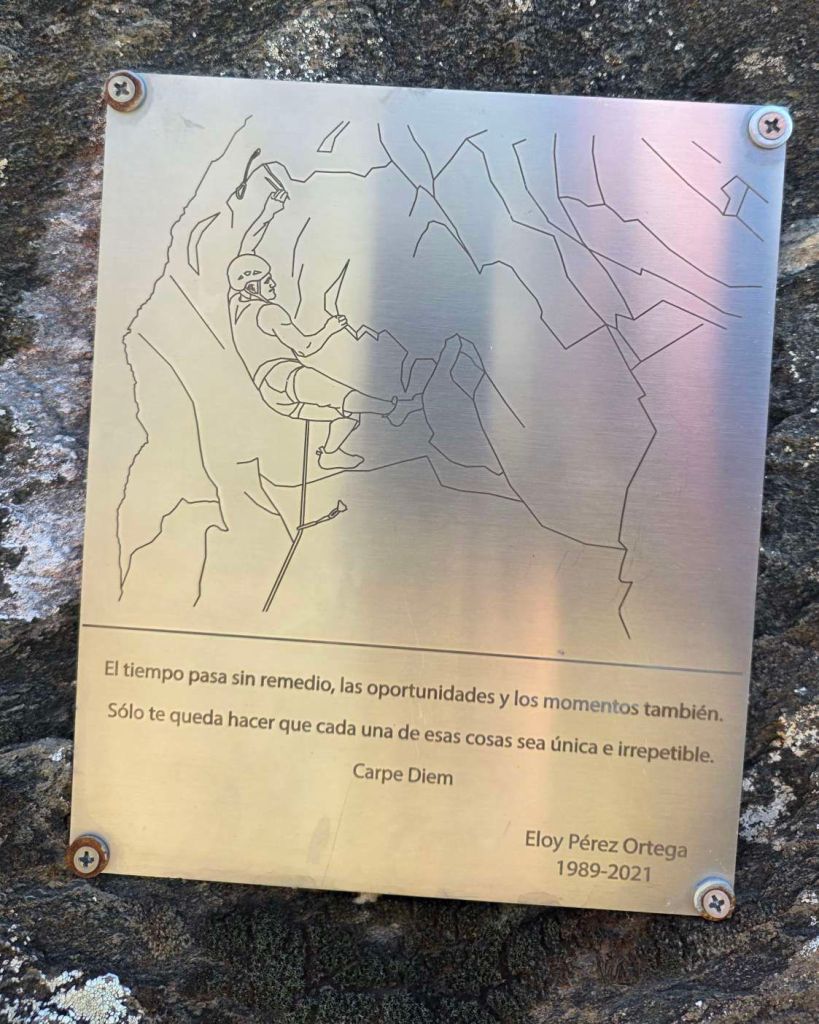
You just have to make each of those things unique and unrepeatable.
Carpe Diem
Further right there’s a sunny slab sector, where the routes and the grading are a bit friendlier. Here’s Helen on Paf, 4+
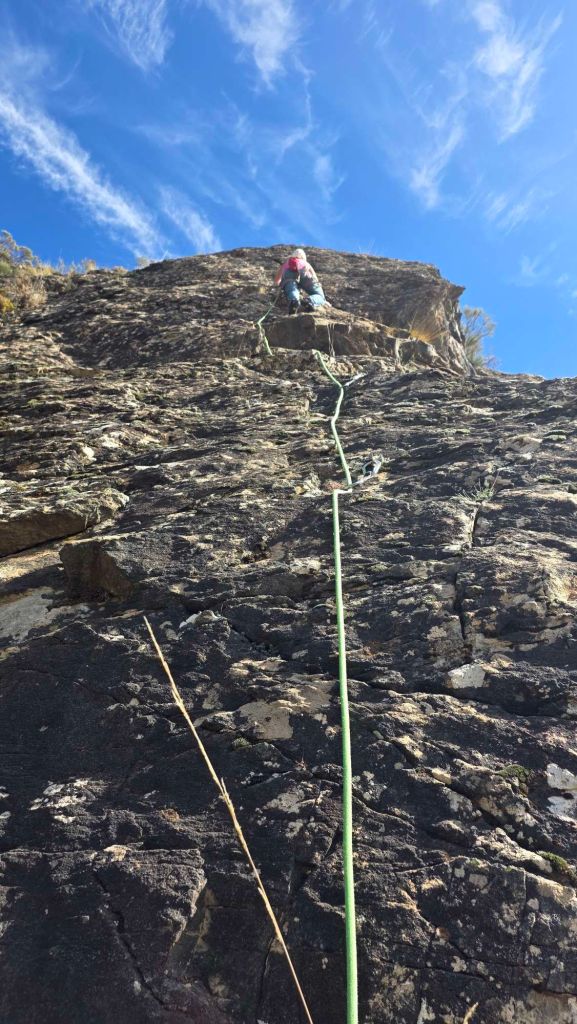
… and Popo, V+
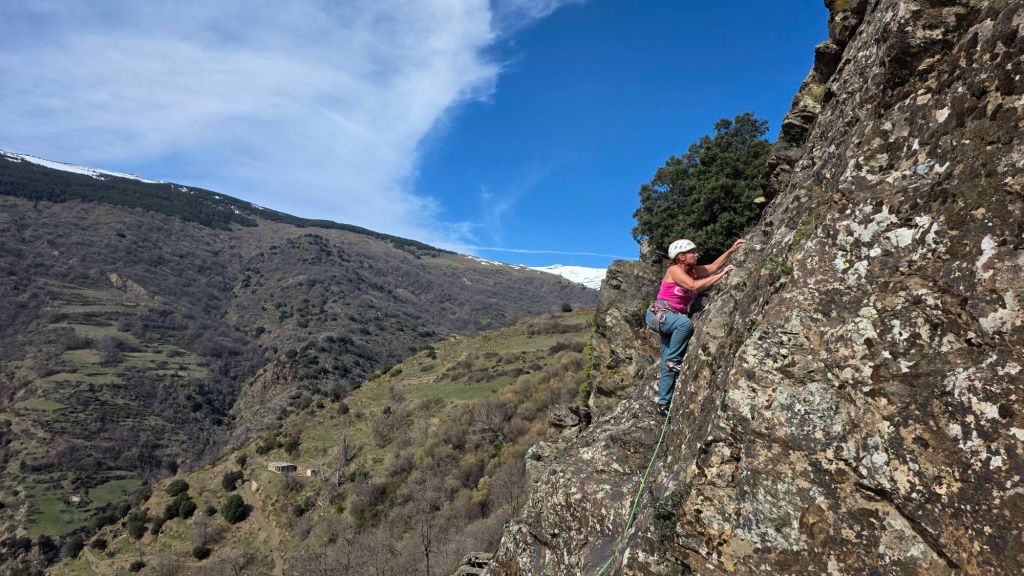
Here’s the view back to the crag (once the sun had come around)…
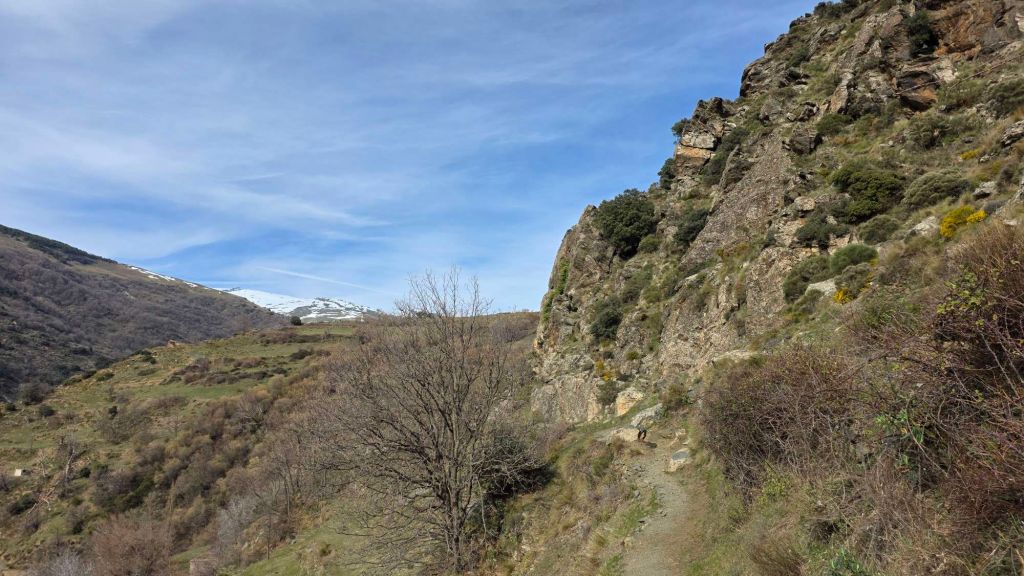
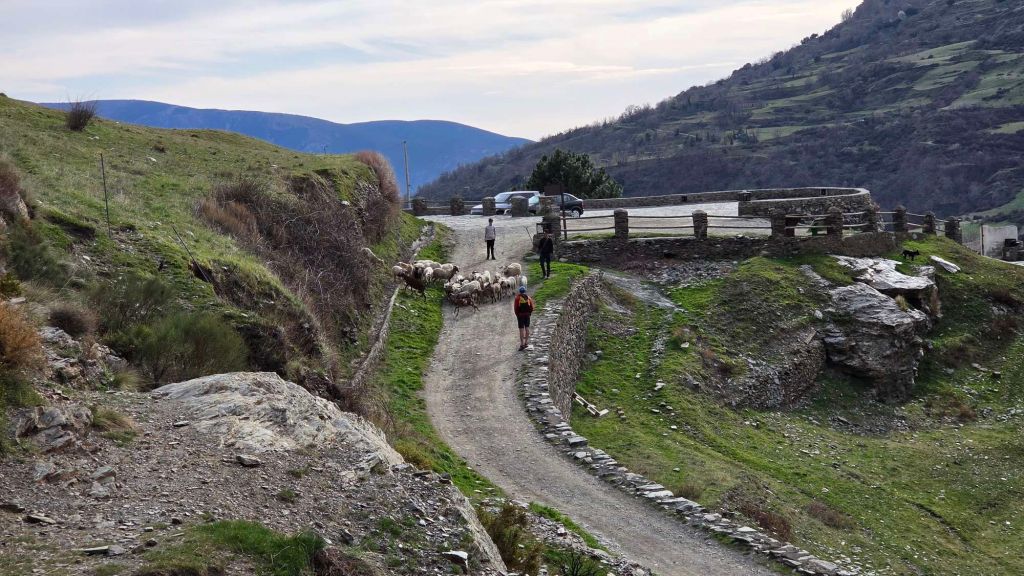
… and the final obstacle to the journey – a sheep-jam!
Cerro del Toro
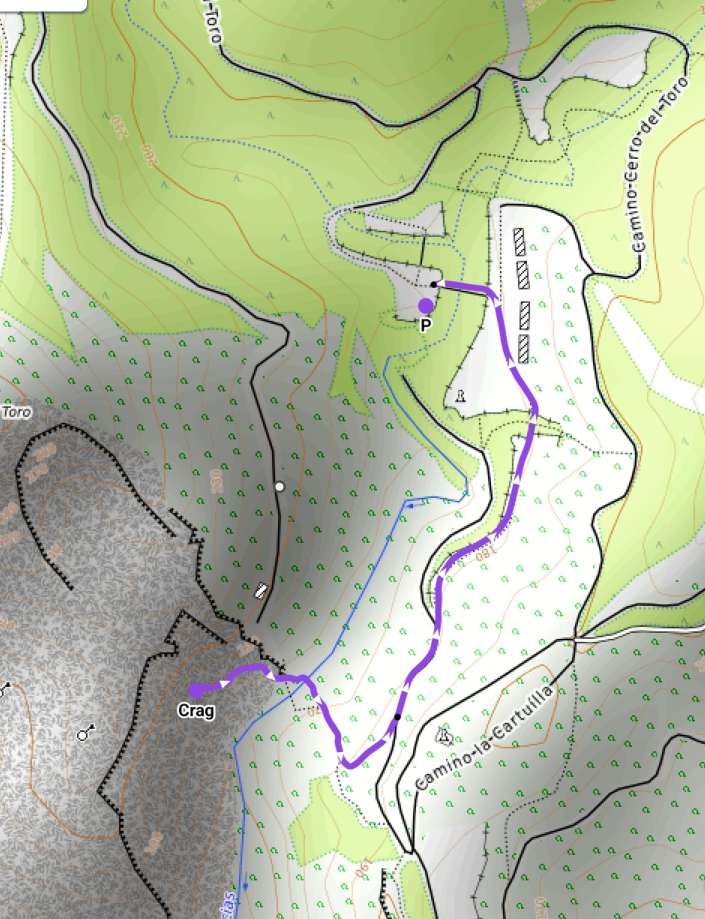
This one does make it into the Granada guide. The crag is set in an unusual location, a reclaimed mining area which has had a lot of money spent on it (fancy stone feature walls, walkways and iron bridges) but has fallen into disrepair. Anyway, it makes for a handy parking spot (and probably on okay overnight, though we were based on the campsite). You can park a bit closer according to the guide but the road isn’t in great shape, and it’s only a 10mins approach rather than the claimed 5. It’s not entirely obvious, so here’s a trail…
There are two contrasting crags. El Espejo on the left (sunny, steep slab, with routes to 40m and more) and Extraplomos, skulking on the right with shady, overhanging 10m nasties, mostly 7s and 8s. Guess where we headed?
A German couple were just packing up as we arrived – here’s the bloke on maybe Curro, 6a+
We were totally frazzled in the sun and settled for Normal – an unremarkable name for a very worthwhile route: two pitches of 20+m 5, 5 but well worth a plus in a oner. WARNING it’s over 40m to lower off, not the 35m suggested in the guidebook (we’re prepared to cut guidebook authors a bit of slack for the occasional error, but this one is towards the unforgivable end of the spectrum).
Great outlook and one to revisit on a cooler day or after 4ish once the sun goes off.
 RockAroundTheWorld