
One of my first jobs in the BMC “hot seat” was to write to the National Trust in support of efforts by the access team to re-open access to the iconic Skeleton Ridge on the Isle of Wight. Wheeling out “The Big Guns” in support, I suspect the signatures of Chris Bonington and first ascentionist Mick Fowler carried more weight than mine!
https://www.thebmc.co.uk/en/skeleton-ridge-access-isle-of-wight
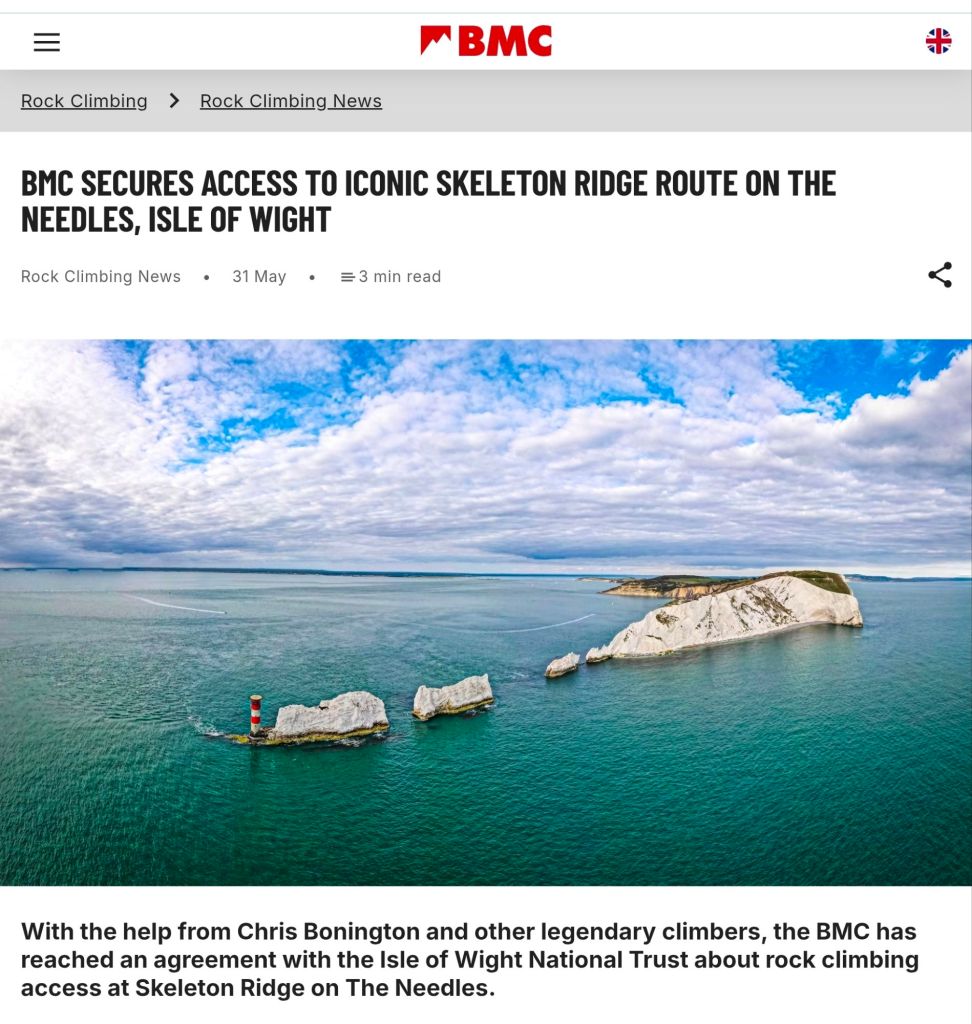
It was a high-profile triumph for collaborative working between volunteers and landowners, even though it’s not the kind of route that is going to appeal to many. It’s tricky to access, a tad esoteric and fraught with a dose of adventure bordering on hazard – not criteria to tick everyone’s boxes, but it made it’s way onto my to-do list.
It could have languished there (it’s a long list) but it also ticked Gareth’s boxes too, so with a willing accomplice we set about the business of pencilling in a date – planned almost a year in advance to work around a bird ban until the start of August and a very tidal approach. As the date drew closer, Helen and Stan were recruited to swell the team to four, so it was cosy as we squeezed everyone into the RockAroundTheWorld truck for the ferry ride onto the island – top tip, it more than halves the ferry cost if you are a member of the Caravan and Motorhome Club (the saving would pay for a few years’ membership).
It’s a bit of a faff to organise, but absolutely essential to continue to retain access. You need to write for permission in advance (the NT team are very helpful) and also inform the coastguard, so nobody tries to rescue you. Full details on the BMC RAD
https://services.thebmc.co.uk/modules/rad/view.aspx?id=212
It’s a pretty tight window to get in and out to do the ridge. The gates at the Old Battery don’t open until 10:30am (though staff at the NT site will arrive early, by arrangement, to allow access through the gates at 9.30am), and you need to be out by 5pm at the latest. The problem is, you need a spring tide for any chance of a splosh rather than a swim, and these occur in the small hours of the morning. You’ll see the trade-off if you have a look at this excerpt for the tide timetable for Freshwater, the closest location. You can download a year in advance for a couple of quid from http://www.tidetimes.org.uk
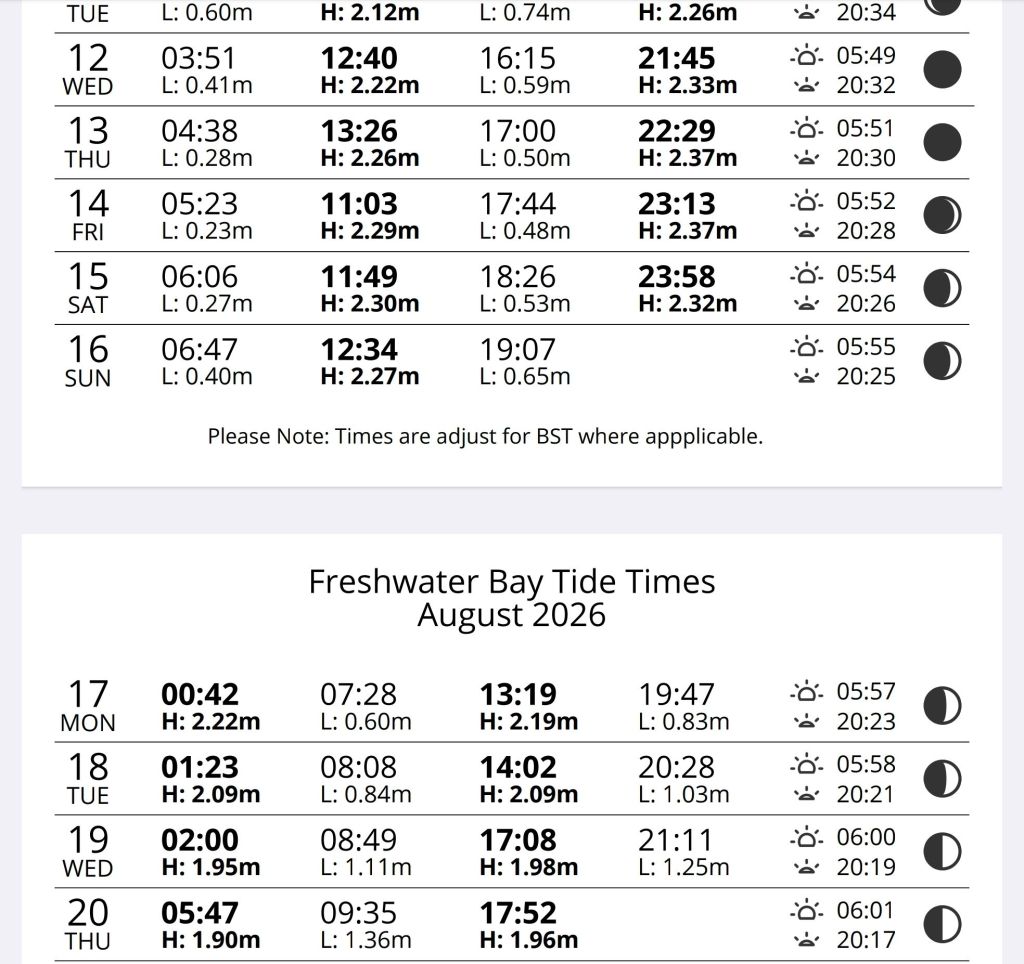
When we planned the trip, access was available at 8am so we settled on Monday 17th August as the first, lowest low tide after the end of the bird ban. This subsequently changed to 9.30am due to an NT budget squeeze, so we’d be abbing in a couple of hours after low tide at best…
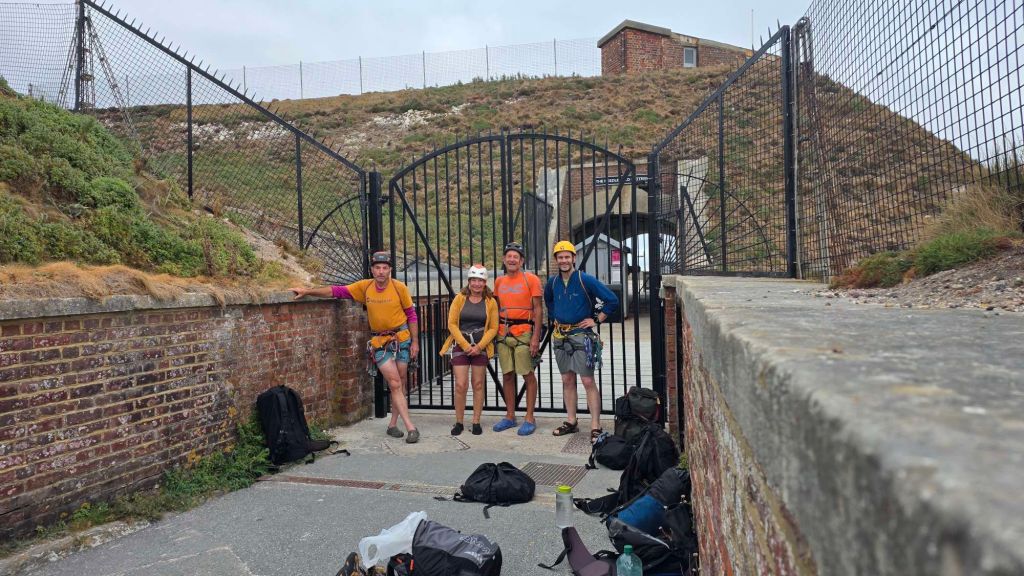
Every minute would count, so we were ready and kitted up at the gate at ten to nine, with our NT contact kindly volunteering to meet us half an hour early.
There are three splendid new stainless steel stakes (thanks to Marti, the local access volunteer) and a spare 40m is useful to equalise these to a rap point on the cliff edge.
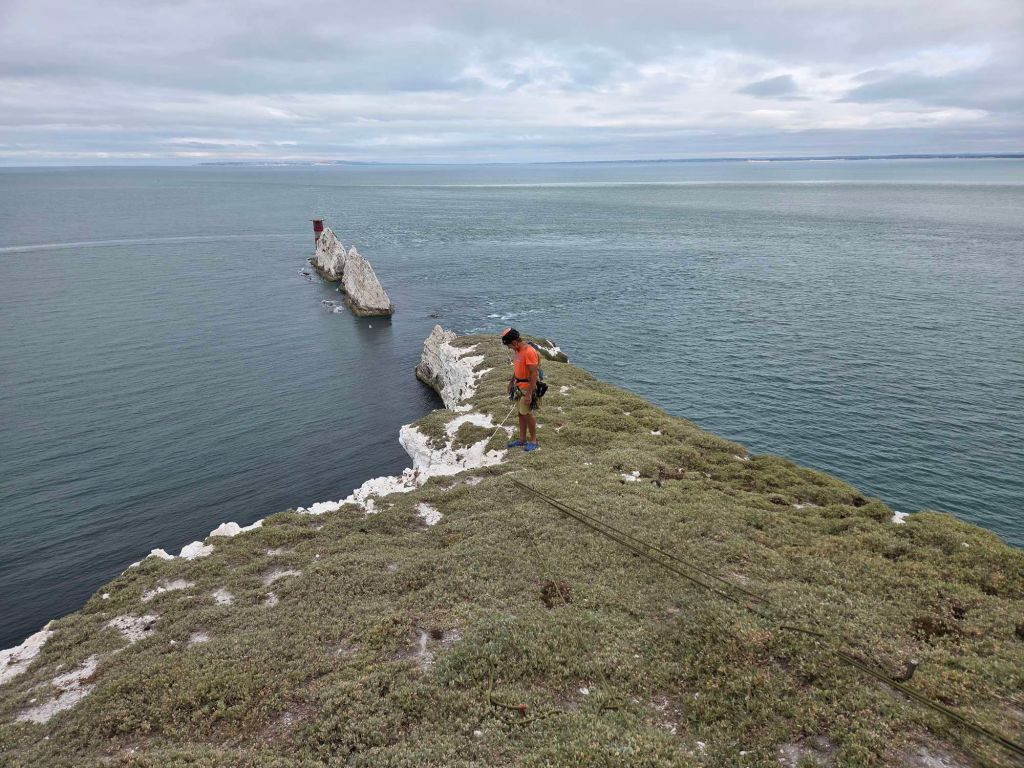
You toss a 70m rope down to the foot of the cliff and trail another 50m to the top out. That was all accomplished with military precision in less than 10mins and Stan was soon on his way down to the sea, followed shortly after by Helen.
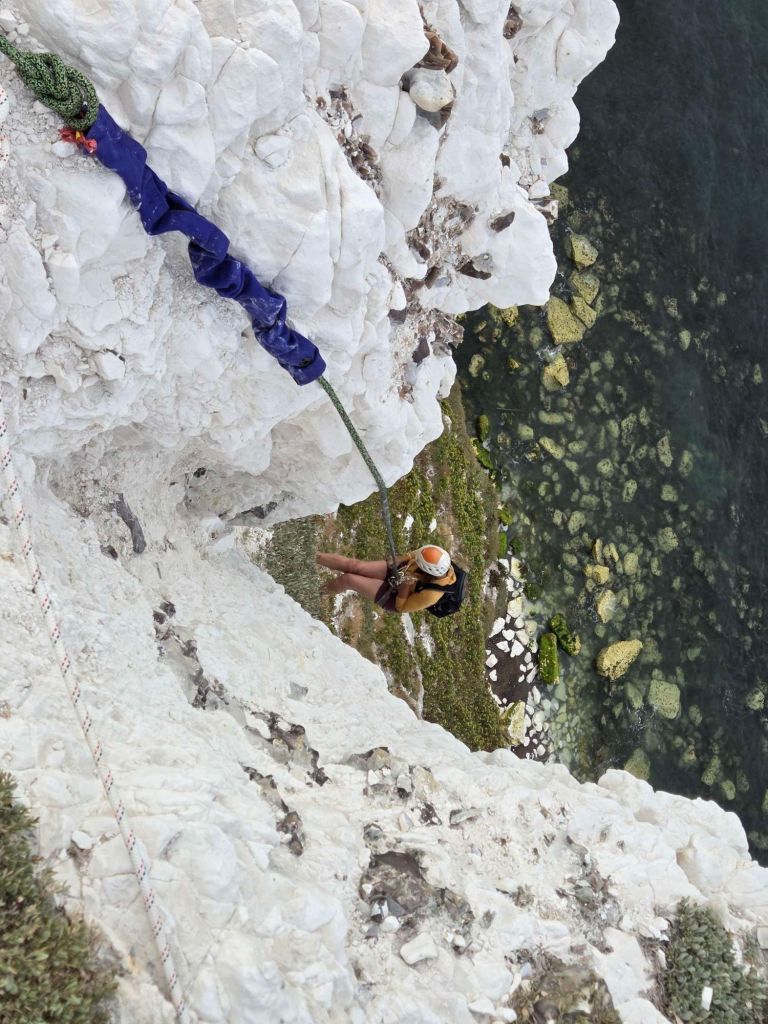
Heading last down the rope it was hard to ignore the chalk crumbling away beneath the rope protector (or rather chalk protector!) I’d rationalised that the “chalk” would actually be more like a slightly softer limestone, but no – it’s chalk like you get on a blackboard!
The foot of the ab is on dry land, but you are soon wading (or at least we were, at about 2hrs after low tide) for the last chunk of the 100m or so to the start of the route.
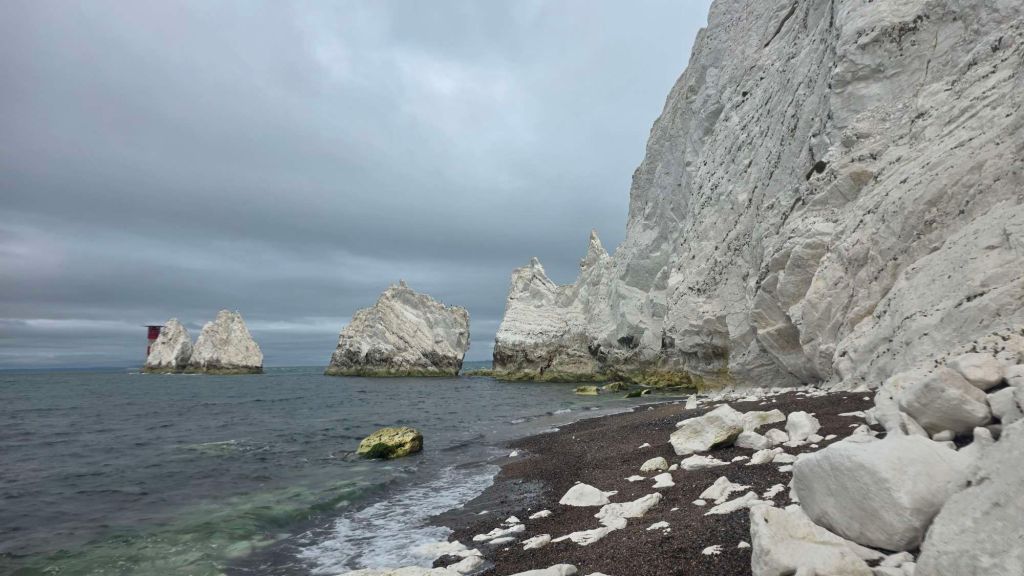
By the time I brought up the rear the water was at my waist with waves lapping up to my chest. In hindsight, it’s probably best to think of immersion as the most likely outcome and plan accordingly. Rock boots and chalk bags in a poly bag or dry bag and maybe Crocs to wade in – it’s less sploshy than Old Man of Stoer and the water is warmer. Probably the biggest thing to be wary of is to check how rough the sea is likely to be – you’ll find good forecasts for wave height and swell on Windy.com (I think you probably add the two). We had a benign combo of about 0.6m whereas the following day was looking like double that!
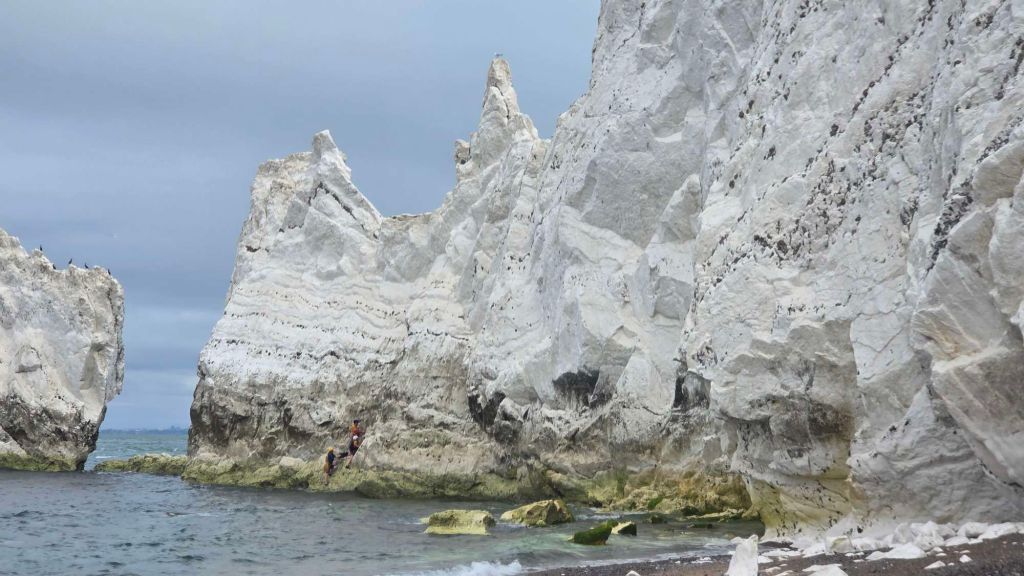
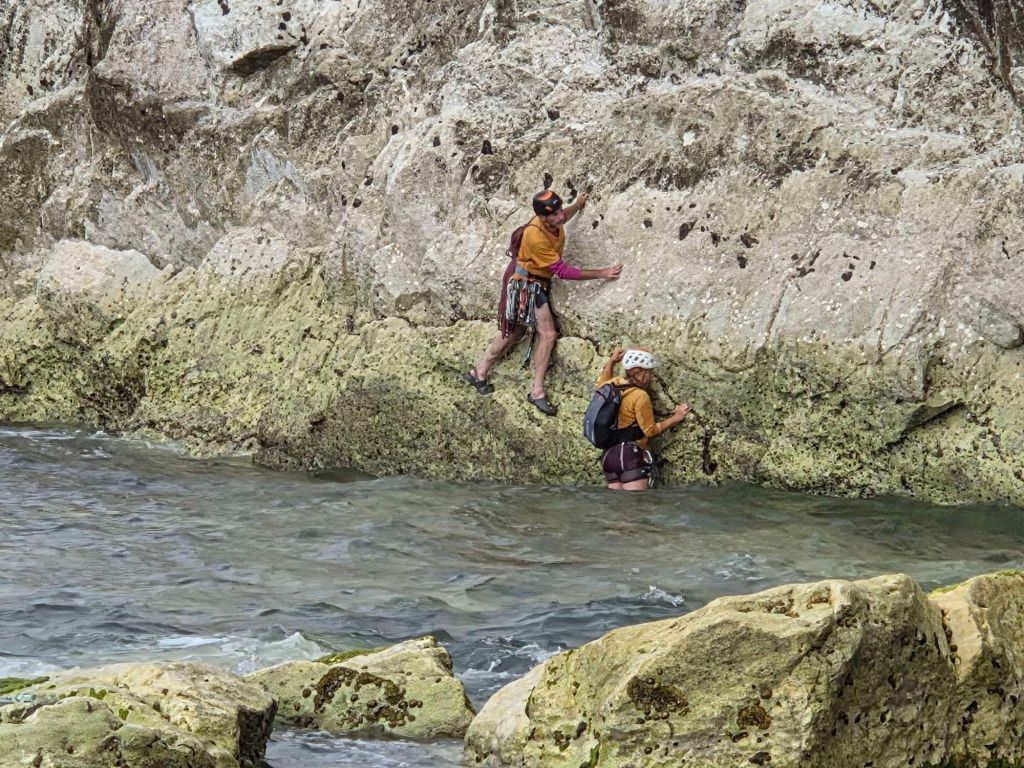
We were safely assembled on dryish land by 9.45…
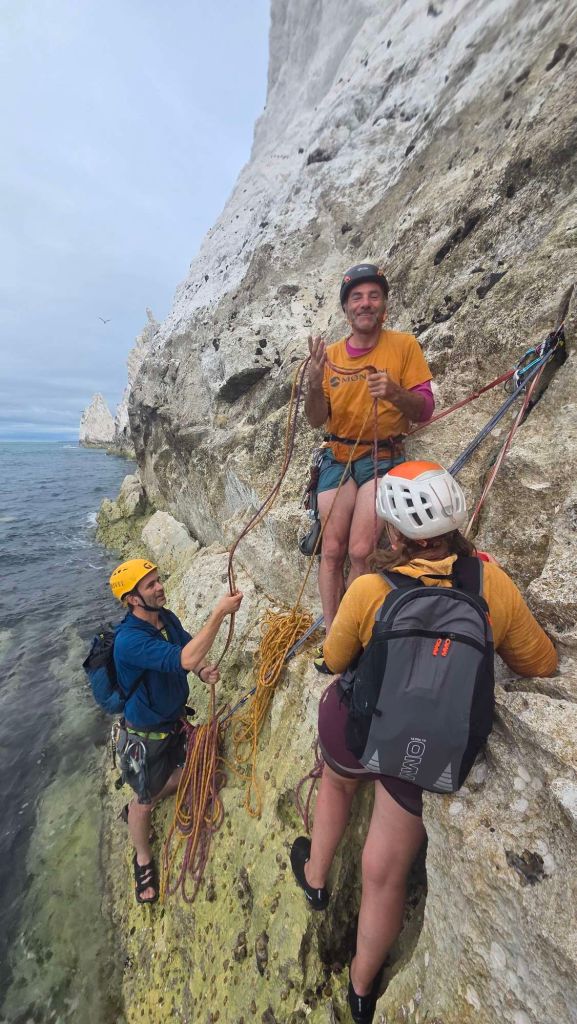
Broody and menacing in the swirling cloud…
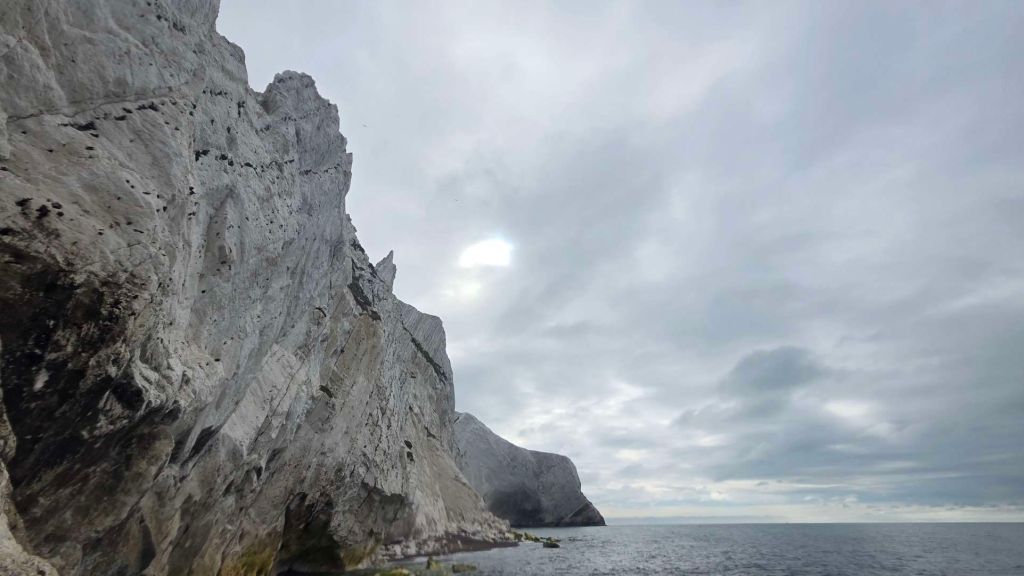
Time to crack on whilst we were still above the briny. Stan set off to get the team landed on the ridge proper…
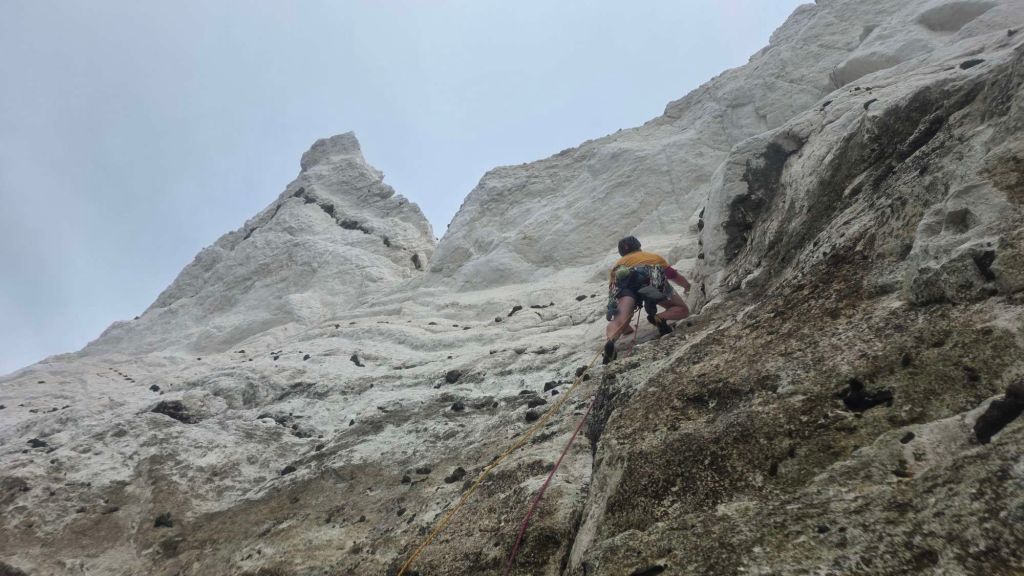
The first pitch follows a shallow corner before traversing out left on a line of embedded flints and then upwards to the notch next to the first tower.
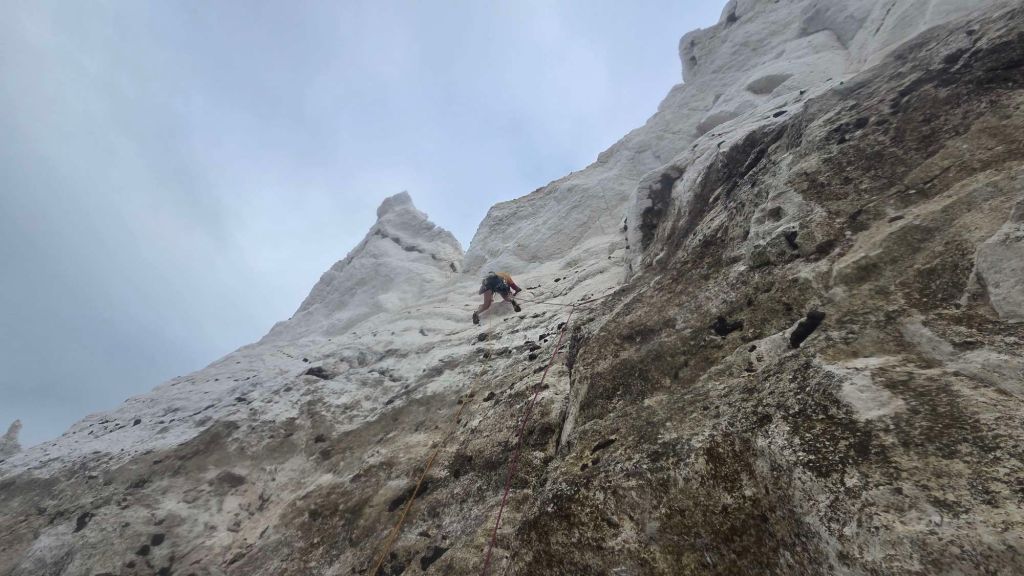
The flints offer some reassurance, but that proved to be illusory as a large chunk of chalk containing one of them came off in Helen’s hand…
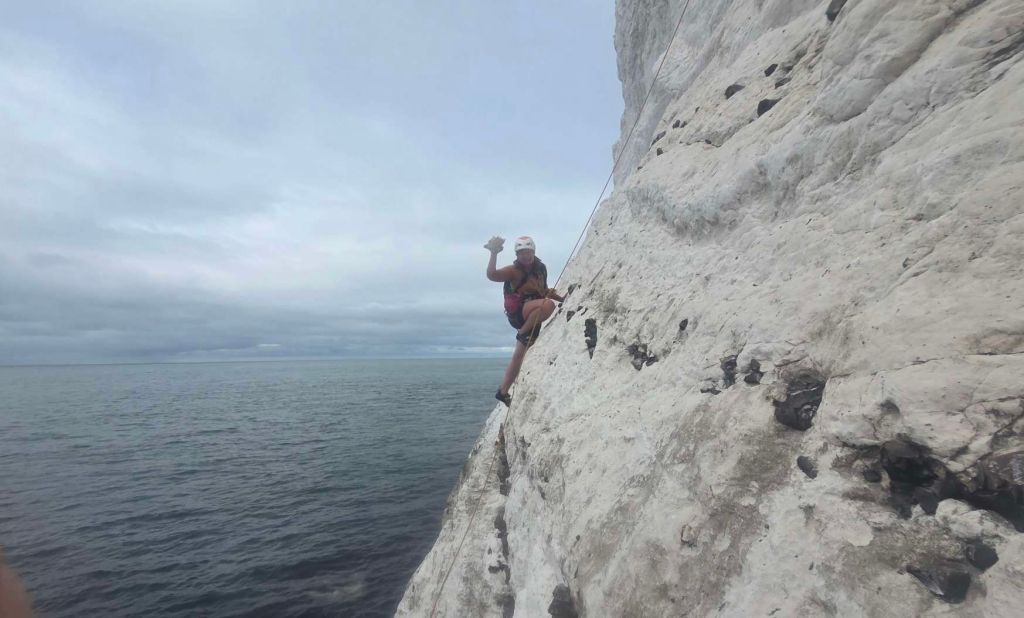
Gareth just about escaped a further wetting…
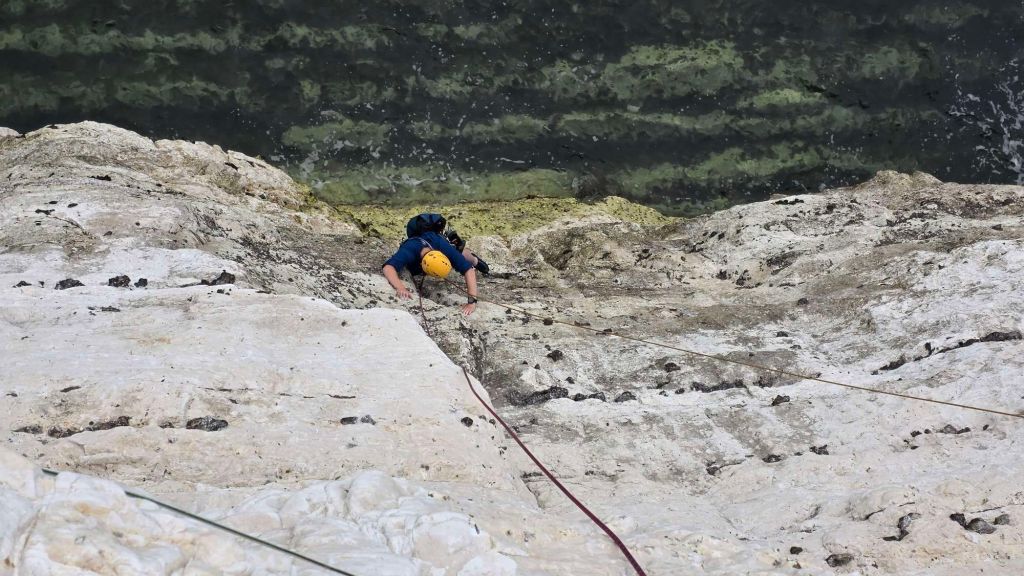
There are a couple of cruddy pegs at the notch (all the pegs have seen better days!) and Stan pressed on to belay halfway along P2 at the foot of the second tower, which takes a reassuring 8ft sling (these are very useful).
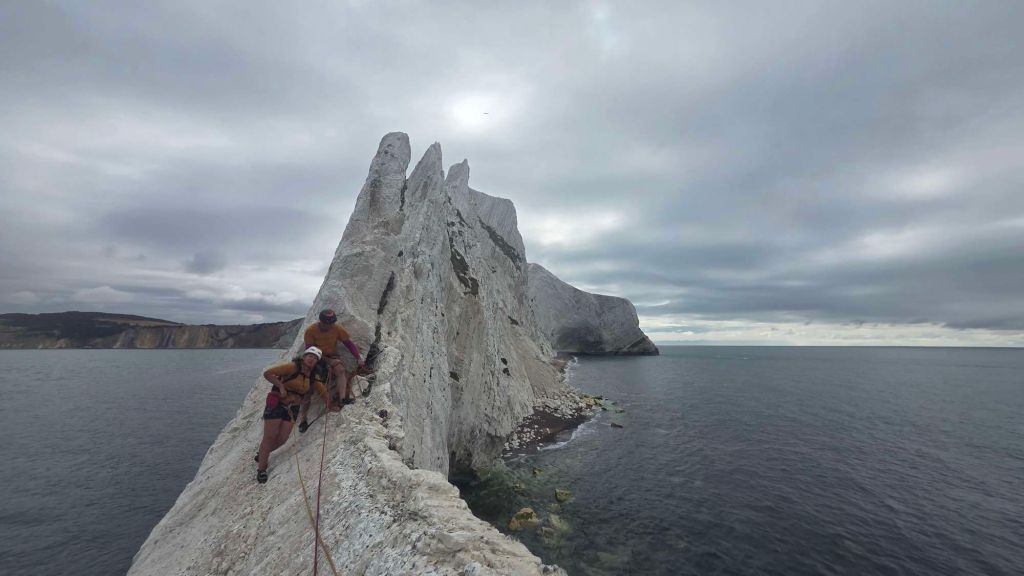
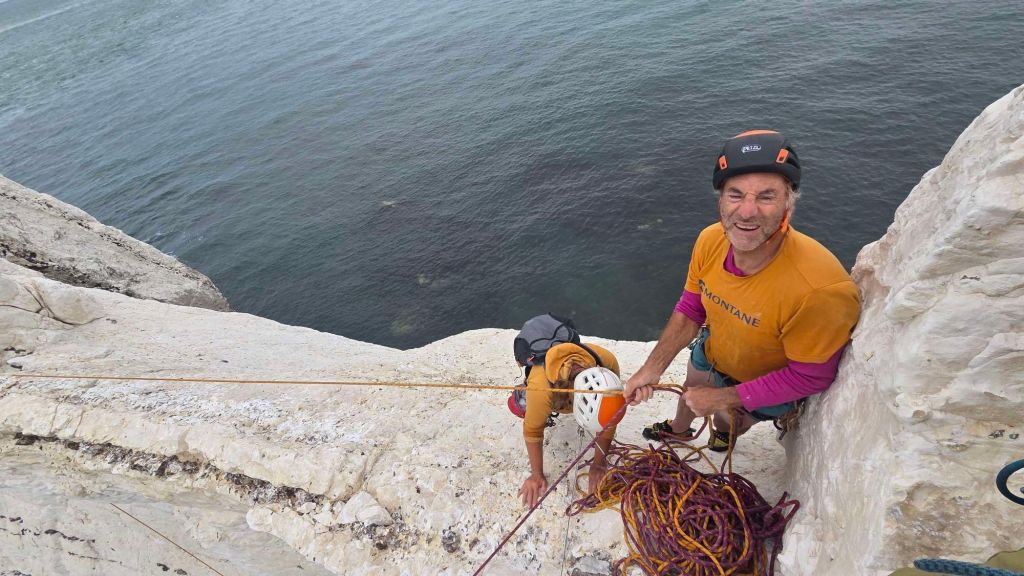
Here’s Gareth demonstrating excellent “a cheval” technique, bringing up the rear:
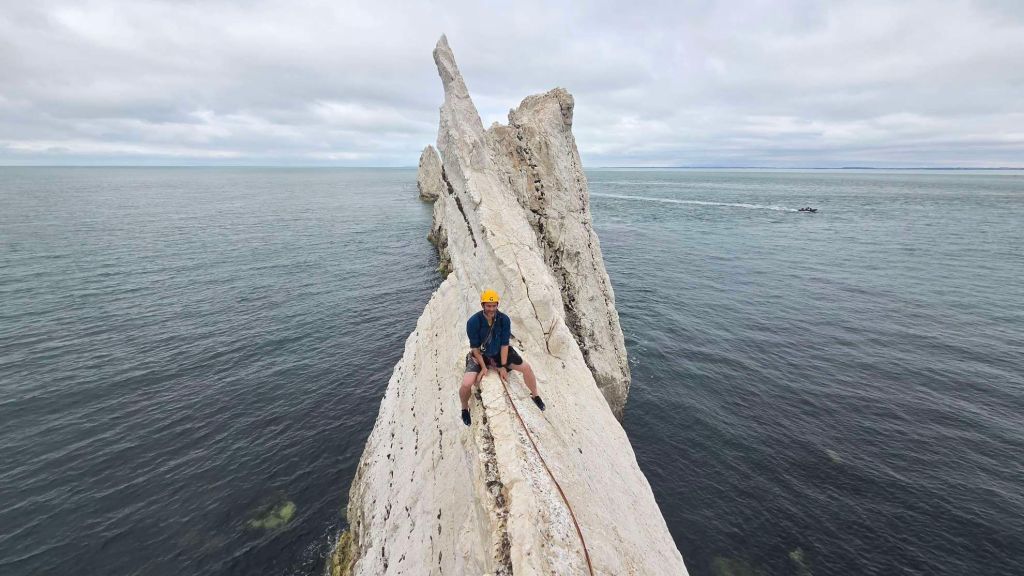
We ran the remainder of P2, traversing around the back of the second tower (here’s Helen following)…
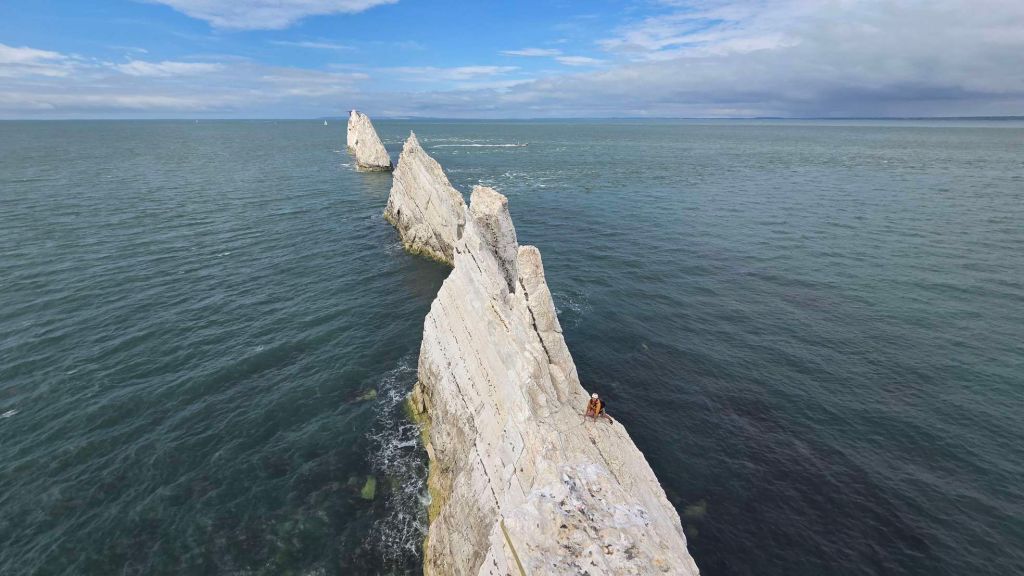
into P3 which is the crux. Another a cheval section leads to an abrupt steepening…
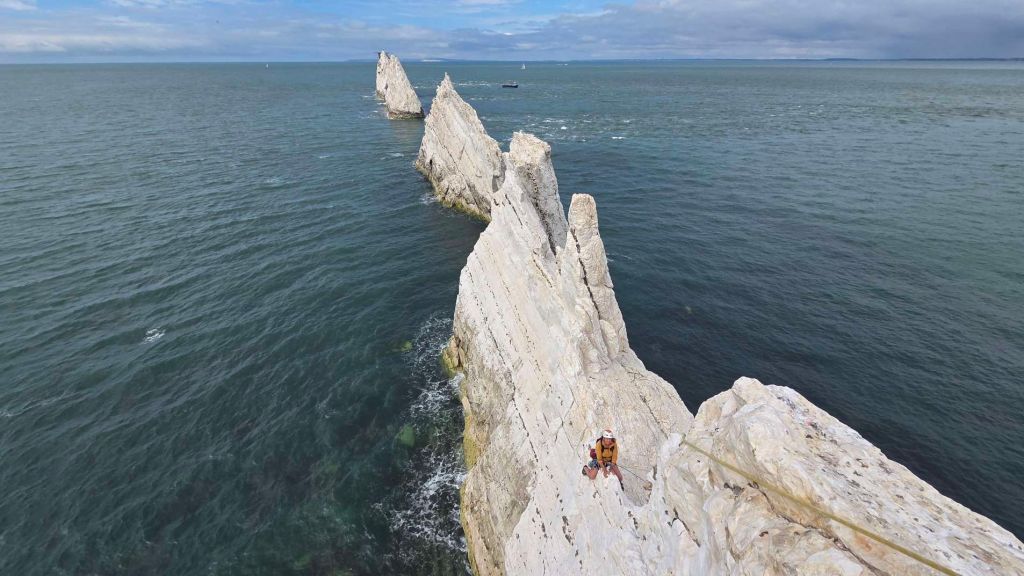
… and some 4c pulling. Up until now it’s been about maintaining as many points of contact as possible to spread the load, but for a few moves here you have to actually yard fairly hard. Heart in mouth time, with the assembly of rusty stumps masquerading as your protection some way beneath your feet. I had a small black Totem just beneath these which I was more convinced by.
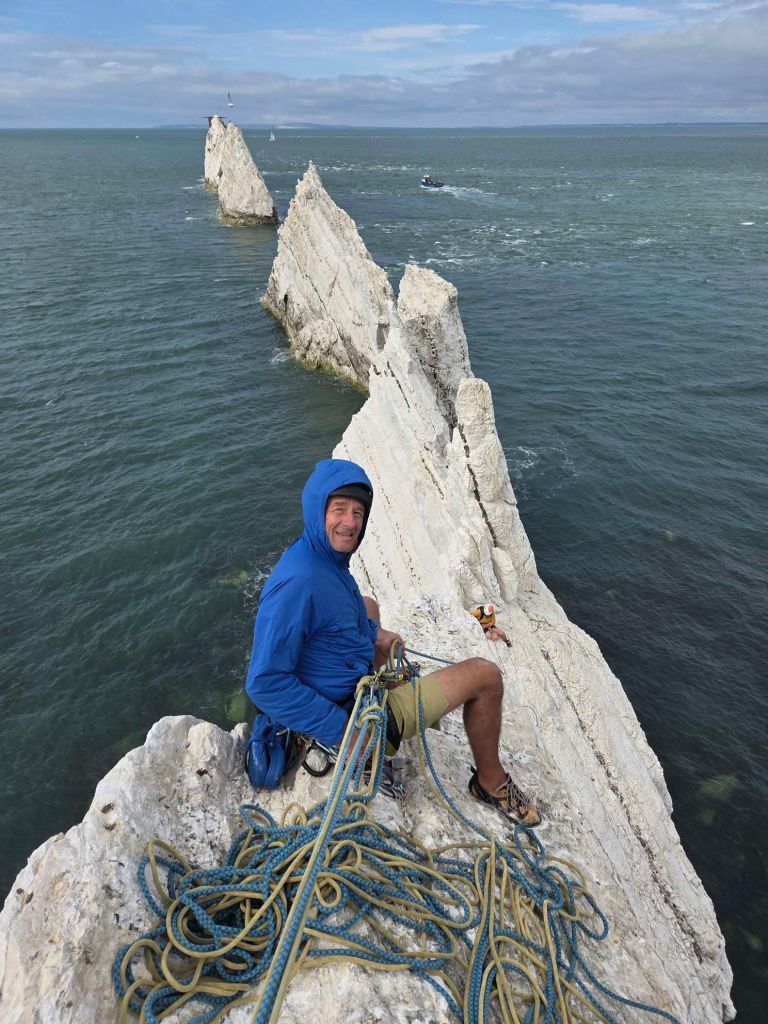
With pitch 3 (our P2) out of the way, it’s back to “a cheval” and a crumbly meander across to the foot of the final tower.
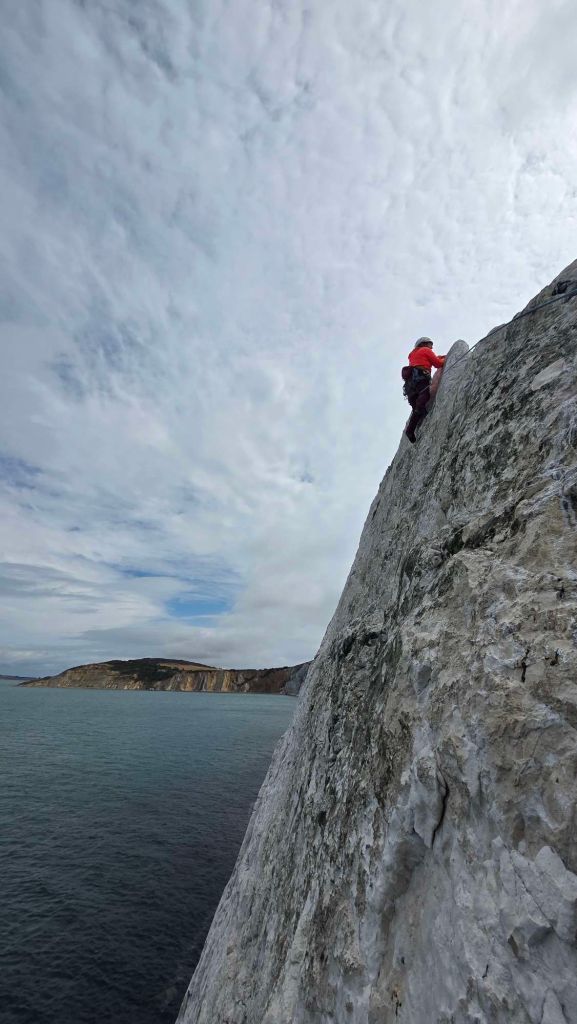
Here’s a view across to Gareth and Helen on the P4 stance with Stan tackling the final airy arete.
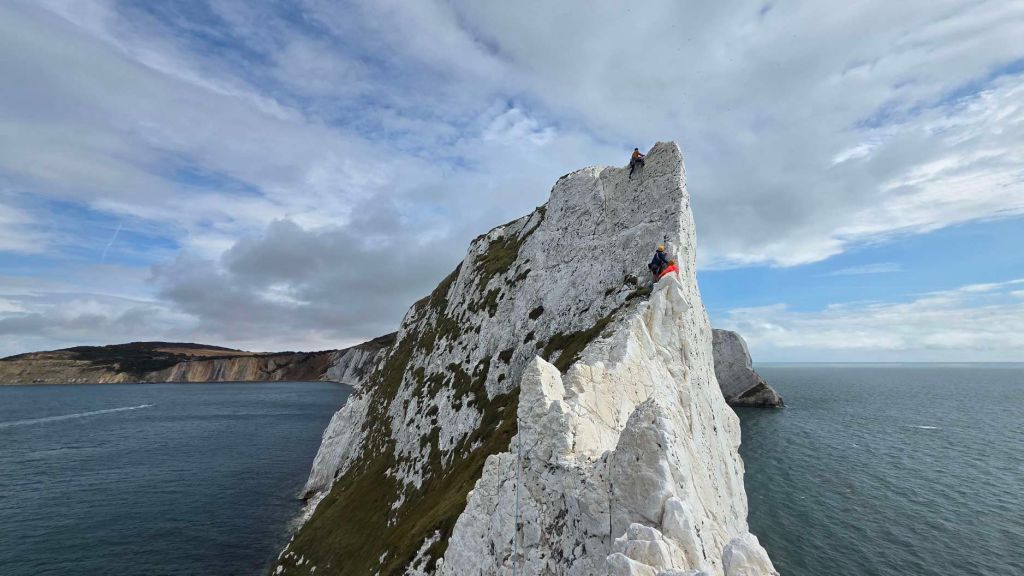
The arete has a tonne of exposure, with only a couple of questionable pegs around half height, and a top out to an overhanging knife-edged fin. Here’s a closer view of Helen…
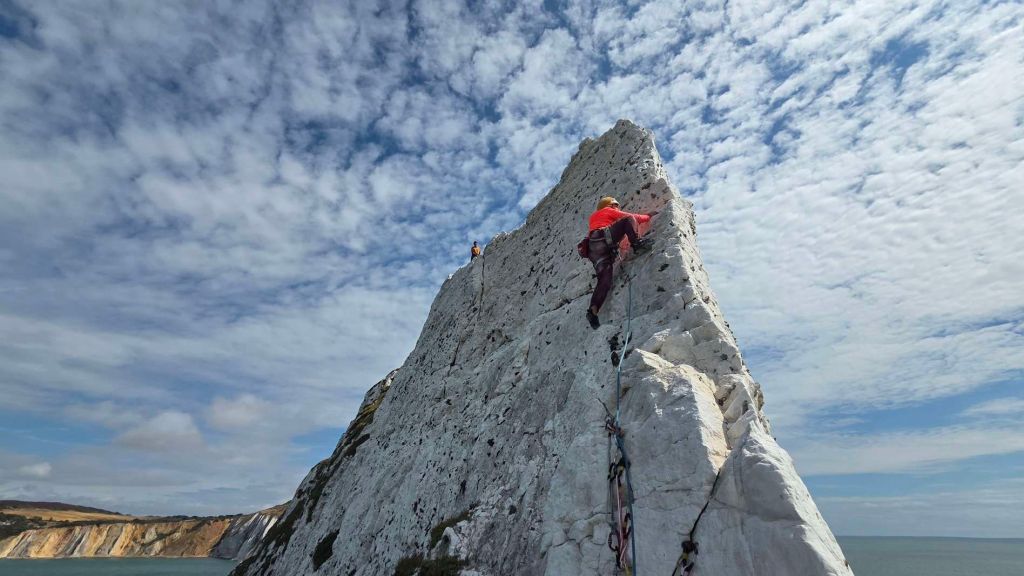
By now, the wind had really picked up – handy for drying out residual sogginess but pretty alarming on the exposed ridge (worth bearing in mind that windspeed on the ridge felt massively more than what was forecasted at the nearest Met Office location). Our ropes were ballooning out over the sea…
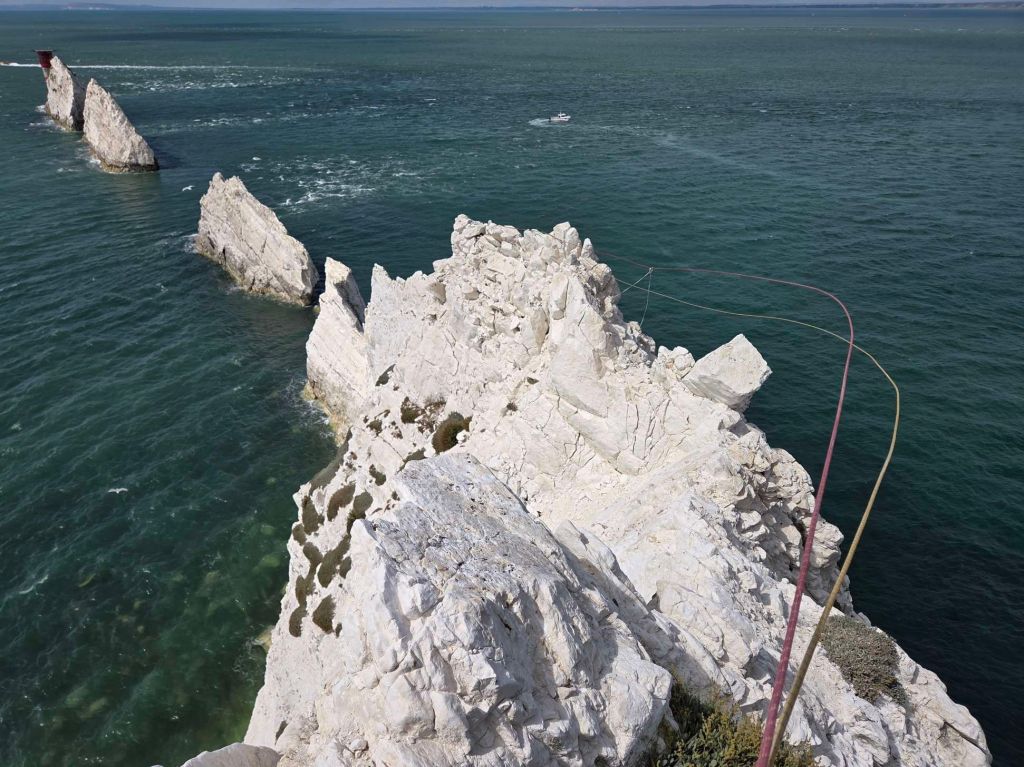
… and we were thankful for Stan and Gareth’s ingenuity in weighting down a draped sling with our peg hammer.
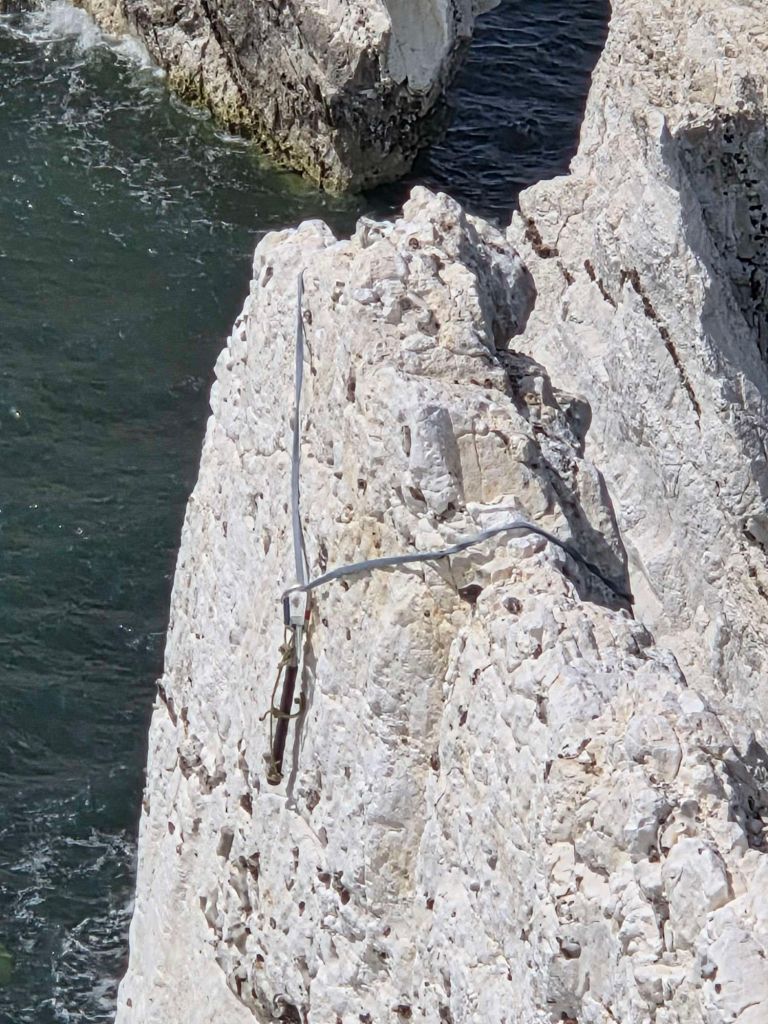
The final exposed walk / shuffle to the cliff top makes for the best pics of the trip.
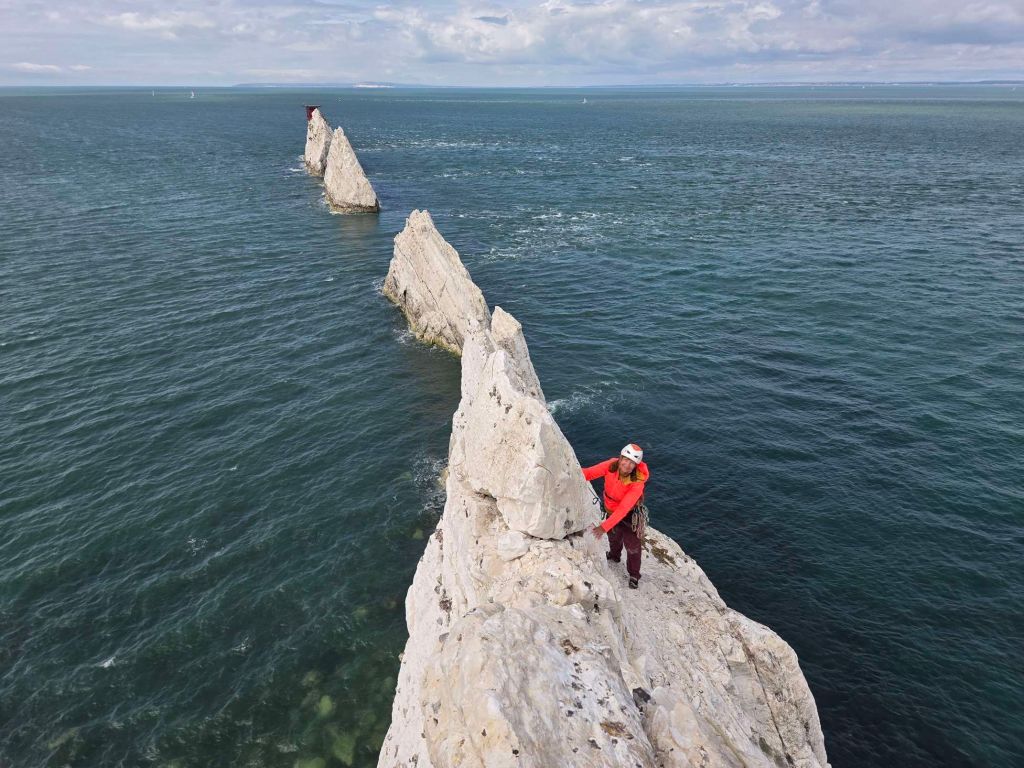
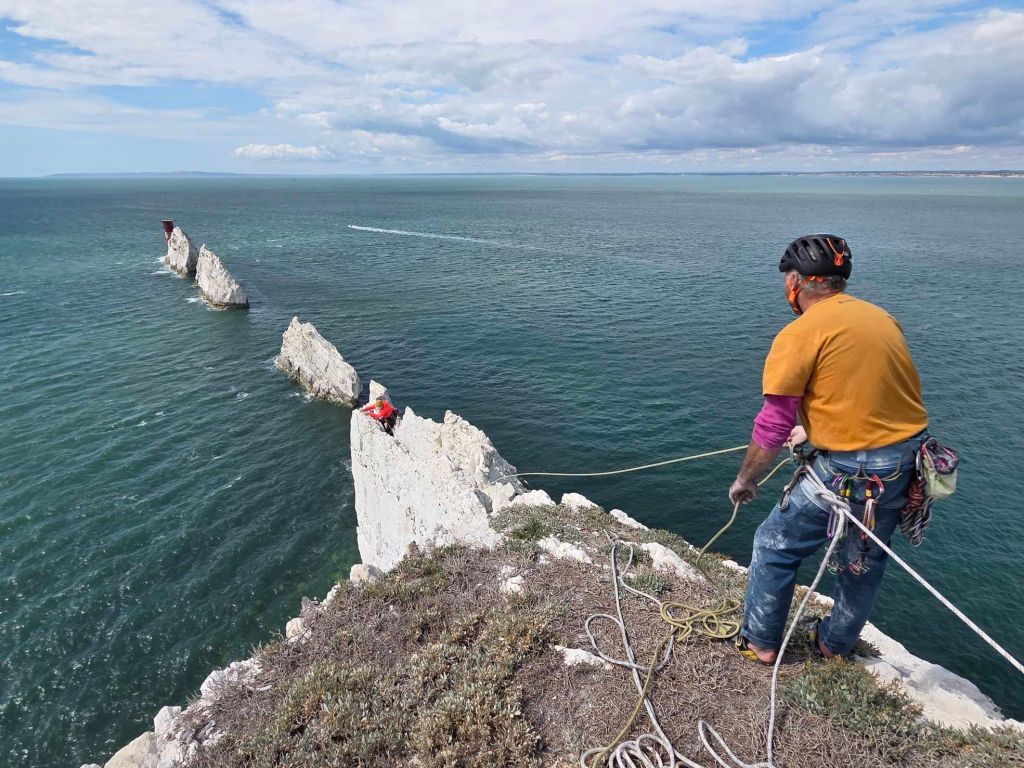
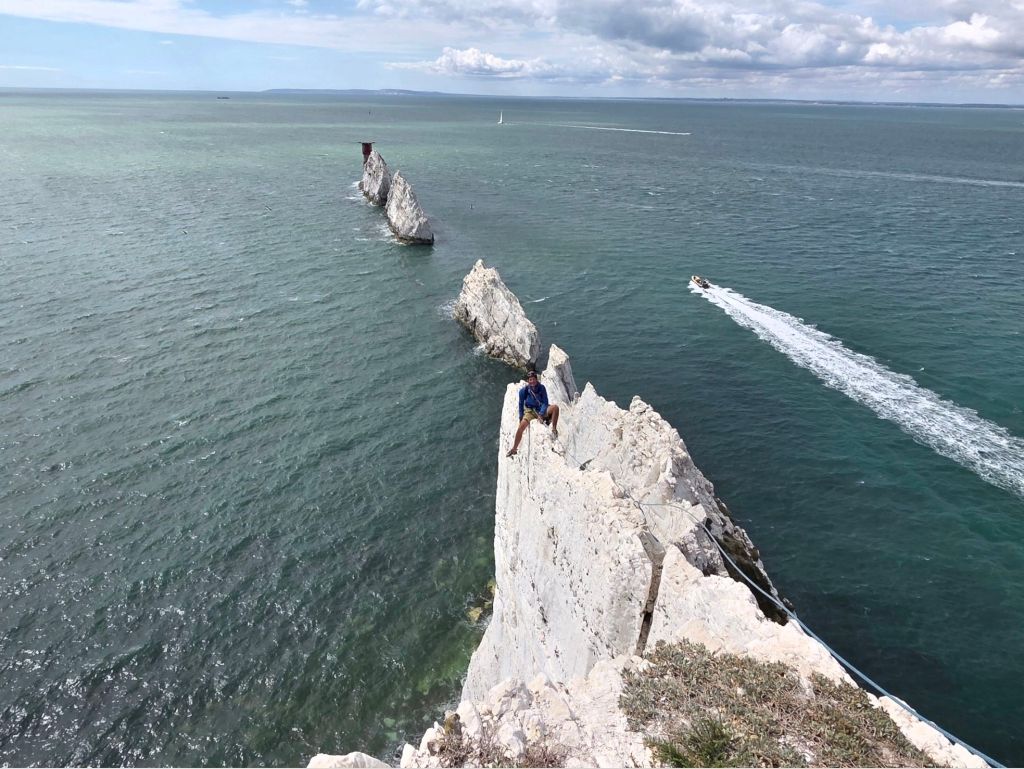
Topping out, there’s a sense of mild disappointment that the adventure is over, but also a bit of a relief that none of the occasional crumbles had taken one of us with it. Types 1.5 fun? It was certainly a good feeling to be able to call the Coastguard to let them know we were safely out of harm’s way.
You top out back at the ab stakes, immediately in front of a clifftop bunker which is now part of the “Old Battery Tour” and we provided a bunch of visitors with the bonus view of some very chalky climbers emerging from the depths.
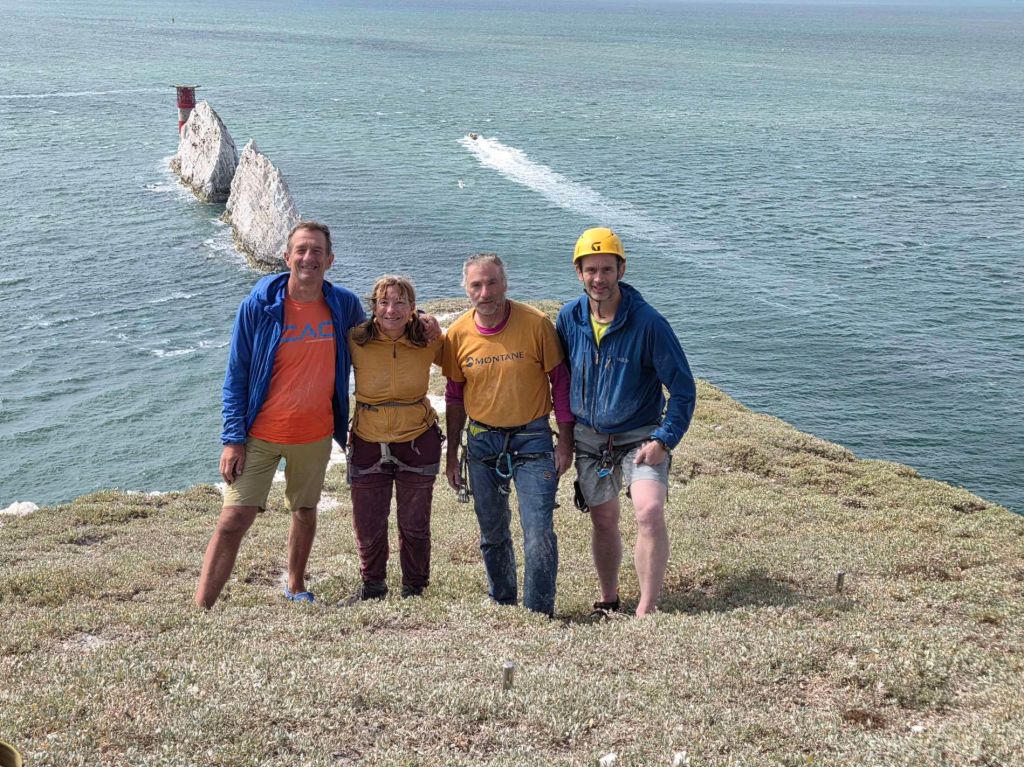
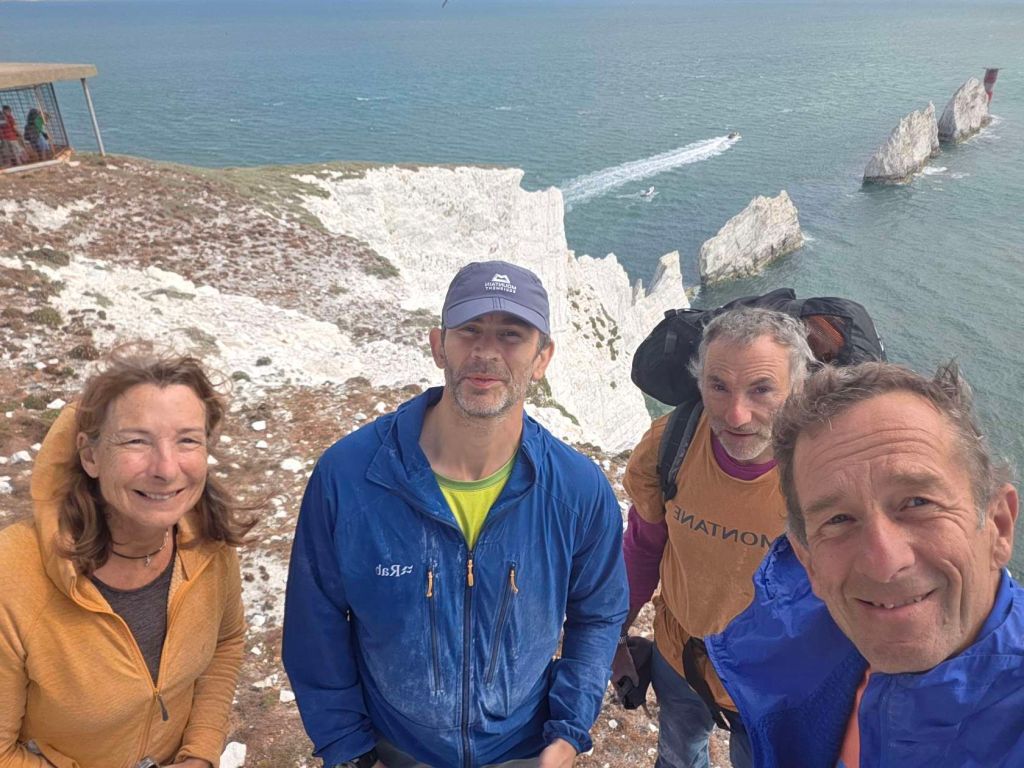
Final team selfie before rejoining the masses for a more typical Needles experience – The Battery Tea Room, and a very well-earned cream team.
Footnote on gear: apart from the assorted bits of ab rope (70 + 40 + 30 at a minimum), you only really need a single set of cams and wires, half a dozen alpine draws and a bunch of long slings including some 8ft (or is that 16ft if you’re talking circumference). We took a small handful of pegs and a single hammer. Gareth placed one, more as a sacrifice to the gods than necessity, and it’s still there. Also recommended to have a means of re-ascending the ab rope in case you decide to bail (although that would be extremely harrowing, given the state of the rock that you’ve abbed down). HVS 4c is probably right, but you wouldn’t want to be a HVS leader. Seconding is pretty much as taxing as leading. Enjoy!

