
Having explored each of the main crags immediately north of Santiago, our provisional plan had been to head up into the Andes to visit Canjon del Maipo, to the South East of the capital, before dashing south to the legendary Valle de los Cóndores. However, they say a plan rarely survives the first encounter with the enemy, and this one was no exception, as we were blown off course by the Super El Niño. Ever since our arrival in Chile people had been welcoming us in one breath before shaking their heads at our plans – shame you’ve come this year with the Super El Niño. The obsession with the weather was making me wonder if we’d actually left home!
Sure enough, as we hatched plans for our next move, the forecast animation was being dominated by a giant Cyclops eye, swirling out over the Pacific – angry yellow with flecks of red – before rampaging across the country to deposit 10mm to 20mm of rain a day for much of the week. We’d need a re-think, so shifted camp an hour or so towards Valparaiso near the coast as a holding measure whilst we scratched our heads.
As we drove towards Quilpué, a giant tottering chaos of improvised corrugated iron dwellings, planted higgledy-piggledy on every available scrap of the steep hillsides, the prospect of finding our promised campsite in amongst it seemed improbable. More so when Google Maps confidently pointed us up a steep, furrowed dirt road. On this occasion at least, Google actually was right, and we were warmly welcomed by Don, our loquacious host, into his tranquil Shangrila – Camping los Árboles Nativos. A couple of chomping horses were the only sound to intrude, despite the proximity of the motorway and massed humanity. Who’d have thought it!
Laguna Verde
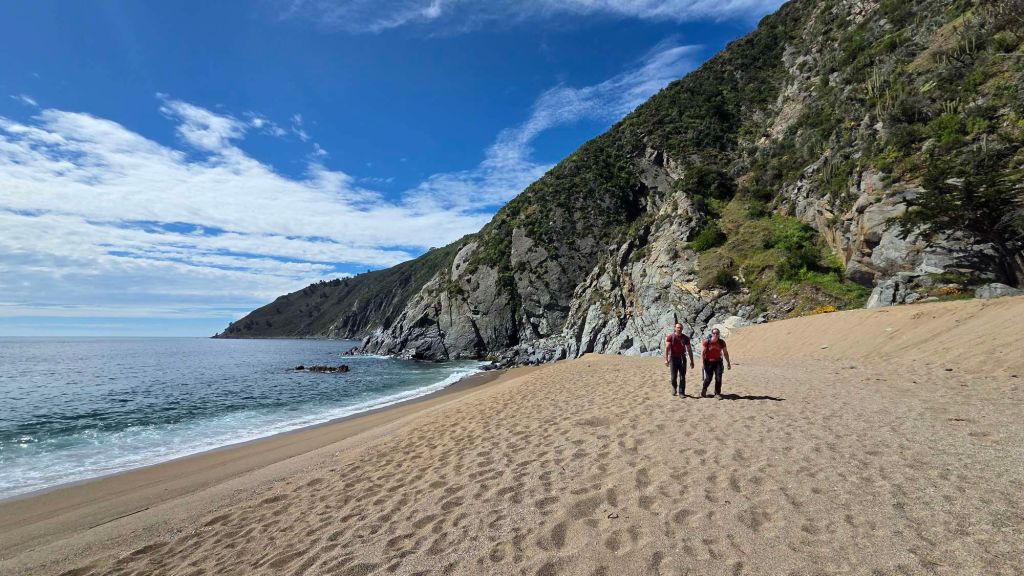
This put us in striking distance of the small seaside crag of Laguna Verde, above the beach of the same name. Helen was still struggling with her chest infection so the rest of us headed over to check it out. A short walk across the deserted beach, with seabirds scattering at our approach, we could easily have been on Gower.
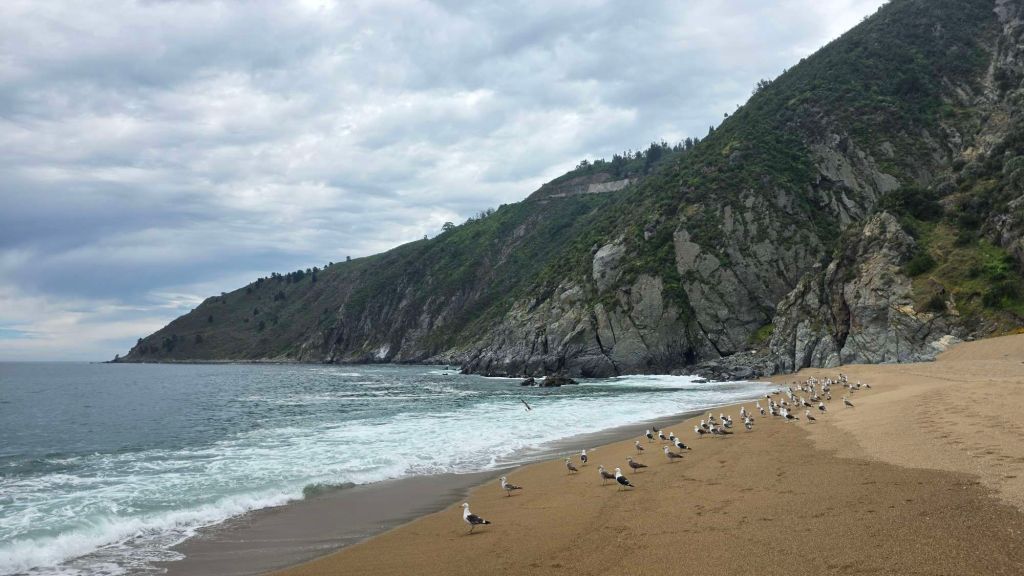
There are only half a dozen bolted routes, and we dropped our rope at the foot of the first Escuela Buttress. The routes might only have been a 5.7 and 5.8 but the rock was an immaculate granite, the bolts weren’t too rusted, and the setting sublime.
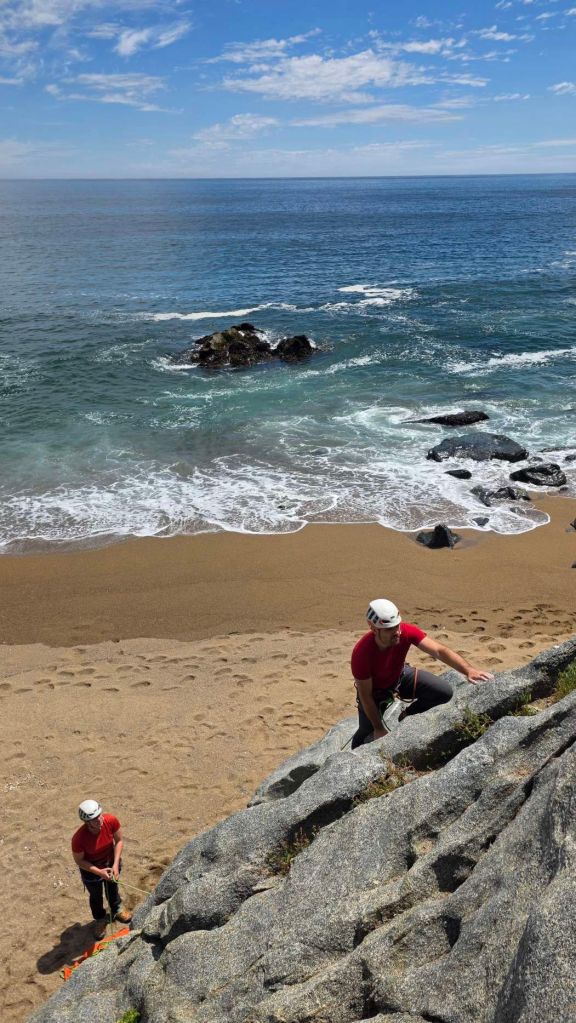
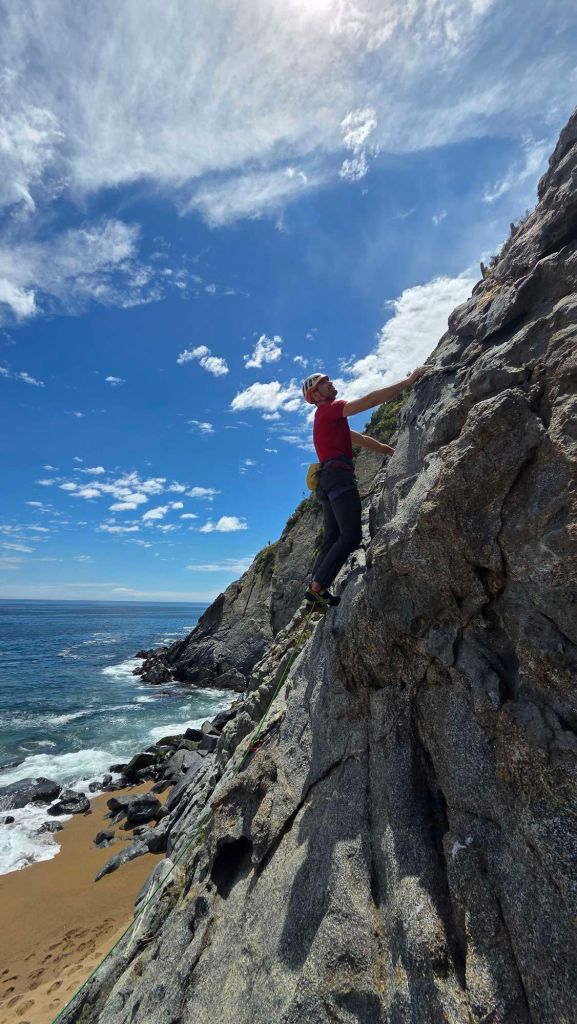
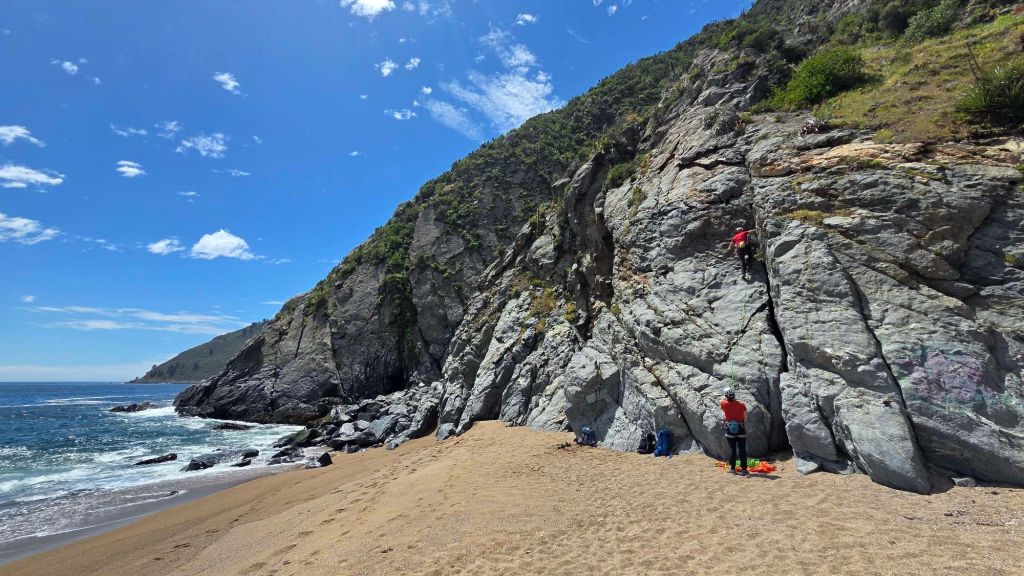
Skipping a couple of scruffy-looking routes in a ravine, which were variously recorded as either high 11s or 12s, we headed over to the Rompe Olas sector, accessed from a small wave-splashed platform above the sea. We were richly entertained by a game of dodging the spray from the incoming swell whilst enjoying a couple of fun routes: Chungungo, 5.9 and Plandemian, 5.10a.
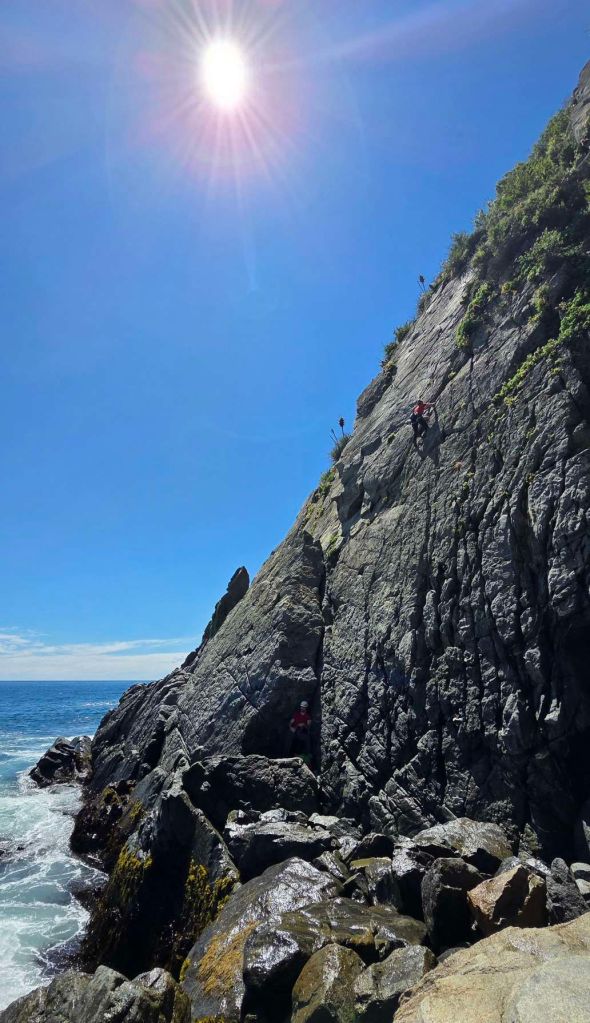
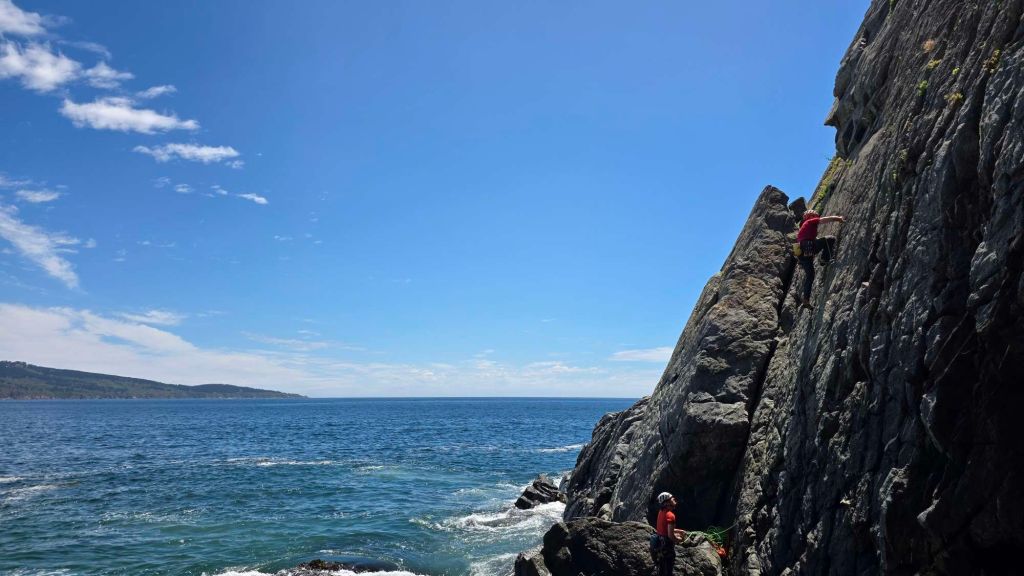
Not a destination crag by any stretch, but a good spot for an afternoon drive-by (and would be perfect if you had kids in tow!)
Los Loros
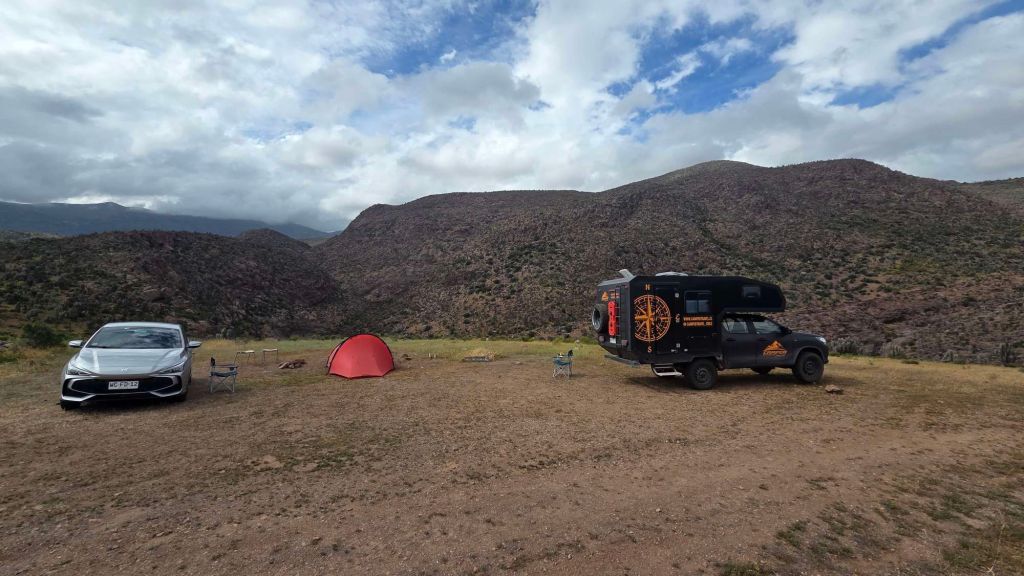
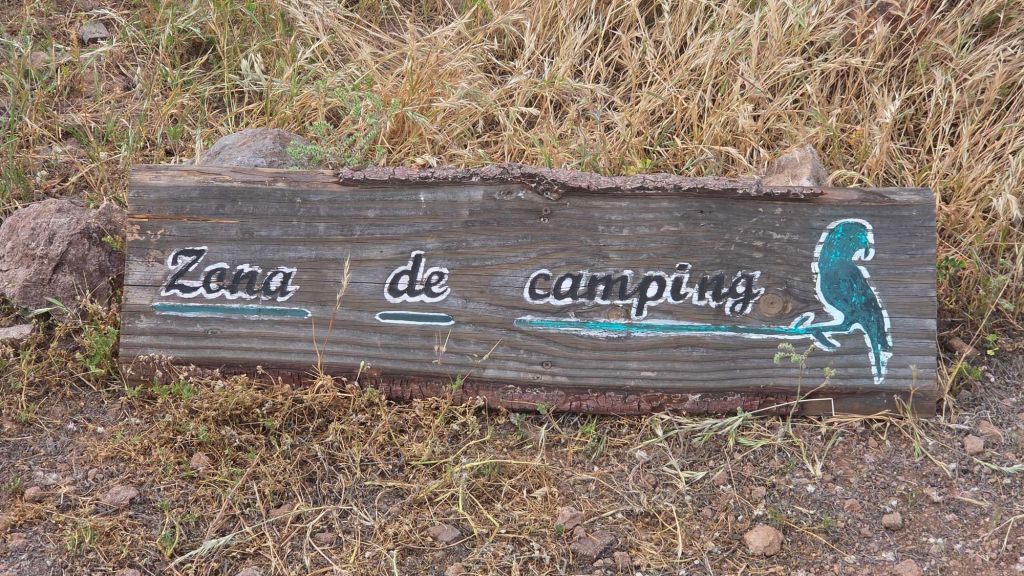
Back at the campsite, Helen had been putting the afternoon to good use, poring over weather, cragging and camping apps in an attempt to wrangle the best from El Niño. She presented her recommendations to an attentive audience – a high-stakes gamble, taking us five hours north to a climbing area called Los Loros (The Parrots). Not much info (a list of routes, but no topo, on The Crag, and mention of camping at the parking area and a pit toilet) but a significantly better forecast (ie not biblical rain!). We rolled the dice and set off up Ruta 5.
Any lingering doubts that we’d made the right decision were soon banished after an hour or so as the heavens opened with torrential rain (the kind that has even the hardiest juggernaut drivers pulling onto the hard shoulder to let it pass) with an accompanying sound and lights show for effect.
As we neared our destination, things perked up and we arrived at the designated parking area a couple of km up a well-maintained dirt road to find it dry and with clouds clearing.
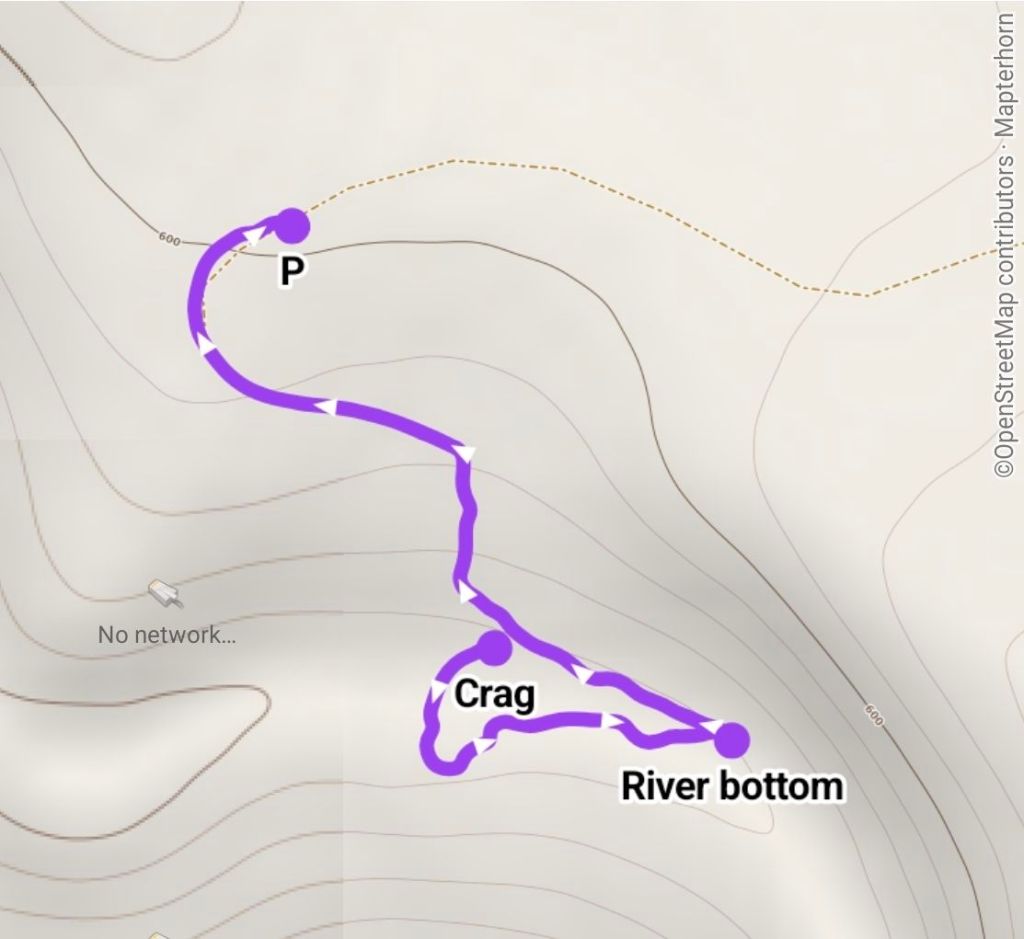
The main sector, Loros 1, is situated on both sides of a steep, water-cut canyon, just down the track from the parking area.
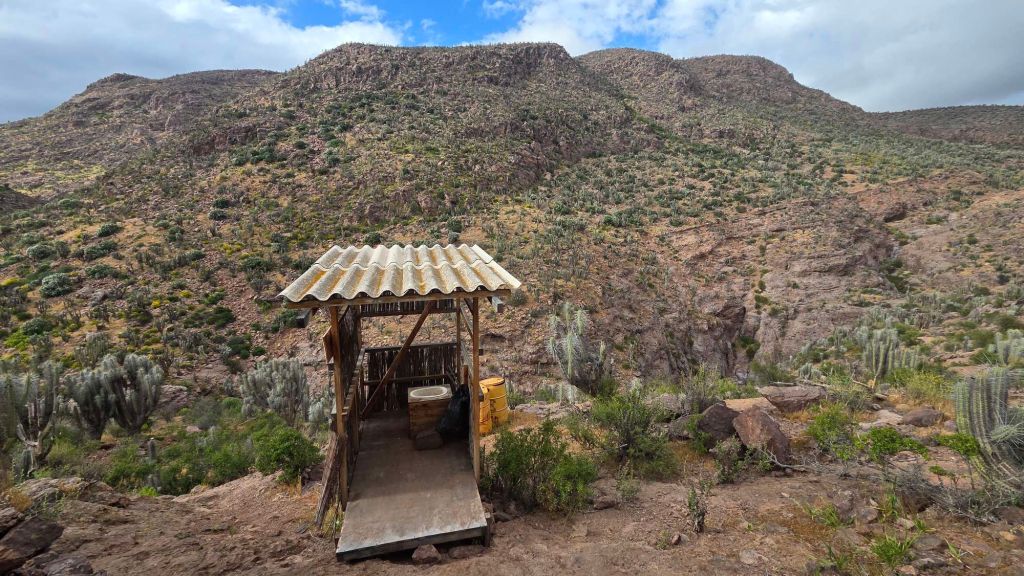
The canyon rim is home to the aforementioned pit toilet…
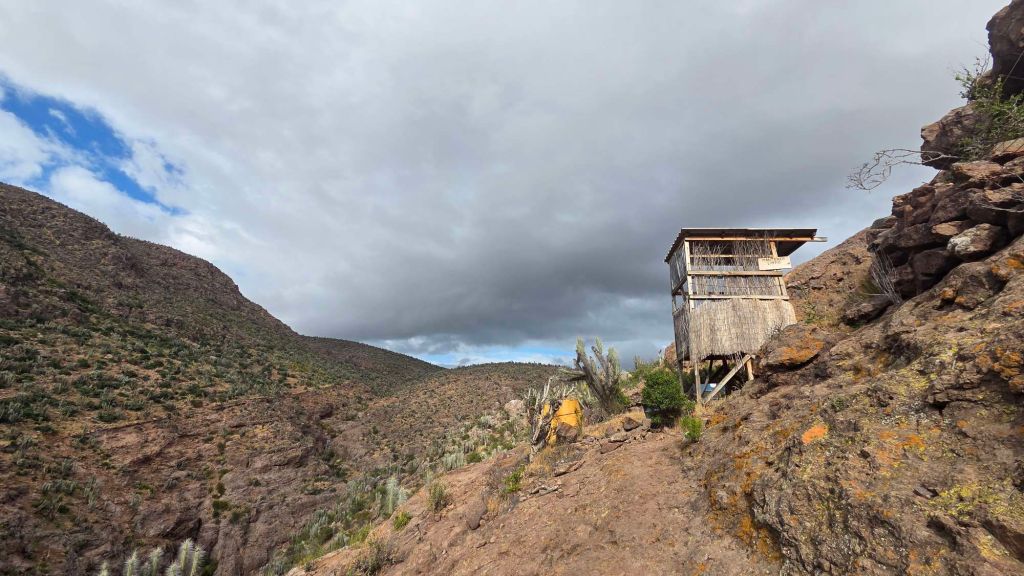
Undoubtedly one of the more spectacular “rooms with a view” you could ask for.
The routes are clearly visible below, but there’s a steep drop in the floor of the canyon, complete with a waterfall, and it’s not entirely obvious how you get down to the base. You actually cross the stream and traverse the opposite rim for a hundred or so metres and there’s an easy path down a side-branch.
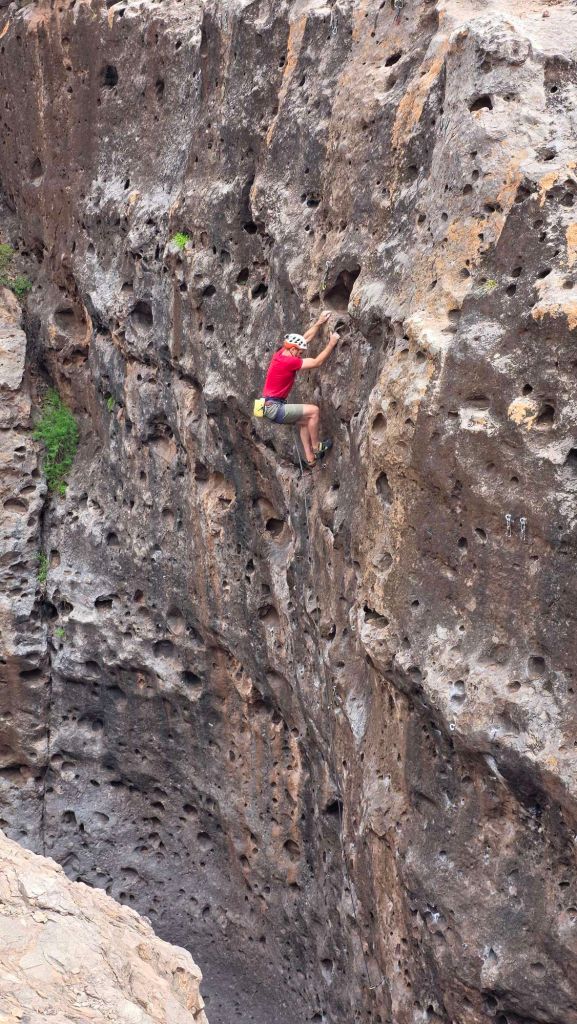
Here’s Jesse powering up one of the hueco-fests on the shady side of the canyon.
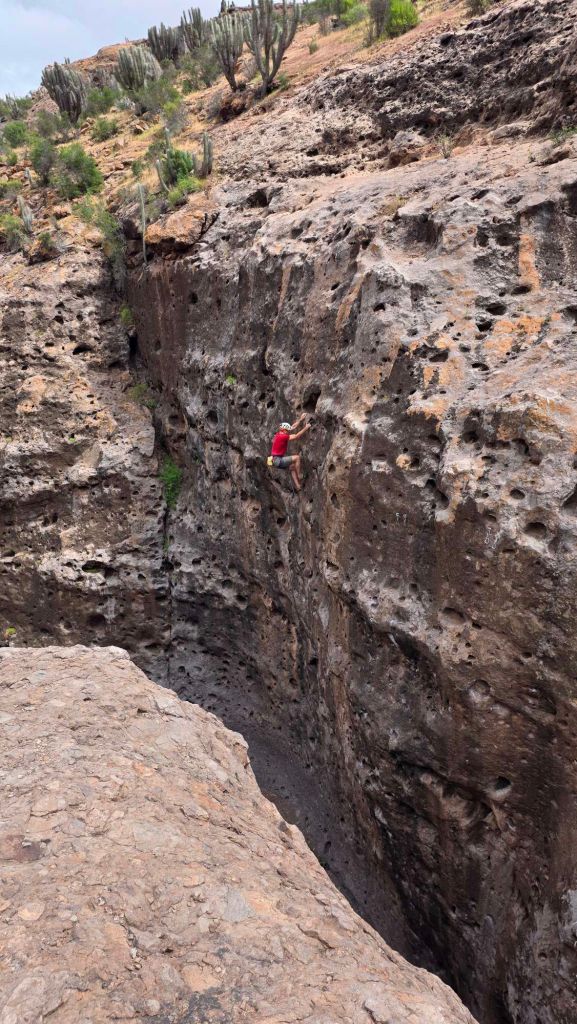
The routes aren’t huge, typically around 15m, but they certainly pack a punch! Here’s Helen on one of the routes upstream of the boulder choke, possibly Antakari, 5a (they don’t give them away!)
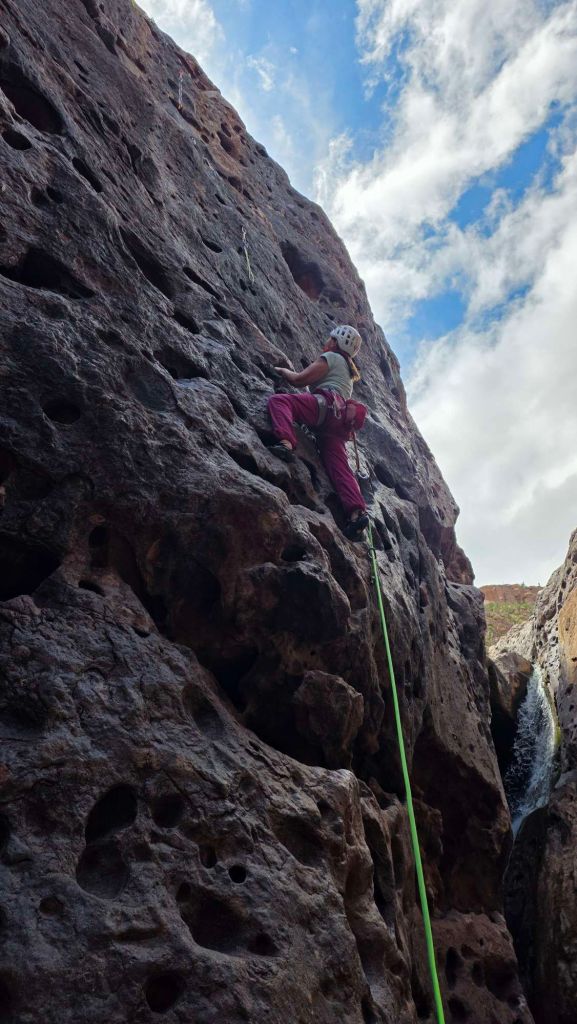
Downstream of the boulder-choke there’s a row of seven routes, all steep, pumpy and chock full of pockets, and all (we discovered to our chagrin) given a miserly grade of 5c. Probably more like 6a/+, but who’s nit picking when they’re all such fun.
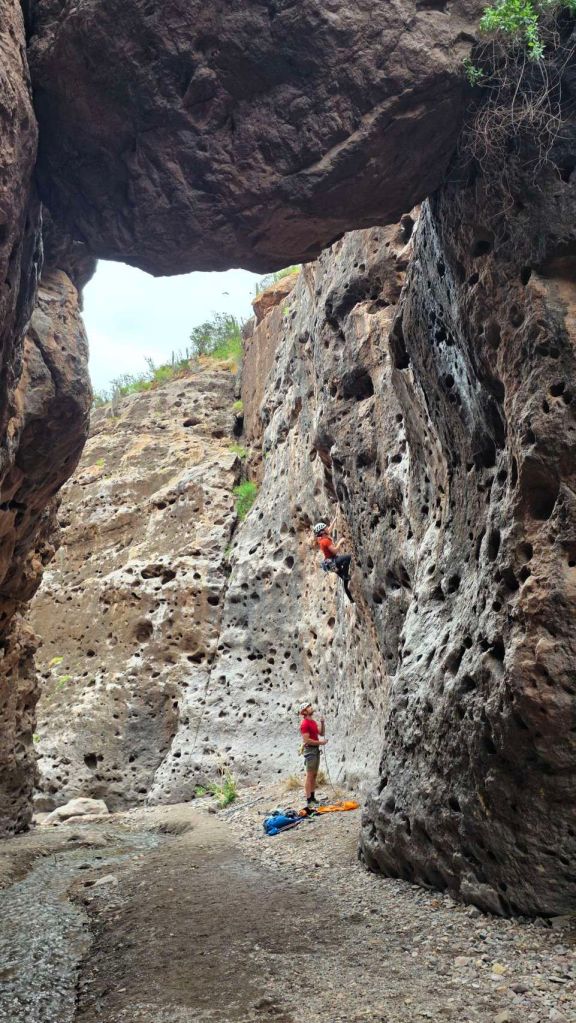
… and in such a gorgeous setting.
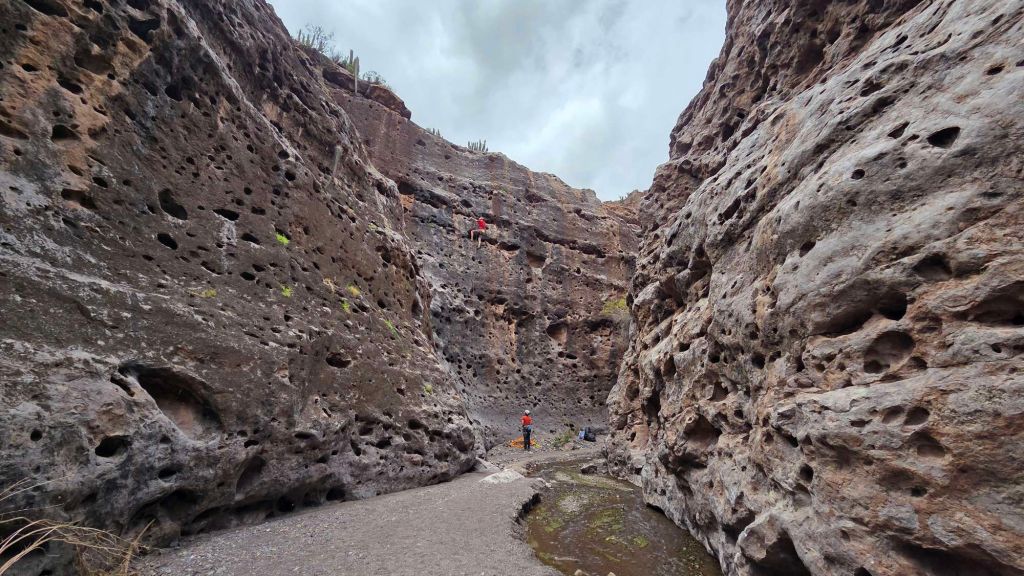
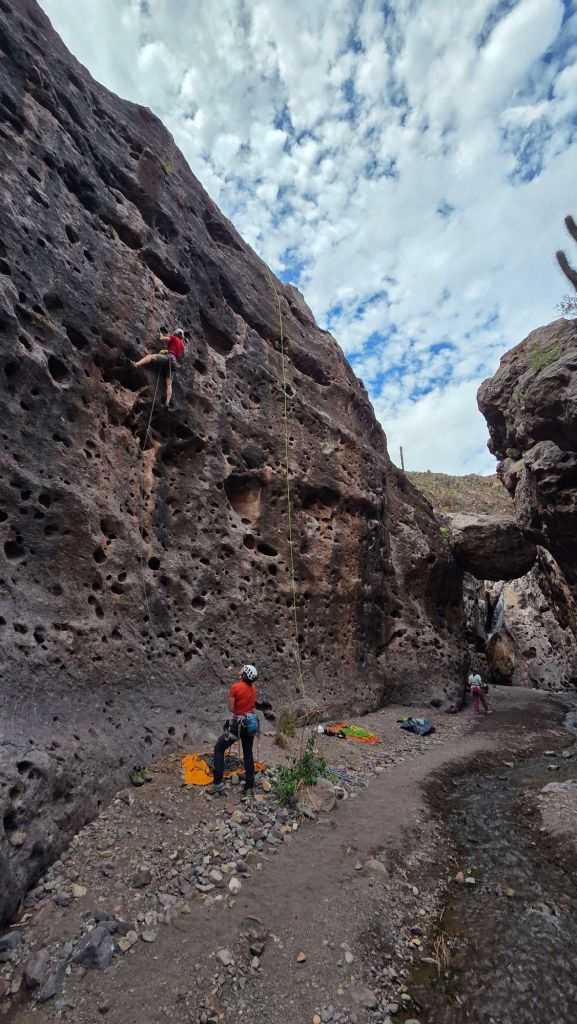
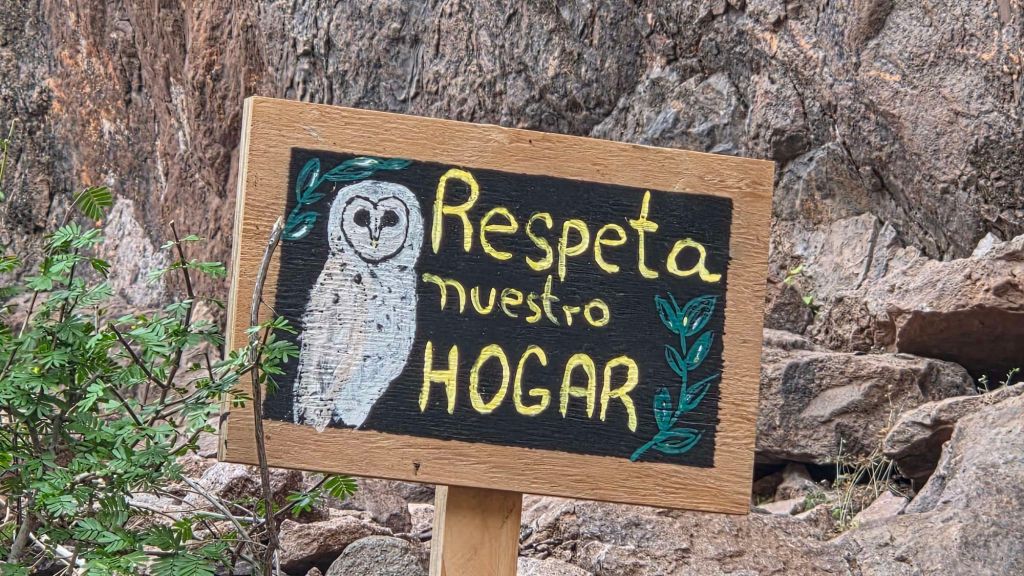
It’s truly a special place, and it’s clear that the climbing community does indeed take good care of it.
We celebrated our adoption of Helen’s bold out-flanking strategy, but by now I’d joined her with a hacking cough and fever more fitting to a fifty-a-day woodbine habit. Turns out we could out-run an El Niño but couldn’t shake off a cold. We put our climbing on hold for a couple of days and set ourselves up on a recuperation regime for a couple of nights at Camping Termes de Socos. First stop: Pichasca National Monument…
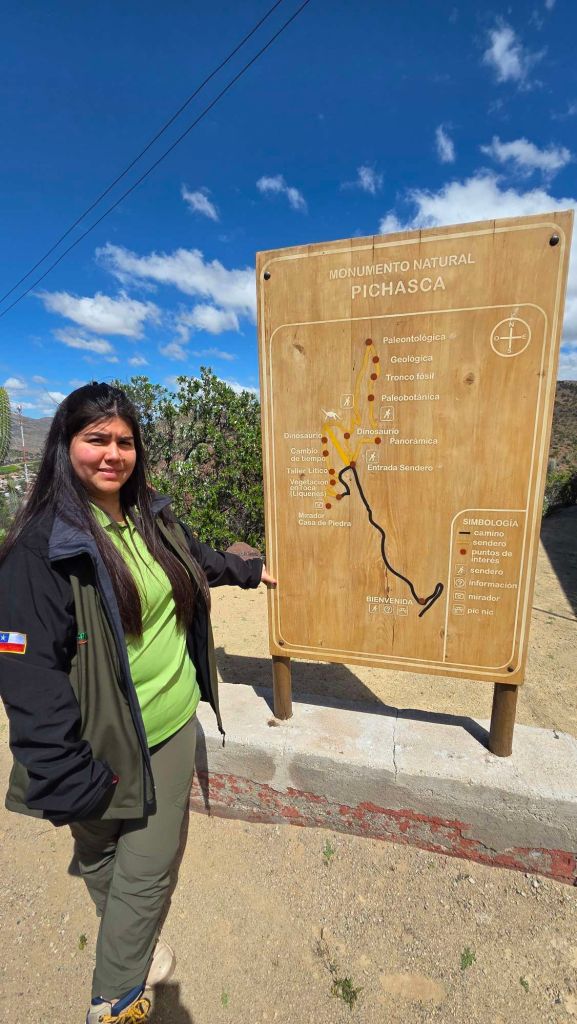
Pretty mountains, plenty of cacti…
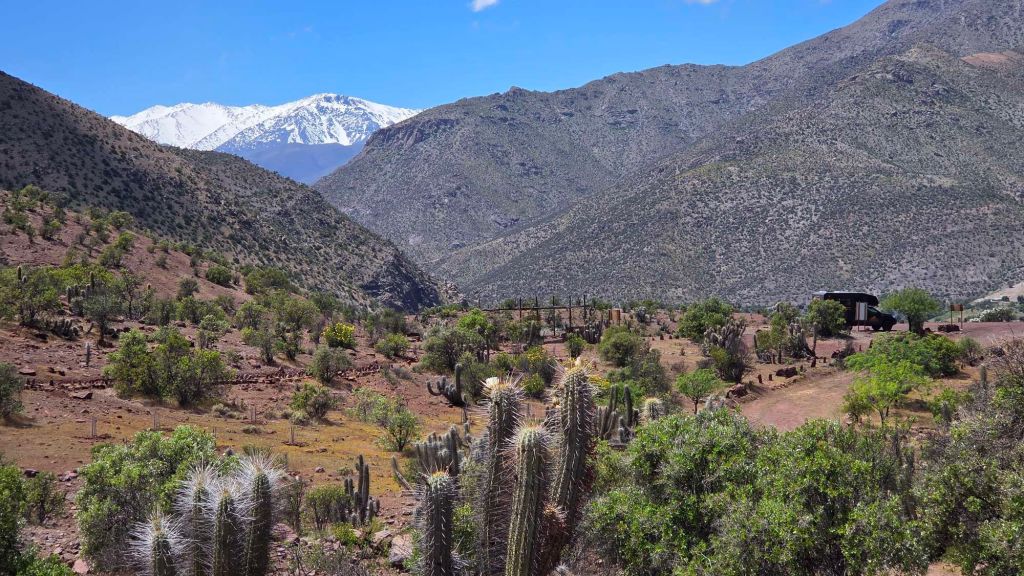
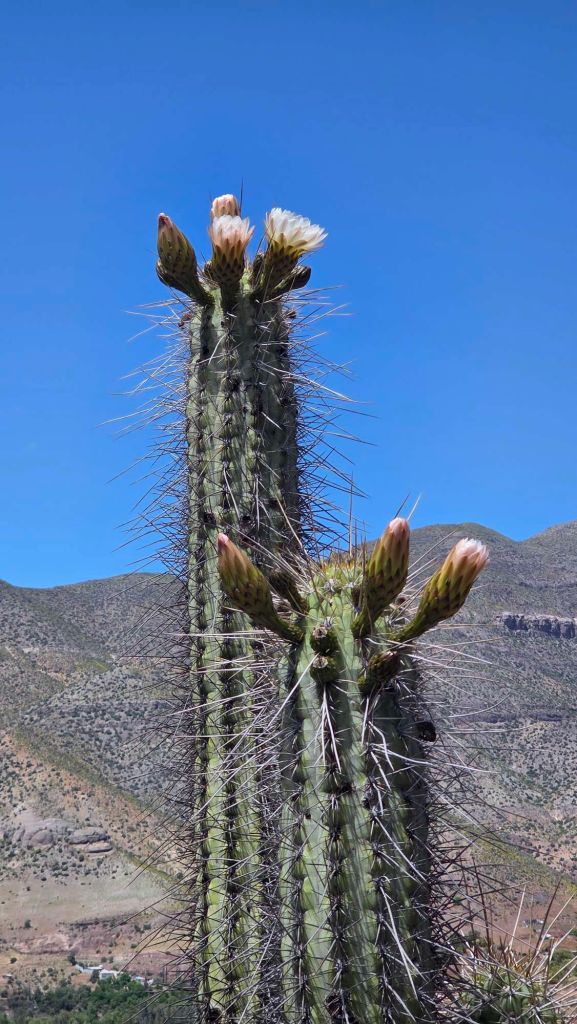
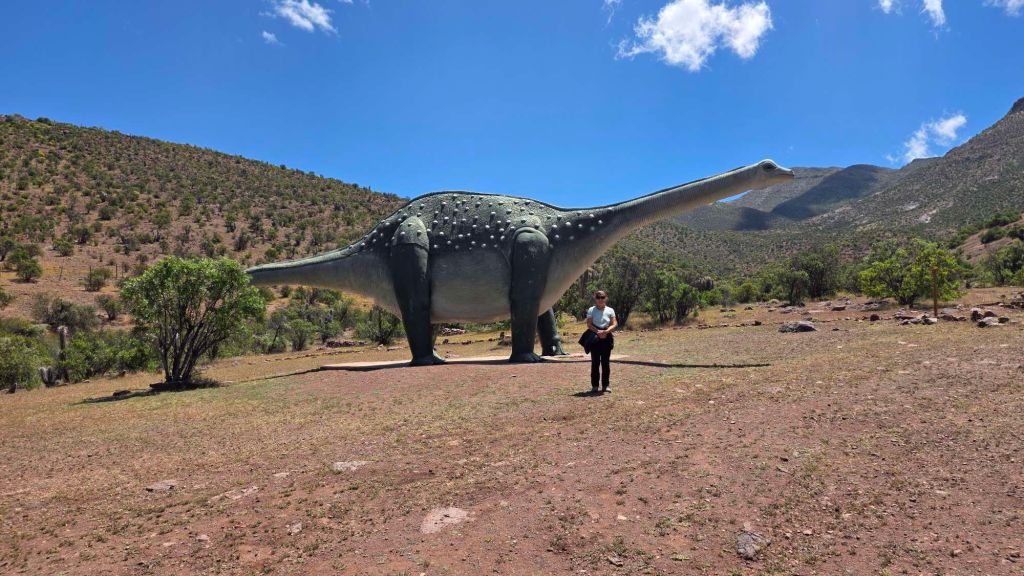
… some ancient cave paintings and an 18m plastic dinosaur (reflecting the discovery of the fossilised bones of said creature).
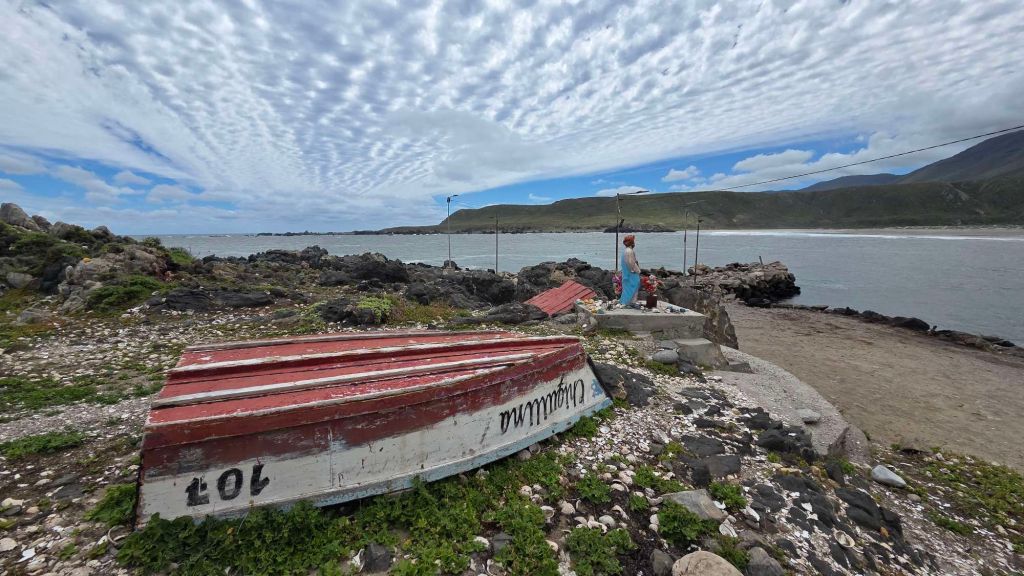
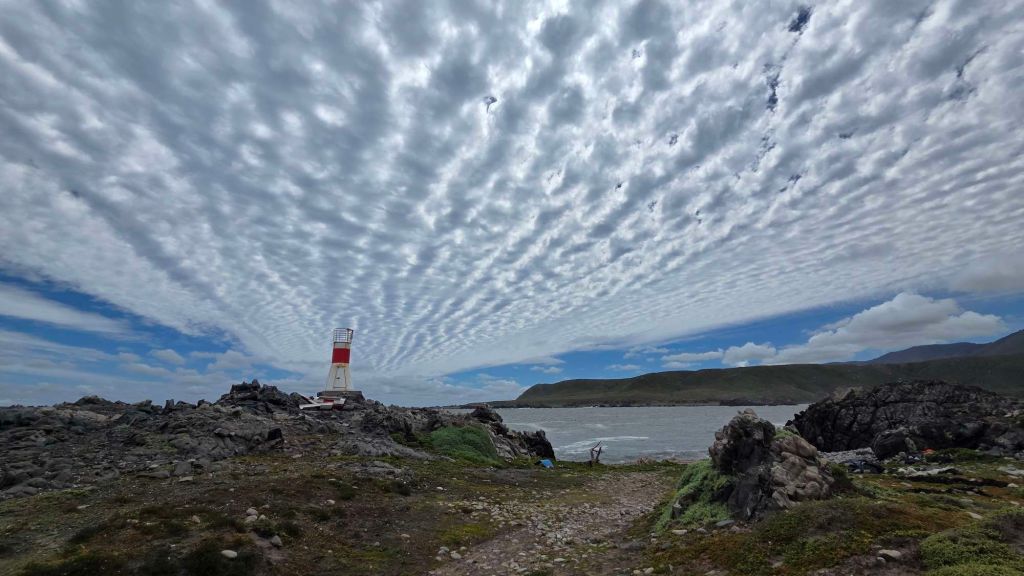
Next up on our R&R tour was a trip to the seaside (nothing like a blast of ozone to clear the lungs!) Despite only being about 20km for the coast, the Pacific is completely hidden from view by a range of coastal mountains. There’s a torturous 30km dirt road which snakes its way through these, on the southern perimeter of the Parque Nacional Fray George, to finally hit the ocean at a broad estuary.
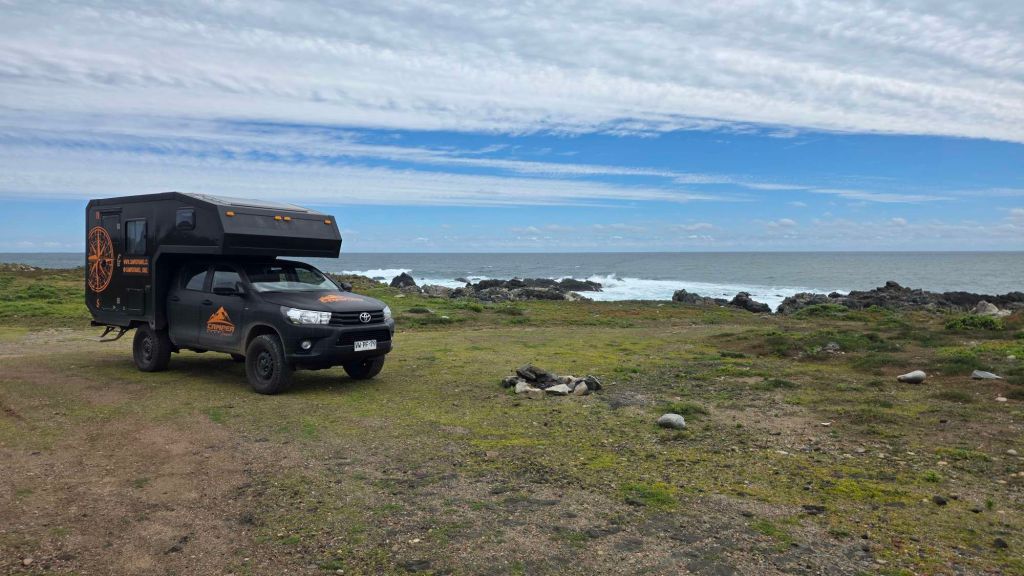
The very modest fishing village of Limari has a definite off-the-beaten-track vibe.
Rested, if not recovered, we were encouraged by the promise of a chink of sunshine and dry weather down south, as the worst of the weather system looked to have blown through. Foot to the floor for the 6hrs blast down the Ruta 5 to be in position to take full advantage of a sunny Saturday in Cajon del Maipo.

