
We were looking forward to flying back into Santiago from the Atacama. A daytime flight over a thousand kilometres of other-worldly desert, with the Pacific sparkling out of the starboard window and the Andes glimmering to port. That wasn’t to be! Another storm system had rolled in, obscuring the ground and bringing more heavy rains and flooding across the city. Hey ho El Niño…
We picked up our rental van, home for the next five weeks, and headed an hour north to outflank the weather (a recurring theme as you’ll see). To the uninitiated, it looks like home-from-home, and it’s by far the nearest thing to our own truck we’ve ever rented, though we find ourselves constantly missing tiny comforts from our own van.
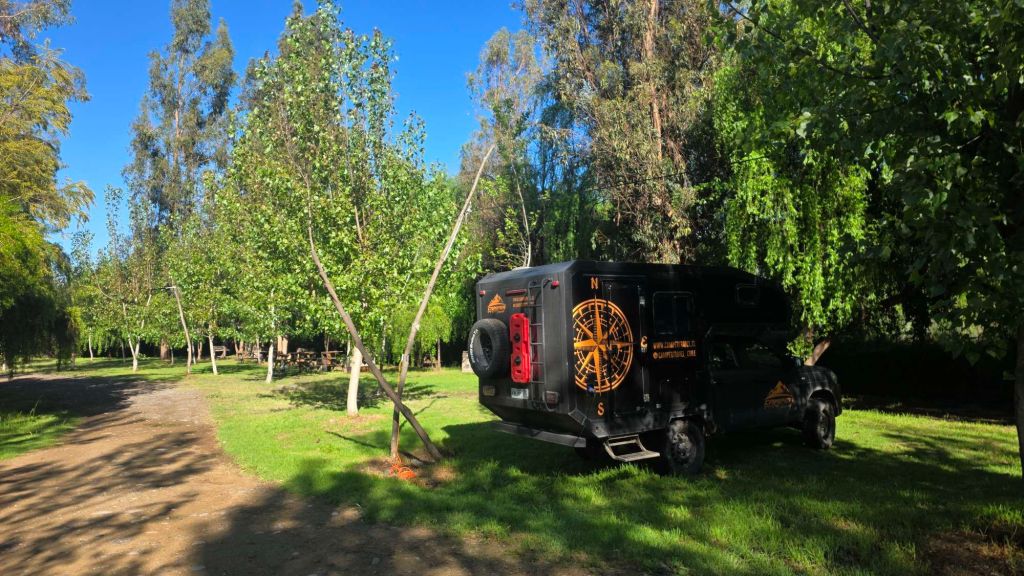
Settled into a friendly and pretty, if basic, campsite at Panquehue, we set off to use a showery day to recce the climbing in the vicinity.
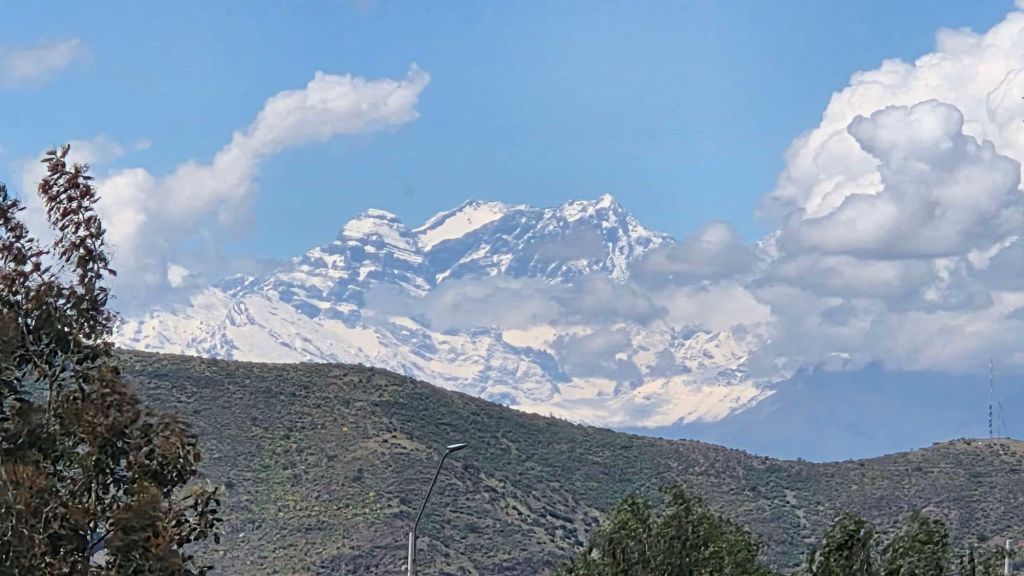
We drive north through the Valle de Aconcagua (the highest summit outside of the Himalayas is actually about 10 miles over the border into Argentina, but its namesake river flows down from the watershed through Chile on its way to the ocean). A brief parting of the clouds reveals a glimpse of a high, snowy mountain, though later research identified it as a tiddler of barely 5,000m.
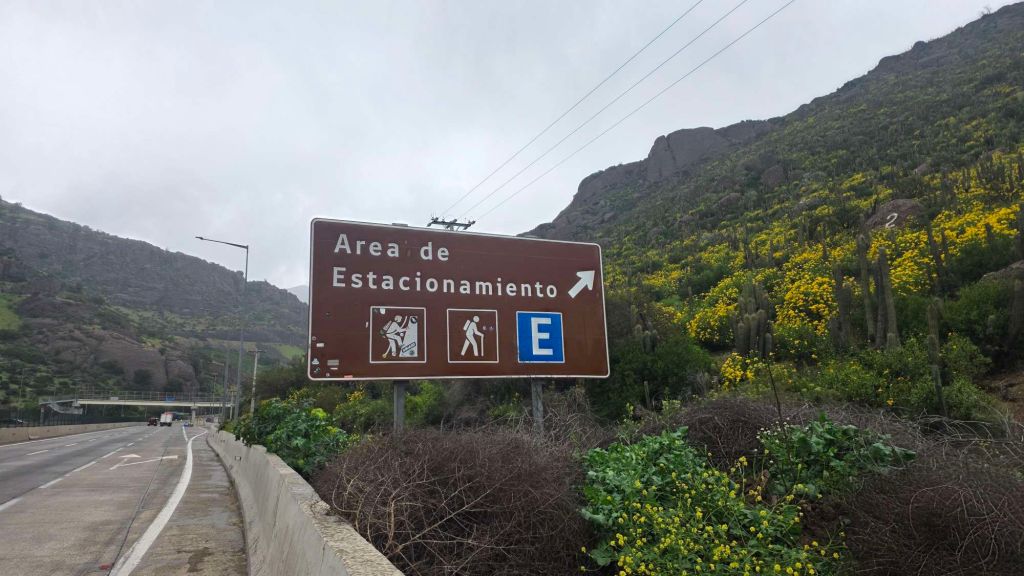
Our recce is disappointing. Our path to El Asiento, north of San Felipe, is blocked by “Private, No Entry” signs, and the parking beneath a wet and soggy Las Chilcas is strewn with broken window glass. However, time spent in reconnaissance is rarely wasted, and at least we’ve identified the challenges to be overcome.
Chacabuco
Next day, the sun’s out and we go for a third roll of the dice in terms of the nearby crags we’d identified. Happily, third time’s the charm and we hit the jackpot with Chacabuco.
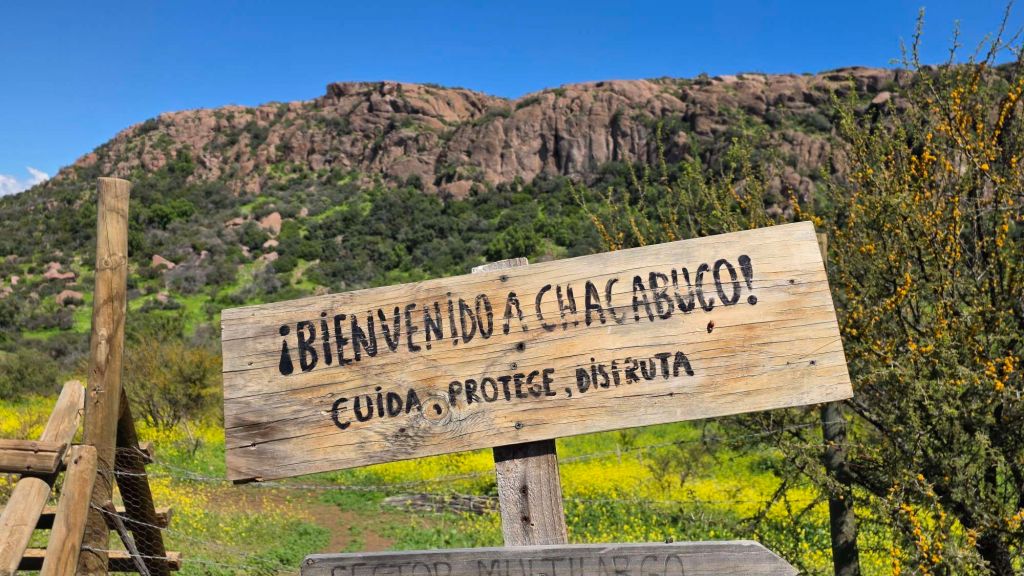
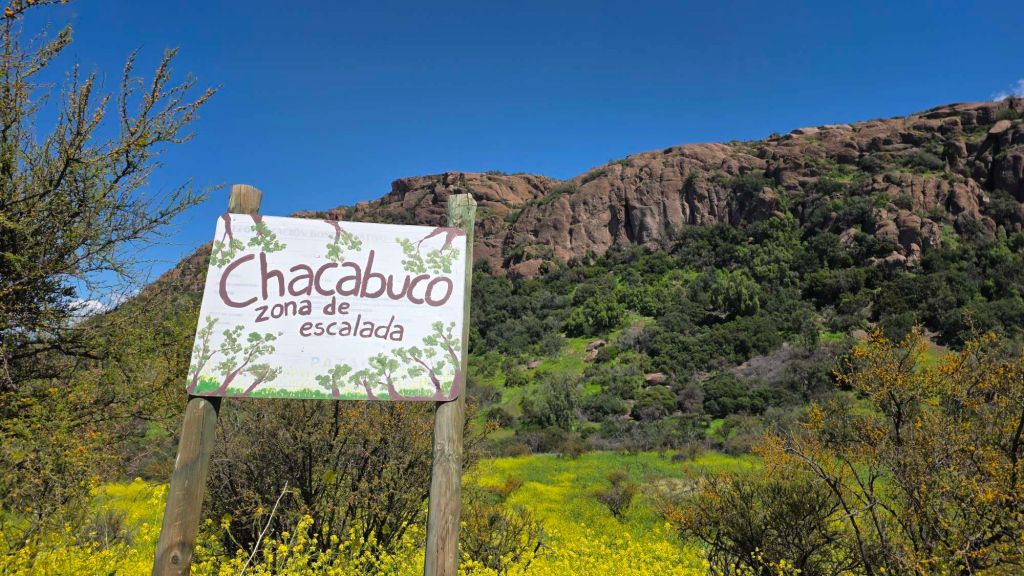
Winding up into the hinterland, we’re immersed in a lush green landscape edged with a fringe of snowy mountains. The welcoming signposts are reassuring – we’re in the right spot and reports of access difficulties on private land are happily not matched by reality on the ground. We might actually get to go climbing in Chile at last!
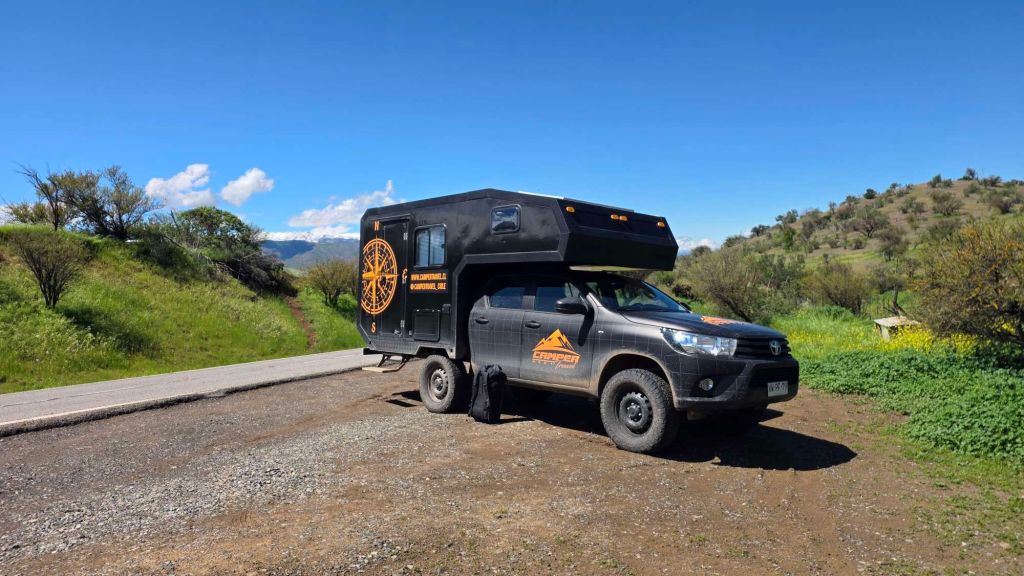
We send a photo of our macho-looking van to the kids. Jake’s response: “It looks like the van that used to bully your van in secondary school lol”.
There are two main chunks of the endless rock on display that have been developed for climbing and we head to the righthand Multilargo area where there are routes of two and three pitches.
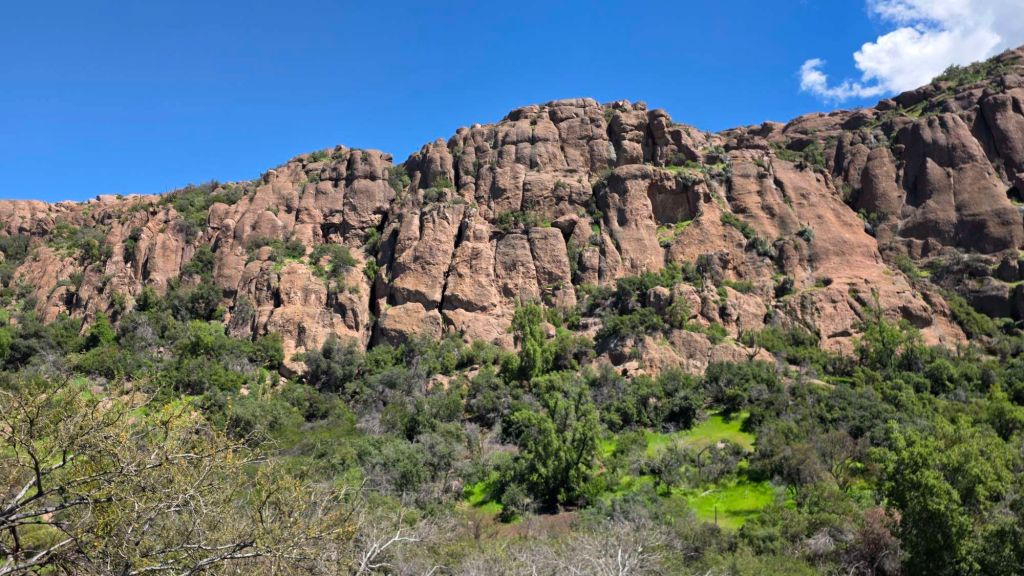
We ticked a bunch of routes (first pitches only) between 5.7 and 5.10a / 5a to 6a (the Chilean climbing community seems to be sitting on the fence between French and YDS grading). There are a number of Web sources for information, and I’ll do a “Climbing in Chile” summary post at the end of the trip, but they’re far from comprehensive or consistent so there’s a fair bit of “follow your nose” guesswork involved. Anyway, fun climbing on volcanic rock with a mix of edges and pockets – mostly solid with the occasional creaking flake.
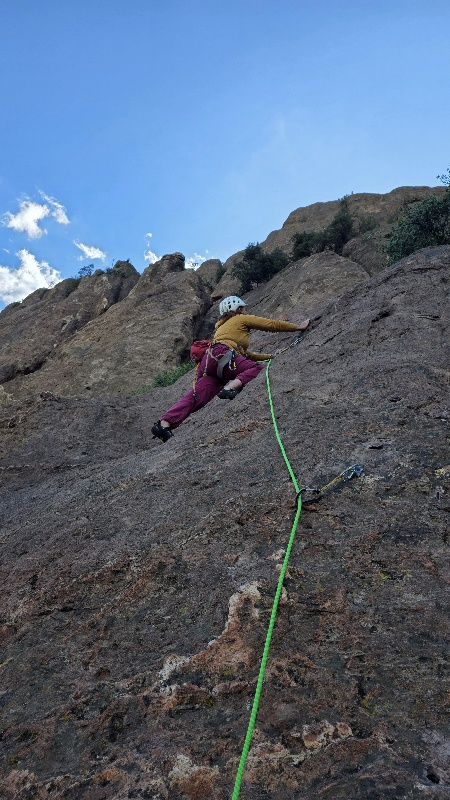
Next day, we’re back for more, and explore the left hand area – three contiguous sectors: Porno, Piola and Marmol, of which we climb on the middle one. There are more routes on the rock than in any of the topos again. Pretty sure this is Combo en lo Cocico, 10a…
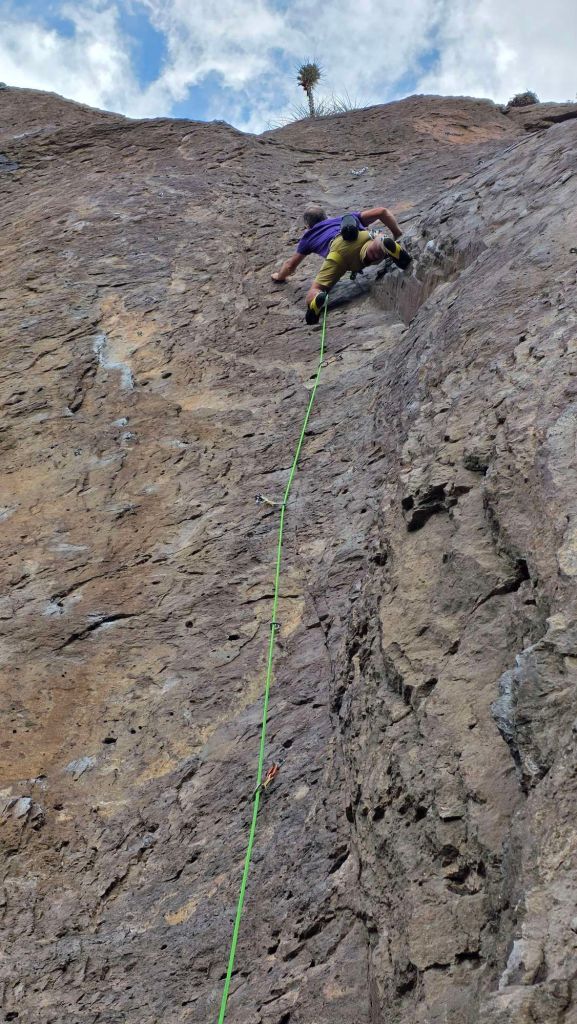
… and hopefully we did Gases del Orificio, 10a, somewhere in the mix – it’d be a pity to have missed it!
Jesse and Molly caught up with us after their visit to a conference in Santiago. Here’s Molly on perhaps the route of the Sector Piola, 10a.
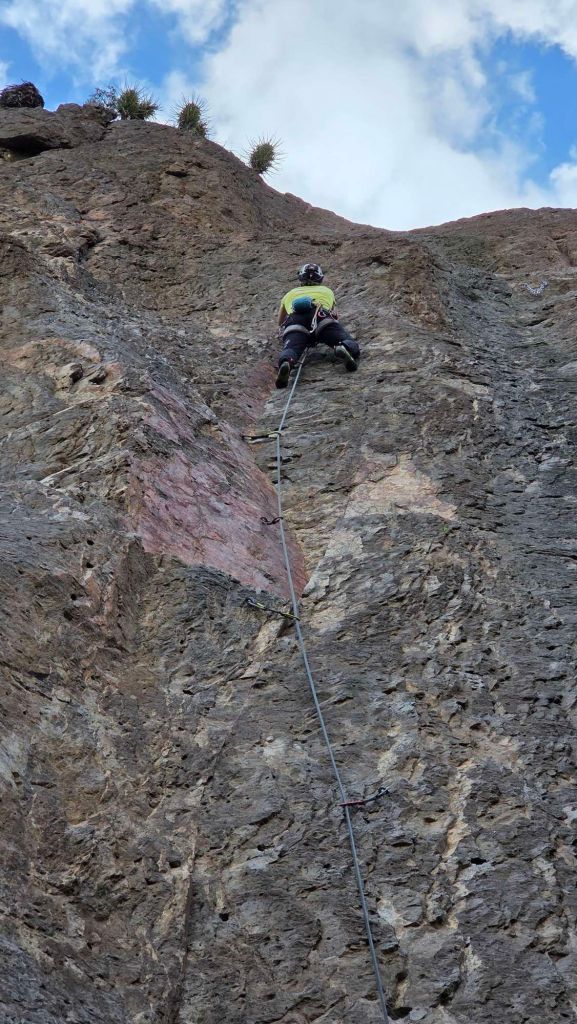
To our surprise, the crag was actually quite busy. Here’s a visiting French climber on Patanes, 11a.
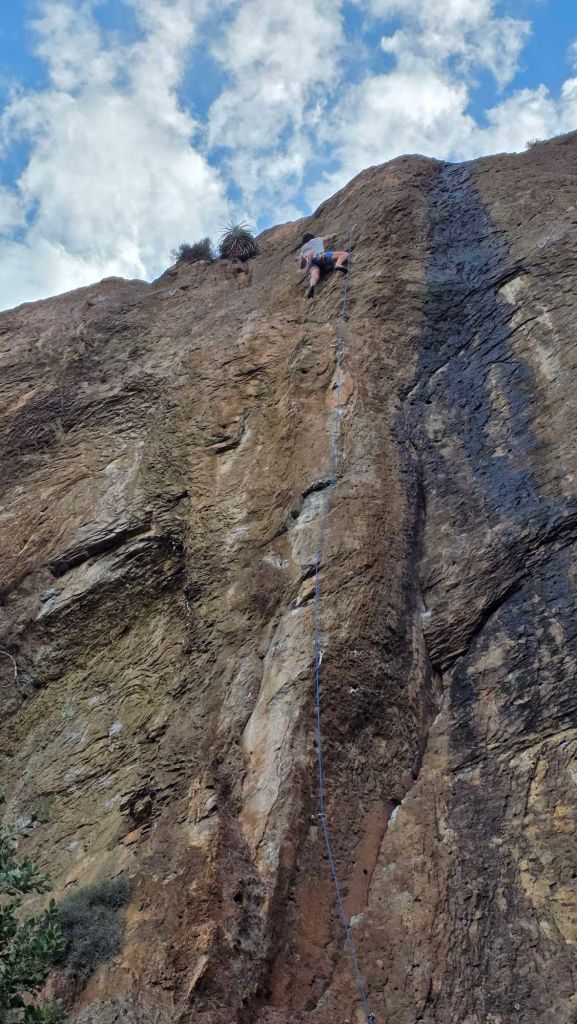
We were also lucky enough to get chatting with a local guide, Cata, who was very helpful with beta to solve our access challenges. Game on!
Las Chilcas
Cata had confirmed the parking beta we’d picked up from the Internet – you drop your car under the watchful eye, and behind the locked gate, of a local woman called Alejandra who lives about 500m from the crag. Five dollars buys peace of mind and puts something back into the local economy, and there were half a dozen climbing teams parked there and none in the official parking, which tells a story.
Helen had picked up a chest infection on the plane, maybe not helped by our jaunt to 5,600m, and decided on some R&R at the campsite, so I teamed up with Jesse and Molly for the day. A bit claggy to start with and it took a while to orient ourselves before we settled on El Cubo Cara Oeste. The Cube is unmistakable – just as described, a 50m x 50m x 50m block of volcanic conglomerate, strewn with potato shaped holds and pockets where the potatoes used to be!
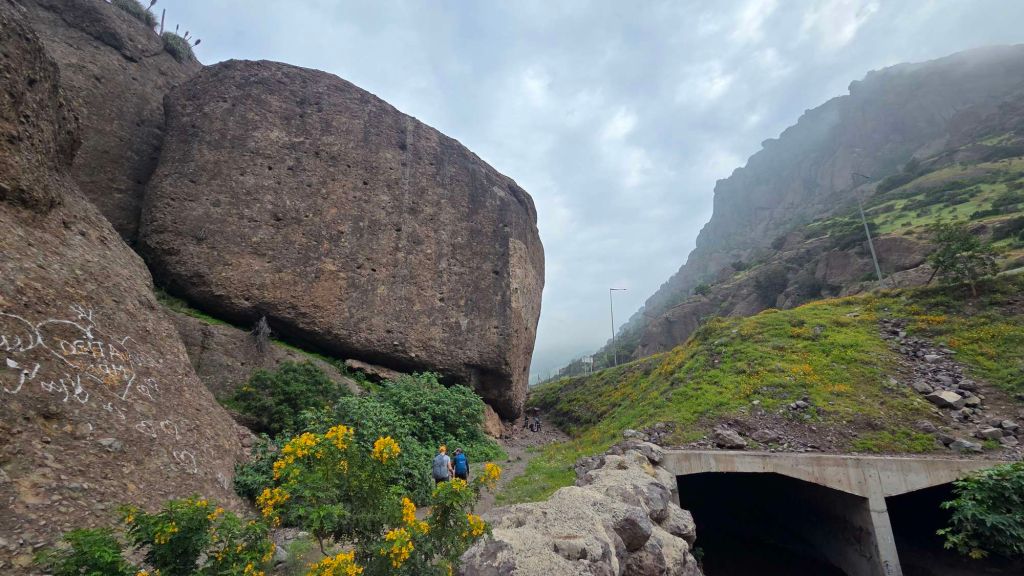
We did a couple of routes on the leaning wall to the right. Buena Tela and Meteorite, both 5.10c or 6b, and both pretty stiff. Here’s Molly weighing up the crux bulge of the latter…
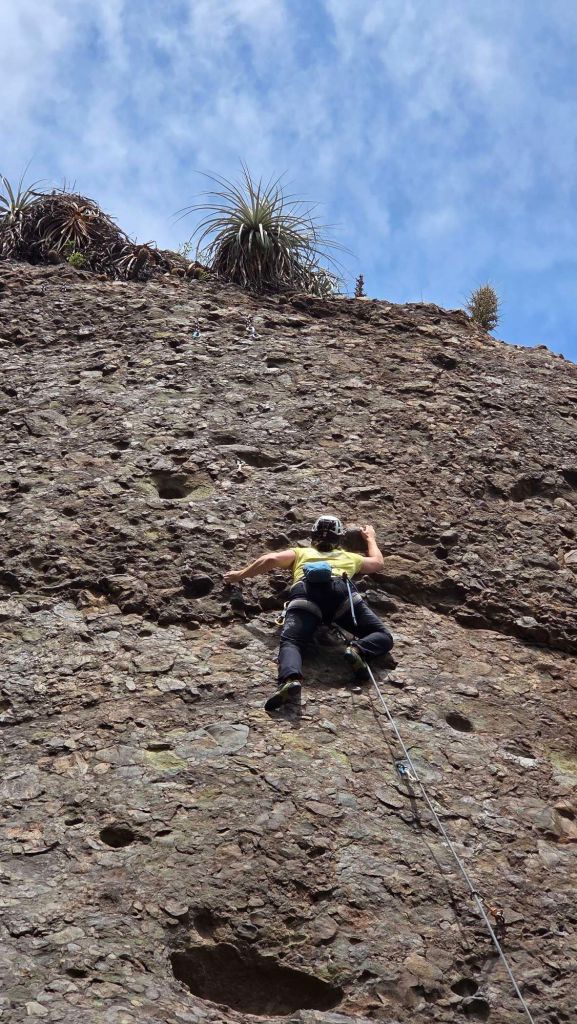
… and powering through.
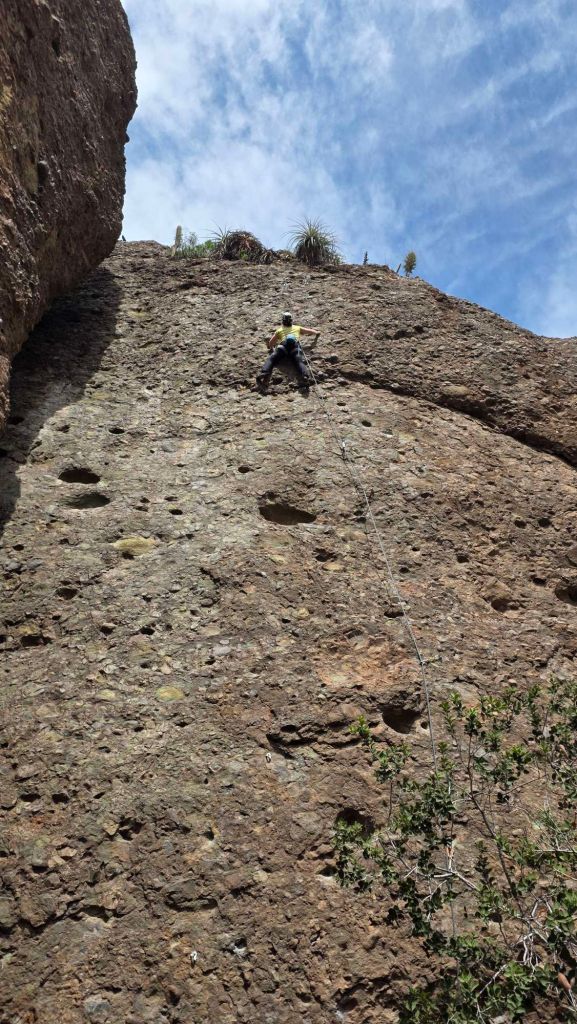
Cabro Culiao, on the west face of the Cube itself, steps things up to 10d. More sustained than the other routes, but less cruxy, with a bit of a spicy runout to the penultimate clip (which had me summoning the clip stick!) Excellent.
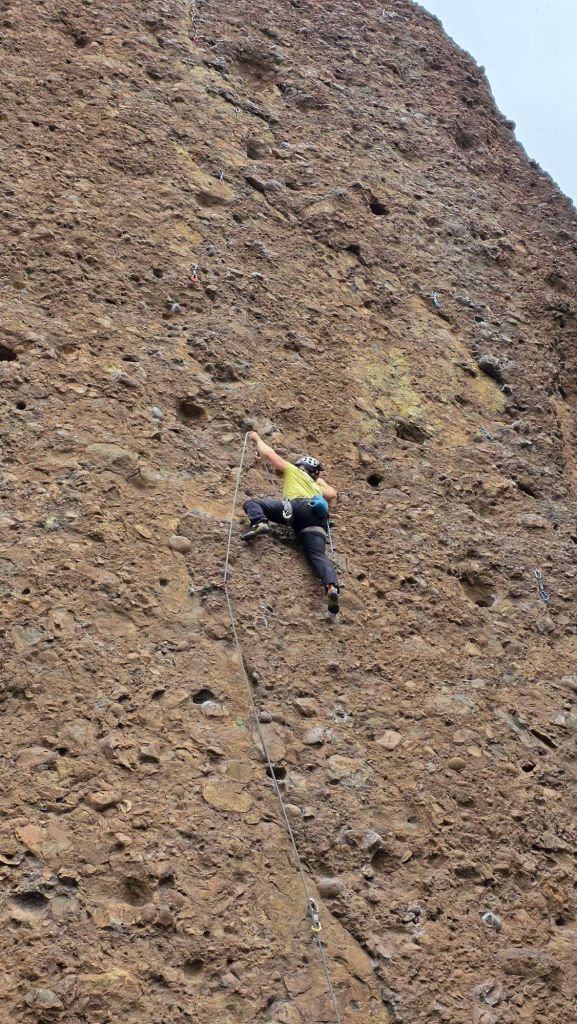
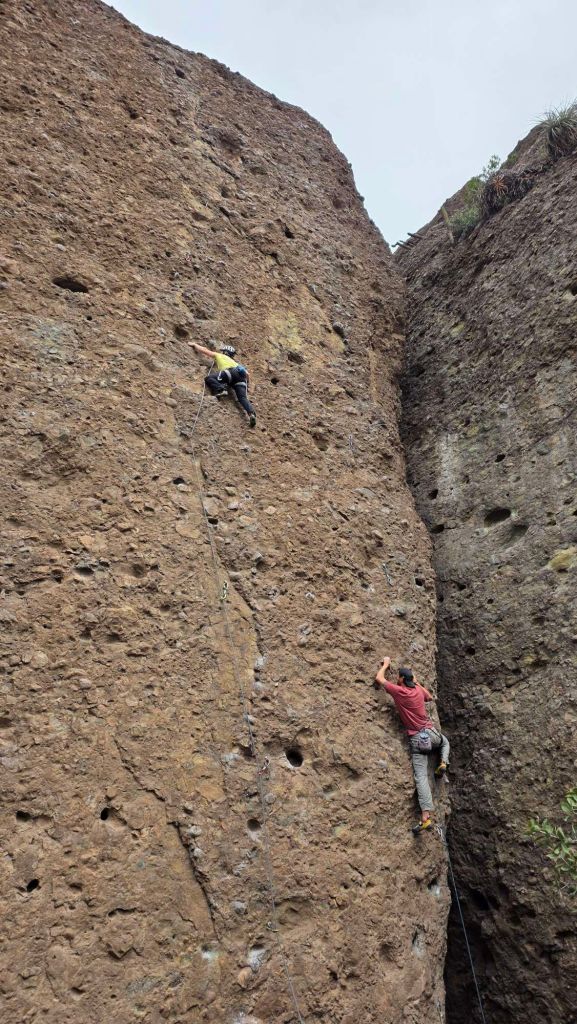
Here’s the view of the Cara Oeste from the road (the main A5 Ruta Norte that runs the length of the country). Therein lies the downside of Las Chilcas – great climbing on really interesting rock, very convenient access, but perhaps the noisiest place I’ve ever climbed. Makes Stoney sound tranquil and would give the Avon Gorge a run for its money.
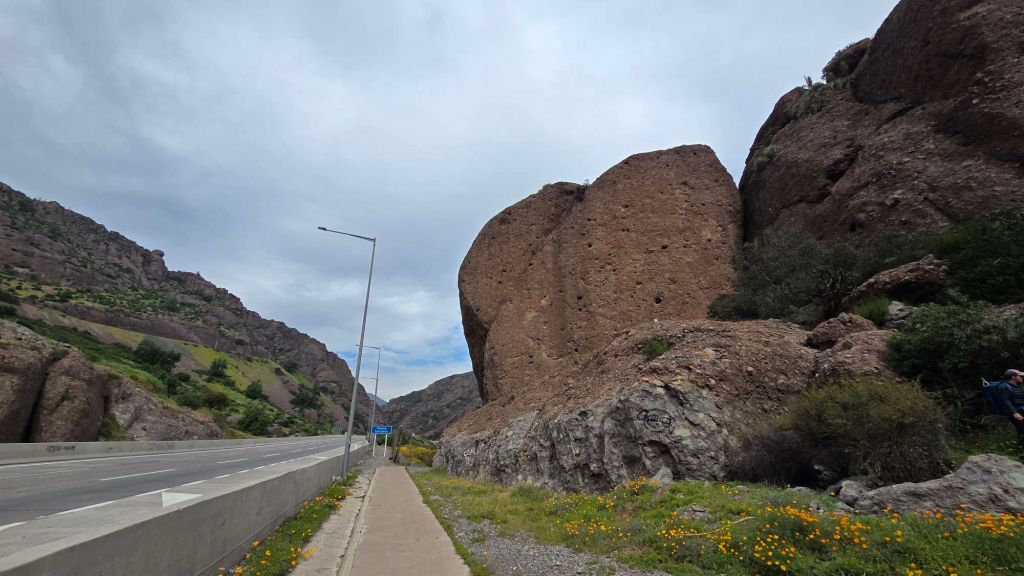
El Asiento, San Felipe
Our chance encounter with Cata also helped unravel the mystery of how to access the climbing at El Asiento. Since the various online resources had been published, the crag and surrounding area have been turned into a nature reserve. You can still access the climbing but need to make contact at least a day in advance so that someone can be on hand to let you in. There are details here: https://serraniaelcipres.cl/flora-y-fauna-2/
It all sounds quite a faff, and of course the guy you have to call (Jose) doesn’t speak any English (and why should he!). My Spanish was just about enough to establish that we were hoping to climb the next day and then we lapsed into WhatsApp messaging (the ubiquitous form of communication in Chile) which at least allowed for some asynchronous translation. The next obstacle was details for the official payment method – a bank transfer for the modest entry fee ($8 for the four of us) which completely bamboozled my Internet banking app. Happily the suggestion to pay in cash was accepted!
If you follow a dropped pin to the crag you end up with your route blocked by the aforementioned PRIVADO signs, but just to the left there’s a sign mentioning the Serrania el Cipres, and sure enough there’s Jose to meet us. He opens up the gate, gives us the usual “leave no trace” briefing, and sets us on our way to drive a further km or so to a barrier where you park the car and proceed on foot.
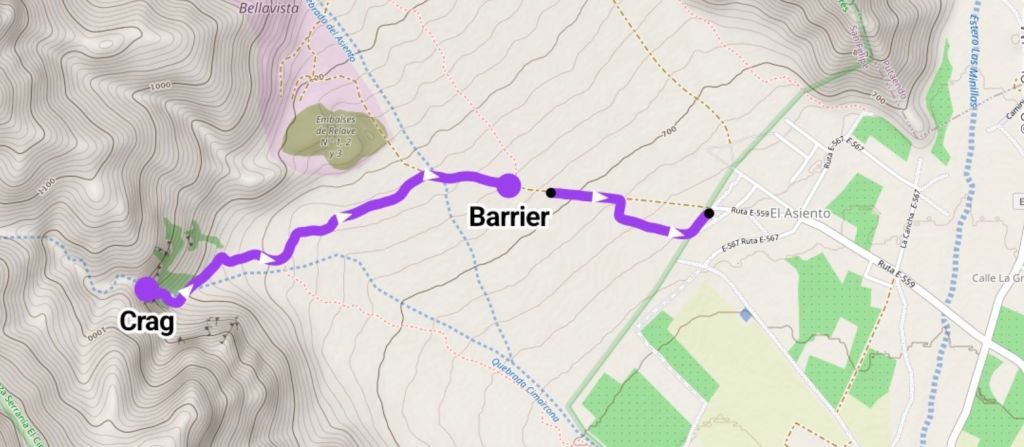
It’s a very pleasant, mostly flat walk, with plenty of rock on evidence…
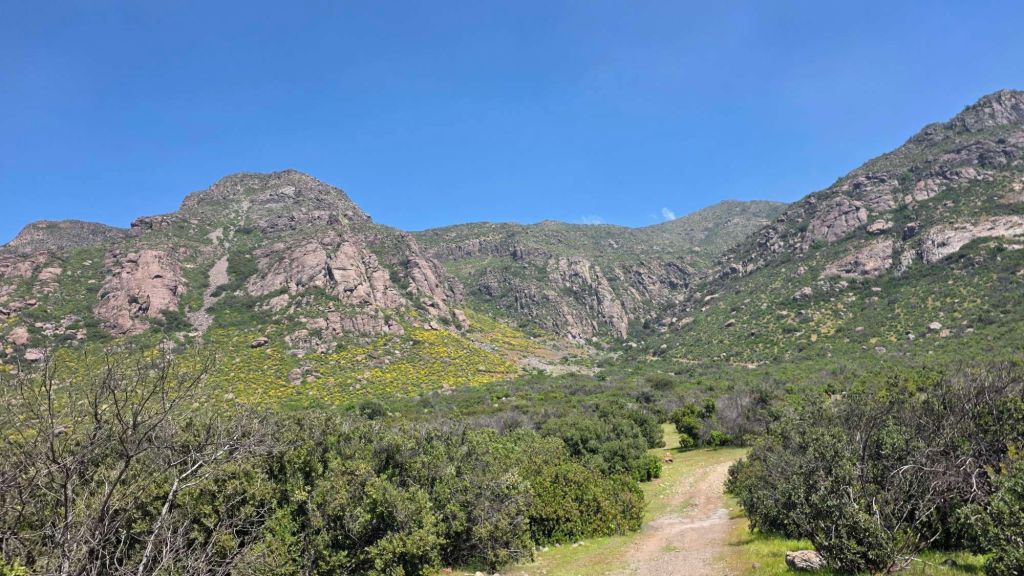
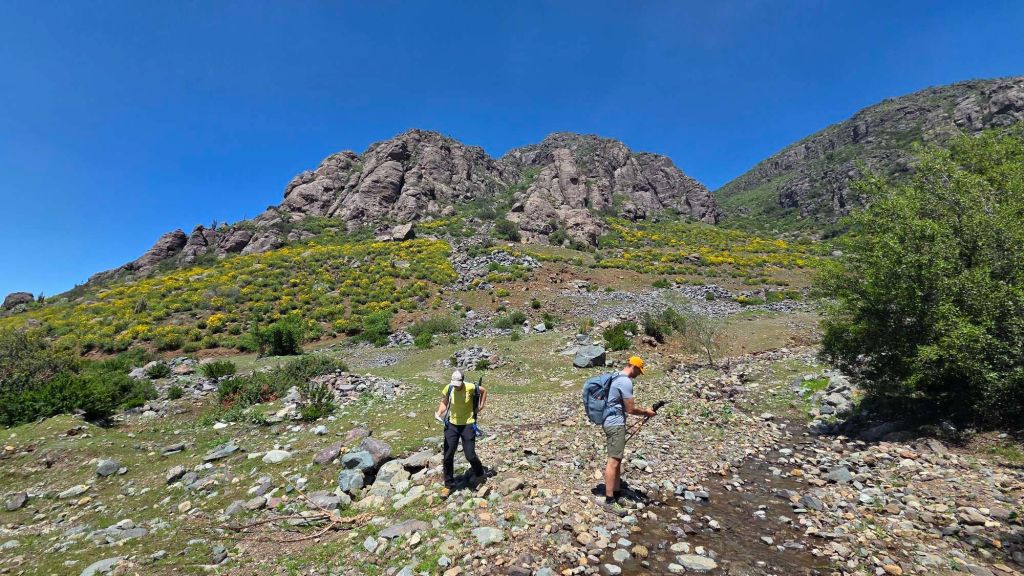
… but it’s only as you near its end and catch sight of the steeper canyon that you realise that most of the climbing is situated either side of this – though perhaps Sector Cascada should have been more of a clue.
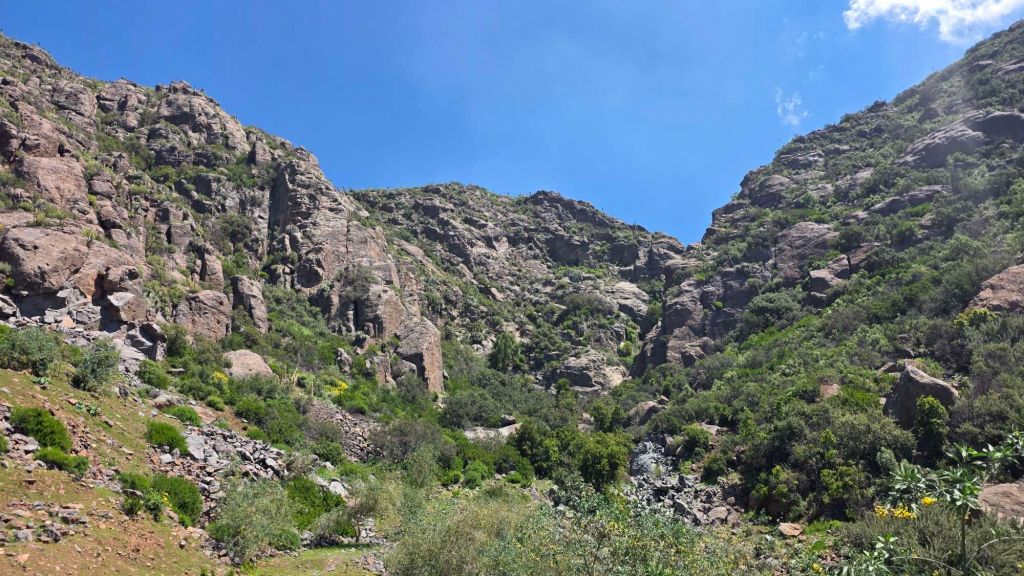
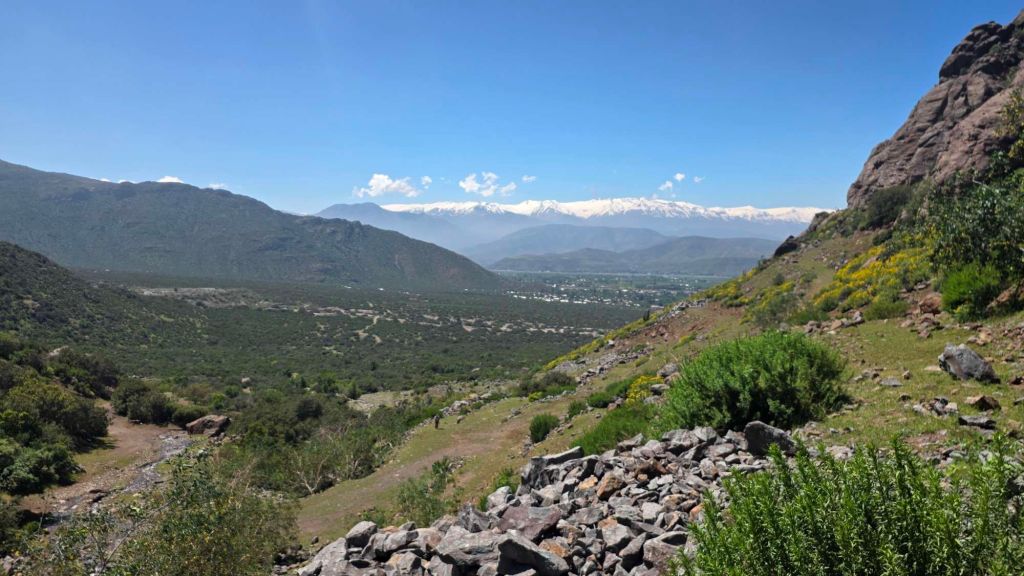
Fab views back to the Andes, though still no sign of the mighty Aconcagua!
We climbed a couple of the routes immediately adjacent the waterfall. Rocanboleo, 5.9, and Mente en Blanco, 10a. Both followed sinuous flake cracks up smooth volcanic rock, with positive edges amidst the no-tex. A friendly local climber pointed out that until the changing weather patterns of the last year or so, the cascada had been little more than a trickle.
Round the corner, the rock is completely different – a steep slab of smooth rock punctuated by small incut holds – largely hidden from below. We did King Kong, 10a, and here’s Molly on Godzilla, 10c.
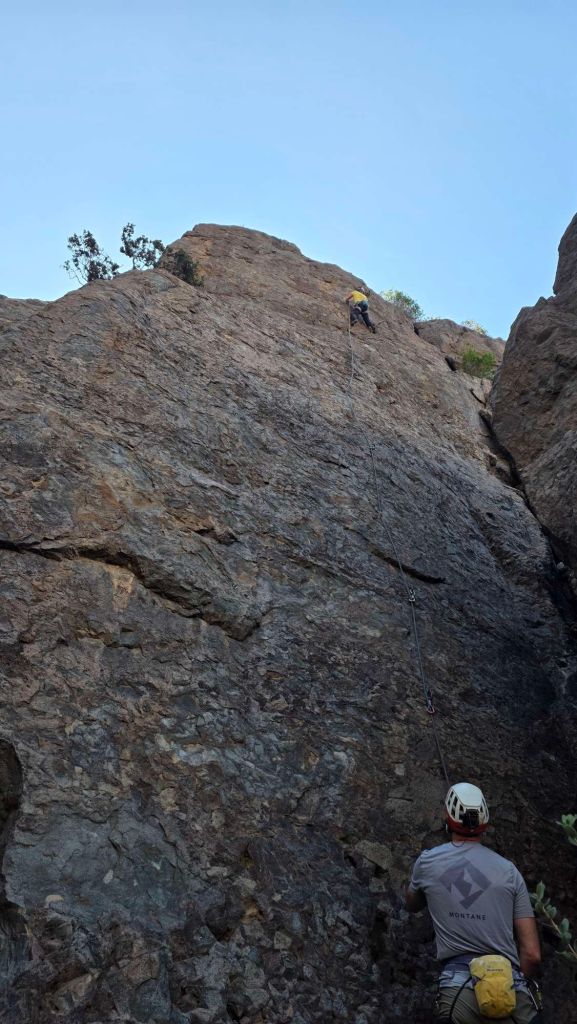
Here’s the view back to the crag…
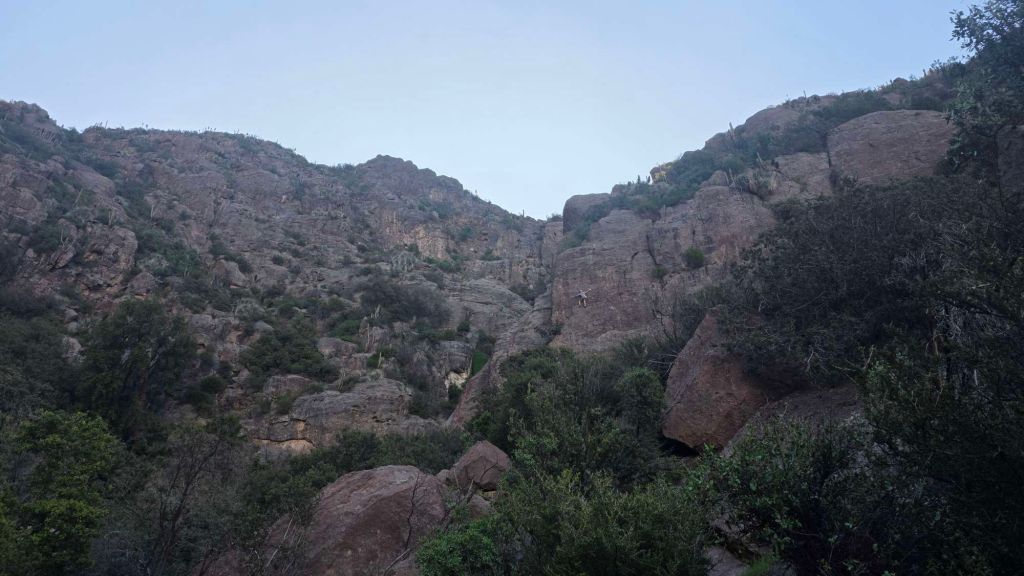
… and you can just about make Jesse topping out on Chupeta Pa Voce, another 10c.
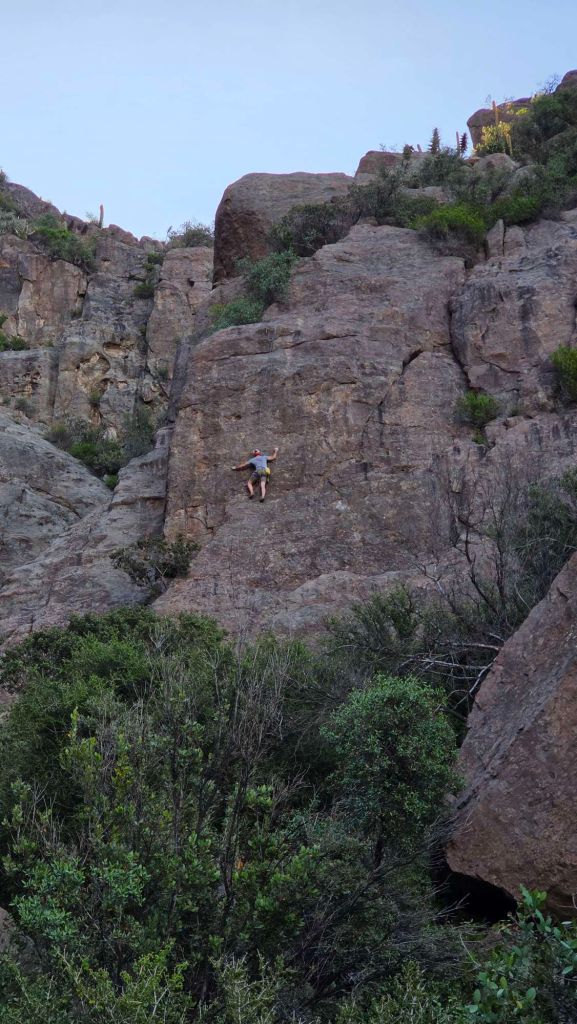
A highly successful day, celebrated with pizza from San Felipe and enjoyed with a sundowner at the campsite.
Petorca
Our guide and saviour, Cata, also recommended a further crag, Petorca. This is about an hour’s drive from our base, but also featured in a blog post from a Chilean climber on the seven best crags in the country. Rude not to check it out!
Winding up into the hills, there’s gorgeous scenery and a well-constructed road, which ultimately threads its way above a river gorge. An anonymous layby corresponds to our dropped pin and has another couple of vehicles, so we take the steep gravel path down into the canyon.
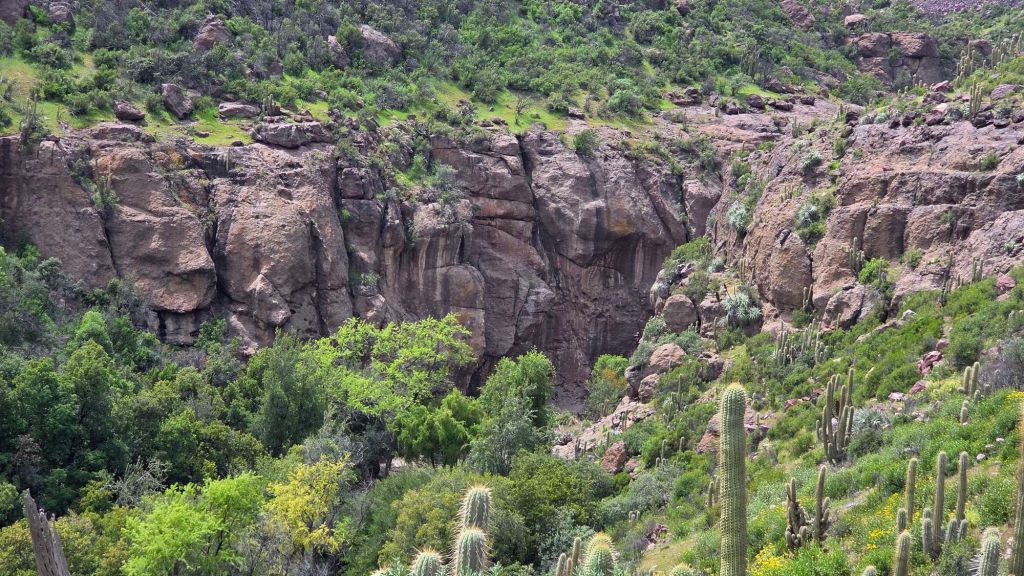
It’s only a couple of minutes down to the river, but there’s a splendid exhibition of the local flora on show…
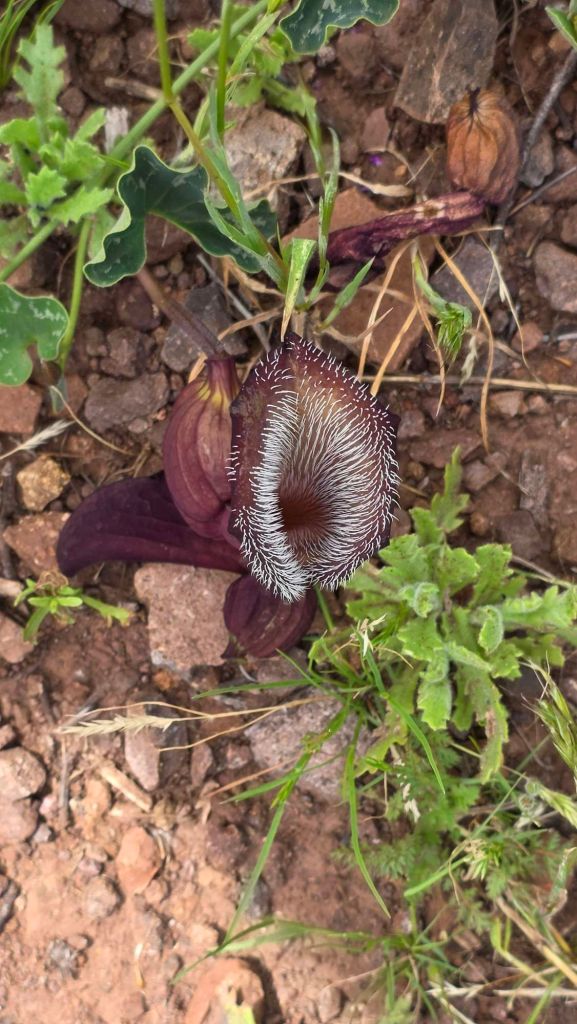
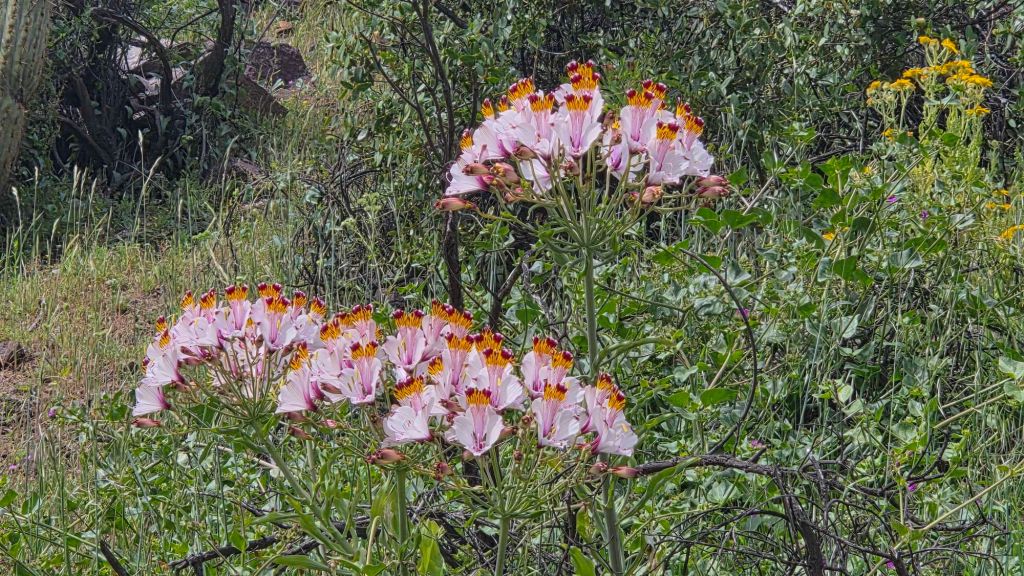
There are stepping stones across the river and a small clearing with a couple of tent spots, and a hundred metres or so up canyon there’s a large gaggle of Chilean climbers at play on the rocks. It’s Sunday and there’s a relaxed, party atmosphere at the crag – plenty of sounds of trying hard, punctuated by much encouragement and laughter.
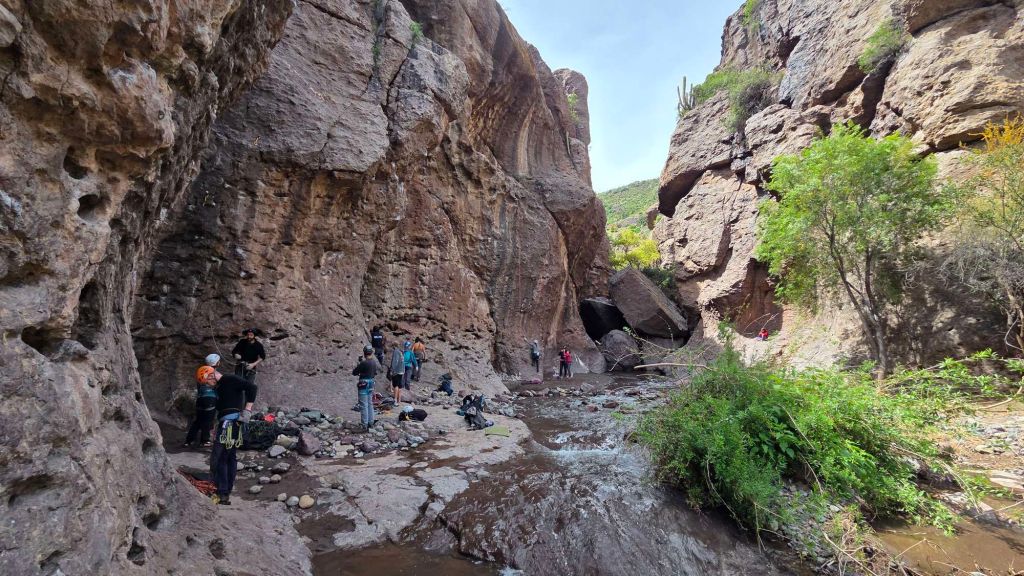
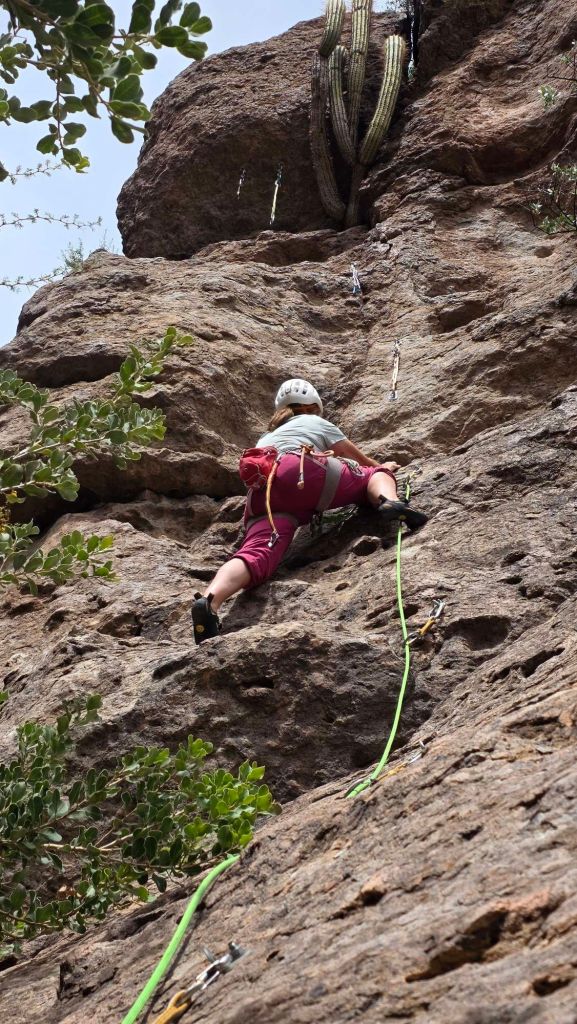
Helen and I did one of a clutch of 5.7s on the sunny Trilogia Al Sol.
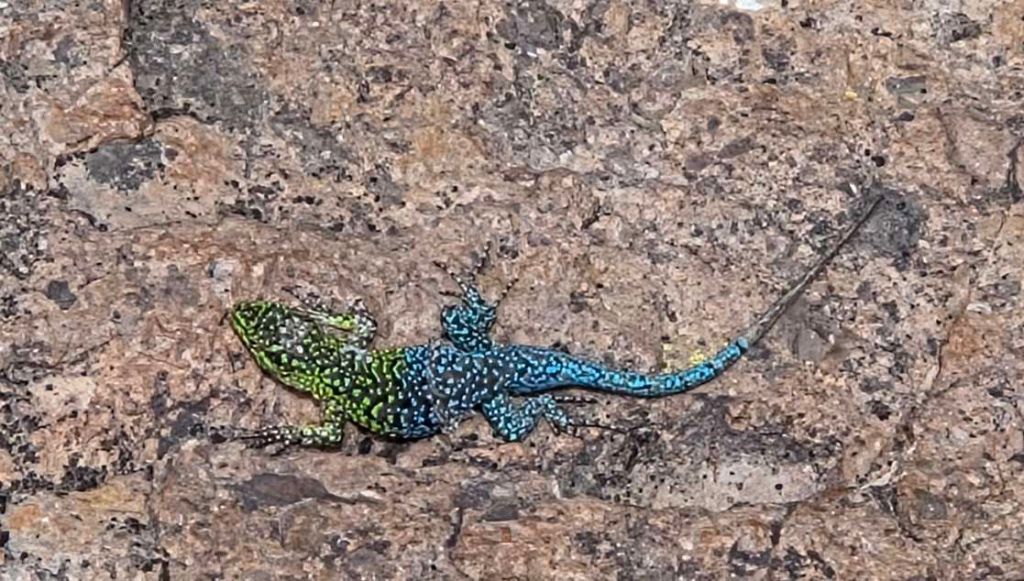
… where we met this fellow climber (I had a similar lycra outfit back in the 80s):
Here’s Molly getting to grips with one of the steep pocket-fests on the shady side. They might not be very tall but they pack a punch!
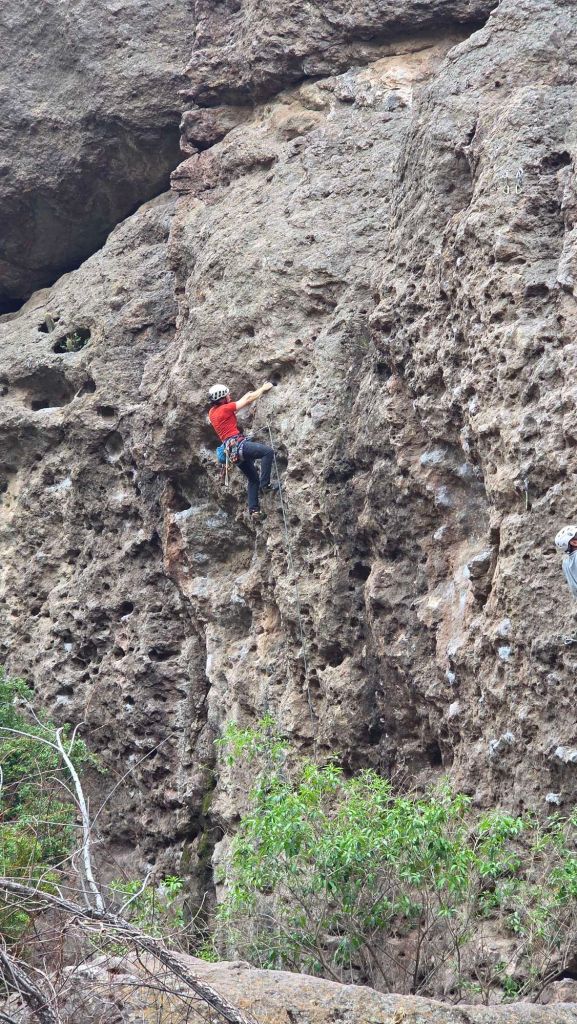
We worked our way through a bunch of the routes on Trilogia Izquierda, including Verde de la buena – 6a+, Con la Calma – 6b+, and Matón – 6b.
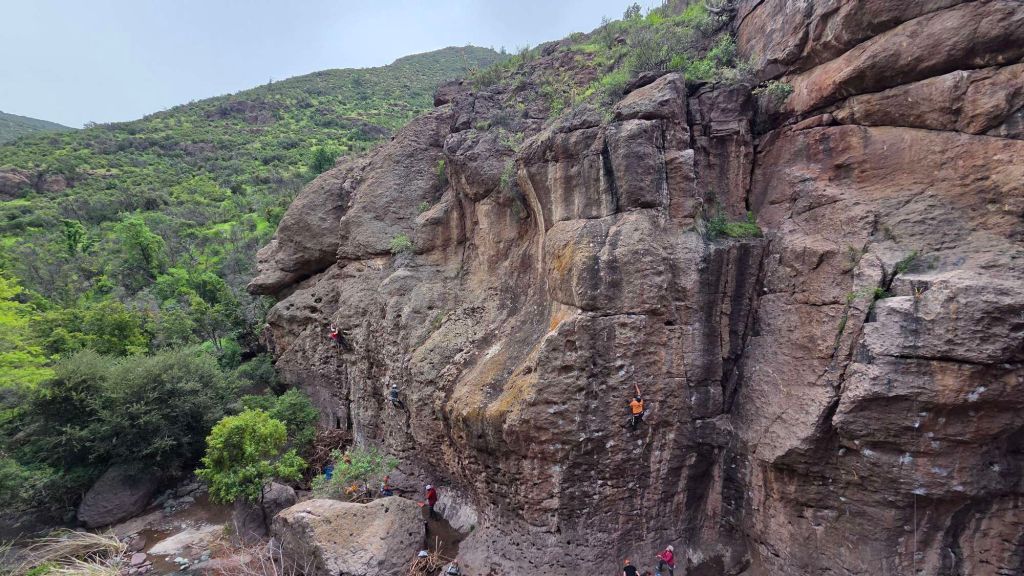
Fab spot, and there are plenty more sectors to explore.

